Vinyl record on turntable closeup
1344×768 · AVIF · CC BY 4.0
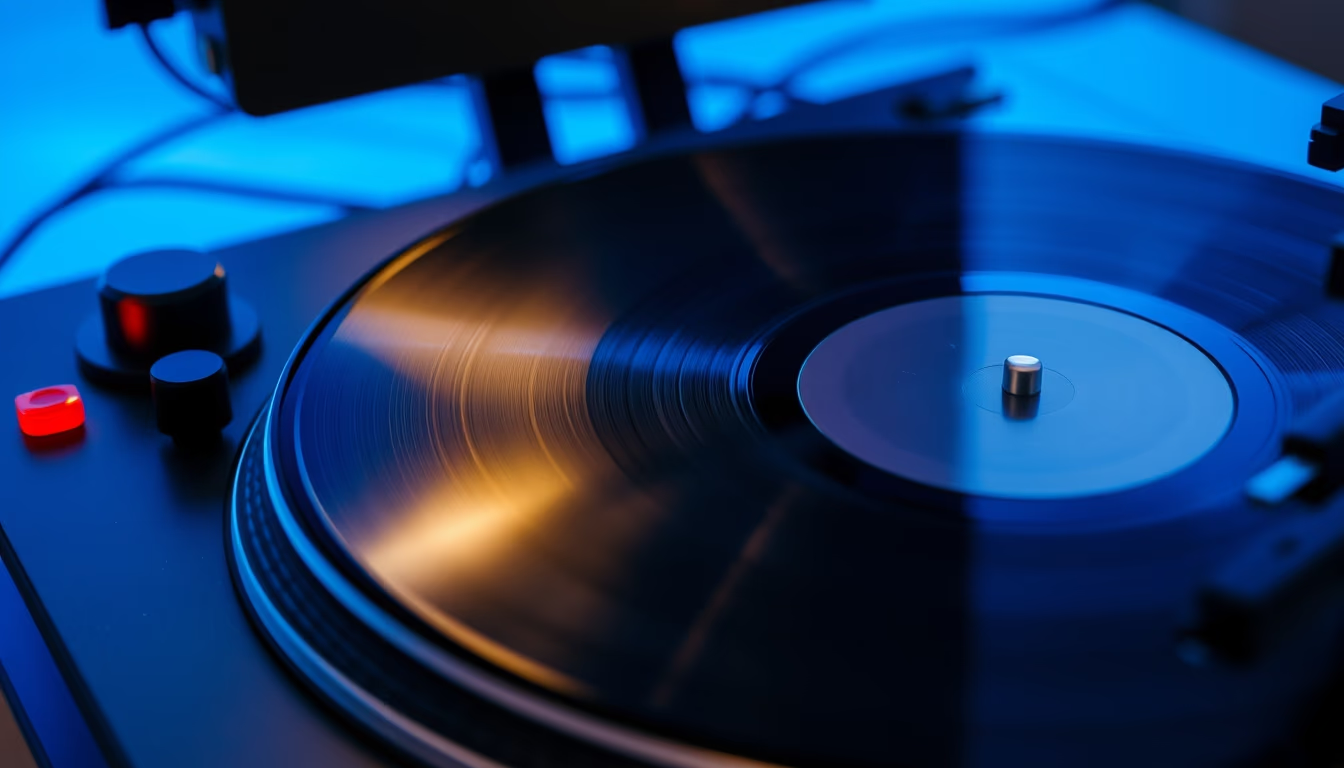
Closeup of a vinyl record on a turntable reveals the texture of grooves and the resurgence of analog format in the digital age.
About this subject
The vinyl record, also known as LP (long-play), is an analog audio medium that dominated the music market from the post-war era until the late 1980s. Its operation relies on the mechanical reading of microscopic grooves by a piezoelectric stylus, which converts vibrations into amplified electrical signals. Each rotation of the turntable platter (33⅓ RPM for LPs, 45 RPM for singles) moves the stylus along a continuous spiral of grooves modulated by the original recording. Sound fidelity depends on the quality of the vinyl (PVC compound with additives) and care for the surface, which can accumulate dust and static.
The vinyl revival began in the 2010s and intensified in the 2020s, driven by audiophiles and collectors. According to the Recording Industry Association of America (RIAA), in 2023 vinyl sales surpassed CDs in revenue for the first time, generating over $1.2 billion. This trend reflects a search for tactile and sonic differentiation, with large album artwork and the ritual of placing the record on the turntable. Brazil, with its strong tradition of record stores and vinyl fairs, also experiences this renaissance, especially in cities like São Paulo and Rio de Janeiro.
Technically, a quality turntable uses a balanced tonearm, magnetic cartridge (Moving Magnet or Moving Coil), and adjustable counterweight to minimize groove wear. The phono stage applies RIAA equalization, which attenuates bass and boosts treble during recording and corrects them playback. Constant rotation is maintained by a synchronous or DC servo motor, and a belt or direct drive transmits motion to the platter. The diamond or sapphire stylus tracks the grooves generating microvibrations; optimal tracking force ranges from 1.5 to 2 grams.
Trivia: the average groove width on an LP is about 0.04 mm, with spacing around 0.08 mm. Each side holds roughly 20 to 25 minutes of music. The characteristic vinyl sound includes surface noise (clicks and pops) from imperfections or particles, which many appreciate as part of the 'analog aura'. The format inspired genres like hip-hop (scratching) and DJ culture, which relies on turntables for real-time sound manipulation.
Frequently Asked Questions
Why has the vinyl record become popular again?
The vinyl revival is attributed to the search for a tangible musical experience and perceived higher sound fidelity, plus the collectible appeal of album covers and special editions. Many enjoy the ritual of handling the record and the 'warm' analog sound.
What is the difference between an LP and a vinyl single?
An LP (long-play) spins at 33⅓ RPM, holds about 20-25 minutes per side, and usually contains a full album. A single spins at 45 RPM, has a smaller diameter (7 inches), and typically carries one track per side, averaging 3-5 minutes.
How should I care for vinyl records to avoid damage?
Store records in polyethylene or anti-static paper inner sleeves, upright, away from heat and humidity. Handle by the edges and center label. Clean with a dry microfiber cloth or specialized solutions, avoiding alcohol. Keep in a dust-free environment.
Direct URL
https://pub-c7d6a6ea828543ac903a74a341ccb2e1.r2.dev/imagens/vinyl-record-on-turntable-closeup-aerial-drone-shot-p3.avifHow to credit
Include a visible link back to UtilizAí. Copy one of the snippets below:
<a href="https://xn--utiliza-eza.com/en/midia/imagens/vinyl-record-on-turntable-closeup-aerial-drone-shot-p3">Vinyl record on turntable closeup</a> by <a href="https://xn--utiliza-eza.com">UtilizAí</a>, licensed under <a href="https://creativecommons.org/licenses/by/4.0/">CC BY 4.0</a>.
[Vinyl record on turntable closeup](https://xn--utiliza-eza.com/en/midia/imagens/vinyl-record-on-turntable-closeup-aerial-drone-shot-p3) by [UtilizAí](https://xn--utiliza-eza.com), CC BY 4.0
License: CC-BY-4.0