Travel postcards europe
1344×768 · AVIF · CC BY 4.0
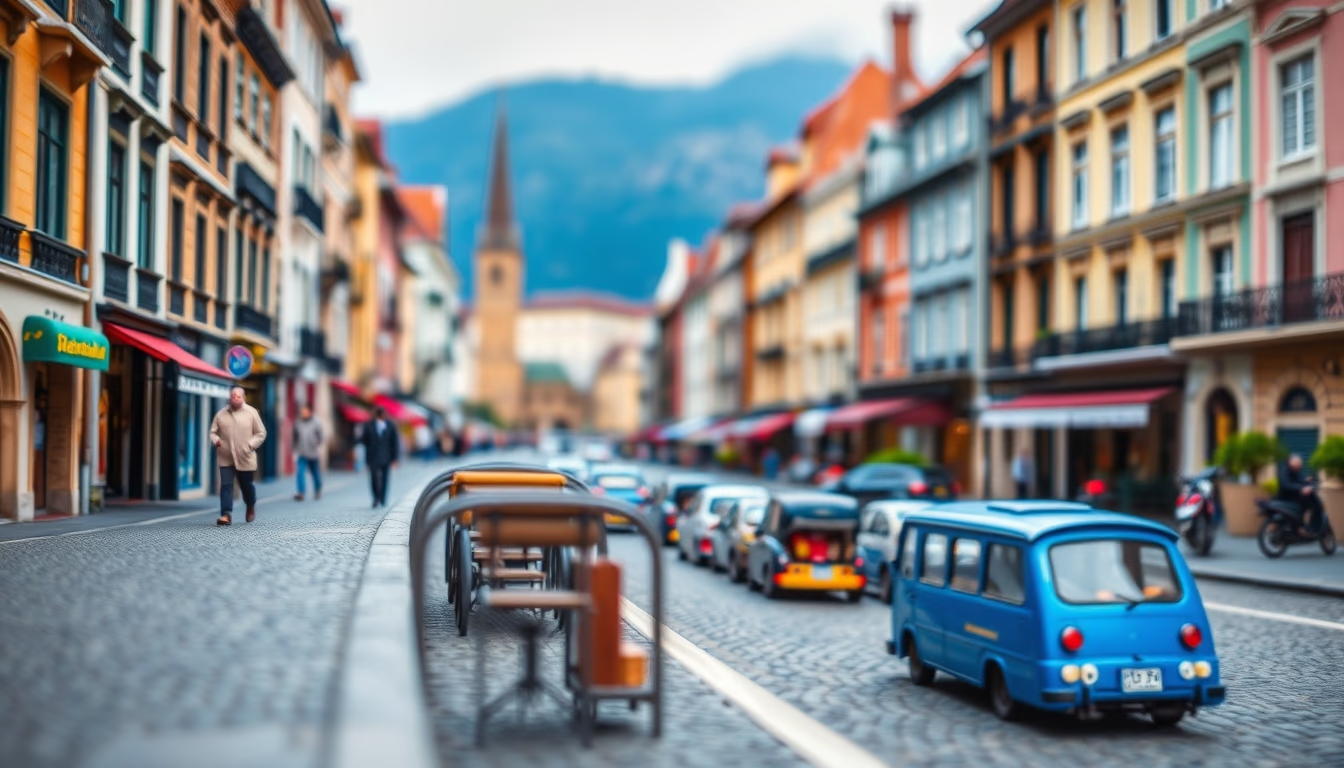
European postcards, visual communication icons that have documented the continent's landscapes and customs since the 19th century.
About this subject
European postcards emerged in the late 19th century, driven by expanding postal services and emerging tourism. Austria-Hungary issued the first illustrated postcard in 1869, but the 1889 Paris Universal Exposition popularized the format. They quickly became essential souvenirs for travelers, depicting everything from the Eiffel Tower to Venetian canals, German castles, and Norwegian fjords.
Production in Europe peaked between 1900 and 1915, known as the Golden Age. Publishers like Raphael Tuck & Sons in England and Photochrom in Switzerland distributed millions. Printing techniques varied: photogravure, lithography, and later vibrant colors through photochromy. These cards served not only as correspondence but as historical records of fashion, architecture, and events.
Culturally, European postcards played a significant role during the world wars, used by soldiers to communicate with families. Post-war mass tourism solidified the habit of sending greetings from journeys. Today, collectors keep the tradition alive among cartophilists, seeking rare examples from cities like Prague, Barcelona, or Istanbul. Digitization has reduced sending, but postcards remain an aesthetic and affective symbol of European travel memory.
Details such as stamps, postmarks, and handwritten messages add historical value. Some antique postcards show views that have drastically changed, such as pre-war Berlin or Lisbon before the 1755 earthquake (though this predates the postcard as we know it). Nevertheless, each card is a fragment of time, geography, and shared emotion.
Frequently Asked Questions
What was the first postcard in Europe?
The first illustrated postcard was issued by Austria-Hungary in 1869, called Correspondenzkarte. However, popularity soared after the 1889 Paris Universal Exposition.
What is cartophily?
Cartophily is the hobby of collecting postcards. Collectors, called cartophilists, seek rare examples by theme, location, date, or aesthetic appeal.
Why are European postcards historically significant?
They document urban changes, fashion, events, and customs over time. Many old postcards are unique records of places that have been destroyed or transformed.
Direct URL
https://pub-c7d6a6ea828543ac903a74a341ccb2e1.r2.dev/imagens/travel-postcards-europe-tilt-shift-miniature-fresh17.avifHow to credit
Include a visible link back to UtilizAí. Copy one of the snippets below:
<a href="https://xn--utiliza-eza.com/en/midia/imagens/travel-postcards-europe-tilt-shift-miniature-fresh17">Travel postcards europe</a> by <a href="https://xn--utiliza-eza.com">UtilizAí</a>, licensed under <a href="https://creativecommons.org/licenses/by/4.0/">CC BY 4.0</a>.
[Travel postcards europe](https://xn--utiliza-eza.com/en/midia/imagens/travel-postcards-europe-tilt-shift-miniature-fresh17) by [UtilizAí](https://xn--utiliza-eza.com), CC BY 4.0
License: CC-BY-4.0