Transistor surface mount
1344×768 · AVIF · CC BY 4.0
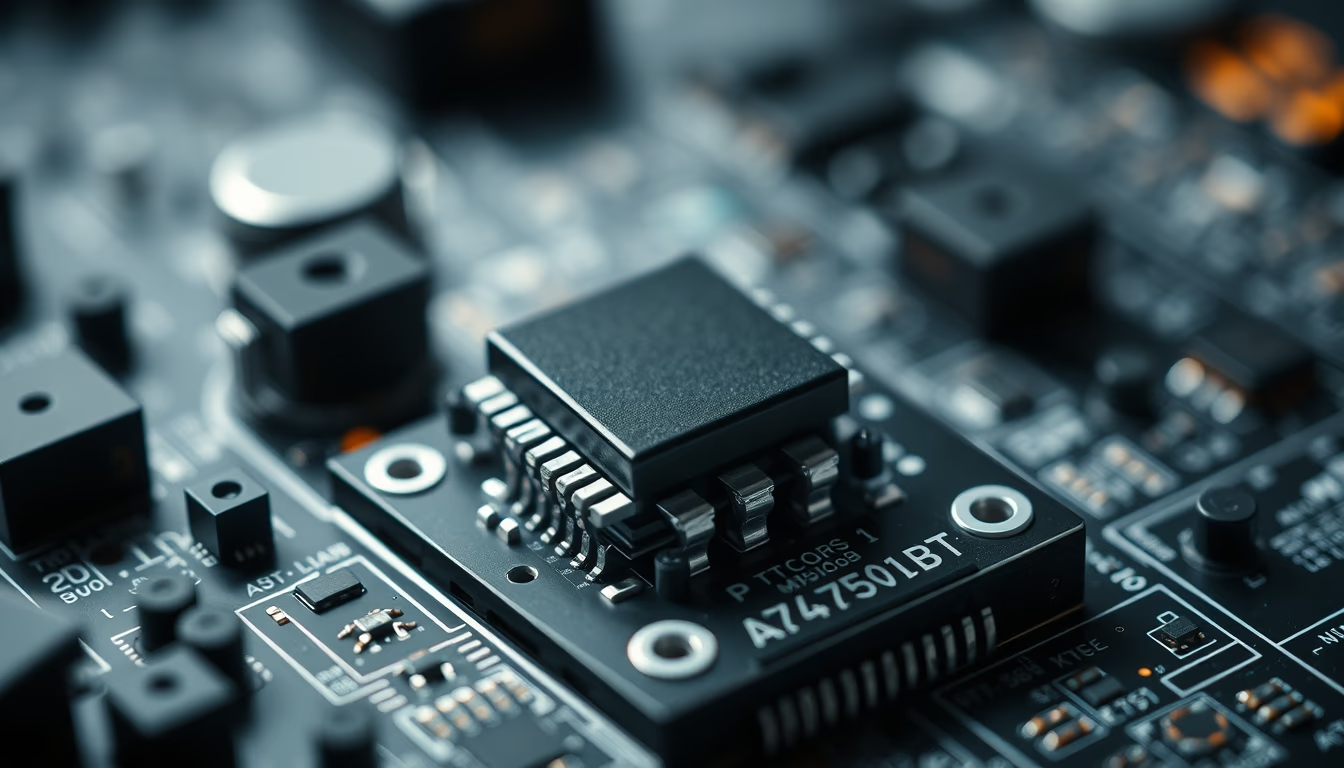
Surface-mount transistors are essential components in modern printed circuit boards, enabling high density and automation in electronics manufacturing.
About this subject
Surface-mount transistors, or SMT (Surface-Mount Technology) components, are electronic devices designed to be soldered directly onto the surface of a printed circuit board, eliminating the need for holes. This technology revolutionized the electronics industry starting in the 1980s, gradually replacing through-hole components. SMT transistors are much smaller than their traditional counterparts, allowing for more compact assemblies and boards with higher component density.
There are various types of SMT transistors, such as BJT (bipolar junction transistors) and MOSFETs (metal-oxide-semiconductor field-effect transistors). Each type serves specific applications, from signal amplification to power switching. Assembly is done by pick-and-place machines, which precisely position components, followed by reflow soldering, where solder paste melts and secures the components.
The main advantage of SMT transistors is efficiency in mass production. Additionally, they offer better high-frequency performance due to lower parasitic inductance from leads. However, heat dissipation can be challenging because the components are small and lack direct contact with bulky heat sinks. Techniques like thermal vias and careful design are essential.
Interestingly, SMT development began in the 1960s for military and space applications where reliability and miniaturization were crucial. Today, virtually all electronic devices, from smartphones to computers, use SMT transistors. The ongoing miniaturization trend leads to ever-smaller packages, such as SOT-23 and SC-70, measuring less than 3 mm.
Frequently Asked Questions
What is a surface-mount transistor?
It is a transistor designed to be soldered directly onto the surface of a printed circuit board, without holes. It is smaller than through-hole transistors and allows automated assembly and high component density.
What is the difference between SMT and through-hole?
In SMT, components are soldered on the board surface, while through-hole components have leads that pass through holes. SMT enables greater miniaturization, automation, and better high-frequency performance, but requires careful thermal management.
What are the main types of SMT transistors?
The main types are BJTs (bipolar junction transistors) and MOSFETs (field-effect transistors). They are used in amplification, switching, and power regulation in virtually all modern electronic devices.
Direct URL
https://pub-c7d6a6ea828543ac903a74a341ccb2e1.r2.dev/imagens/transistor-surface-mount-high-fashion-editorial-p4.avifHow to credit
Include a visible link back to UtilizAí. Copy one of the snippets below:
<a href="https://xn--utiliza-eza.com/en/midia/imagens/transistor-surface-mount-high-fashion-editorial-p4">Transistor surface mount</a> by <a href="https://xn--utiliza-eza.com">UtilizAí</a>, licensed under <a href="https://creativecommons.org/licenses/by/4.0/">CC BY 4.0</a>.
[Transistor surface mount](https://xn--utiliza-eza.com/en/midia/imagens/transistor-surface-mount-high-fashion-editorial-p4) by [UtilizAí](https://xn--utiliza-eza.com), CC BY 4.0
License: CC-BY-4.0