Telescope vintage brass
1344×768 · AVIF · CC BY 4.0
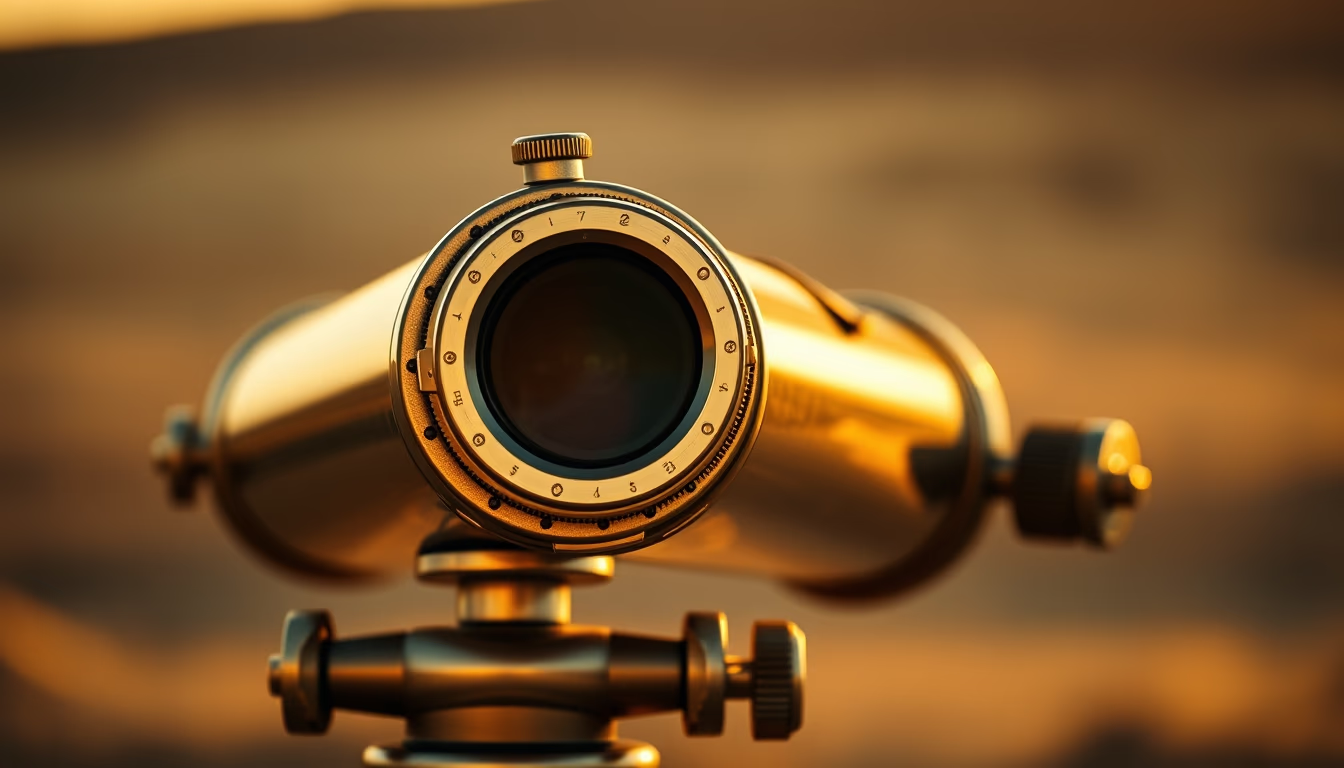
Vintage brass telescopes blend scientific function with decorative craftsmanship, now highly sought by collectors.
About this subject
19th-century brass telescopes are milestones of optics and design. Crafted by masters like Dollond, Ramsden, and Negretti & Zambra, these instruments used achromatic lenses to reduce chromatic aberration, enabling sharper astronomical and terrestrial observations. Brass, a noble and corrosion-resistant metal, was the standard for tubes, mounts, and gears, providing weight and stability. Many models featured ornate finishes, such as engravings and wooden handles, reflecting Victorian style.
These telescopes played a significant role in expanding geographical and astronomical knowledge. Explorers like Livingstone and Cook carried portable models on expeditions. In Brazil, they were used by naturalists and the Imperial Navy. Today, original pieces in good condition can be worth thousands of reais, sold at auctions and specialized antique shops. The patina of the brass and the presence of manufacturer marks are highly valued.
Collectors seek telescopes with original lenses and functional mechanisms. The terrestrial telescope, or "spyglass", is the most common variant, while astronomical models with wooden tripods are rarer. Restoration must be done carefully to preserve authenticity. Beyond historical value, these objects adorn offices and libraries with elegance.
When purchasing a vintage brass telescope, check the integrity of the lenses, the originality of the lacquer, and the smoothness of the focus. Items with historical documentation or associated with important figures have added value. Growing demand makes this niche a promising cultural and financial investment.
Frequently Asked Questions
What is the difference between a spyglass and a vintage brass telescope?
In practice, the terms are used interchangeably, but traditionally a spyglass refers to terrestrial instruments with objective and eyepiece lenses, while a telescope may include reflectors (with mirrors). 19th-century brass models are almost always refractors (spyglasses) with glass lenses.
How can I identify an original vintage brass telescope and avoid fakes?
Look for manufacturer marks engraved or on plates, period-appropriate screws and finishes, and lenses with small bubbles or natural wear. Avoid pieces with recent solder or paint over the brass. Consult reference guides and buy from reputable antique dealers.
Is it worth investing in antique brass telescopes?
Yes, but with research. Models from renowned makers (Dollond, Ramsden, Zeiss) and in original condition appreciate in value. The scientific antiques market is stable, but liquidity may be lower. Ideally, buy for passion for the object, considering appreciation as a secondary benefit.
Direct URL
https://pub-c7d6a6ea828543ac903a74a341ccb2e1.r2.dev/imagens/telescope-vintage-brass-cinematic-wide-shot-p8.avifHow to credit
Include a visible link back to UtilizAí. Copy one of the snippets below:
<a href="https://xn--utiliza-eza.com/en/midia/imagens/telescope-vintage-brass-cinematic-wide-shot-p8">Telescope vintage brass</a> by <a href="https://xn--utiliza-eza.com">UtilizAí</a>, licensed under <a href="https://creativecommons.org/licenses/by/4.0/">CC BY 4.0</a>.
[Telescope vintage brass](https://xn--utiliza-eza.com/en/midia/imagens/telescope-vintage-brass-cinematic-wide-shot-p8) by [UtilizAí](https://xn--utiliza-eza.com), CC BY 4.0
License: CC-BY-4.0