Tapestry medieval flemish
1344×768 · AVIF · CC BY 4.0
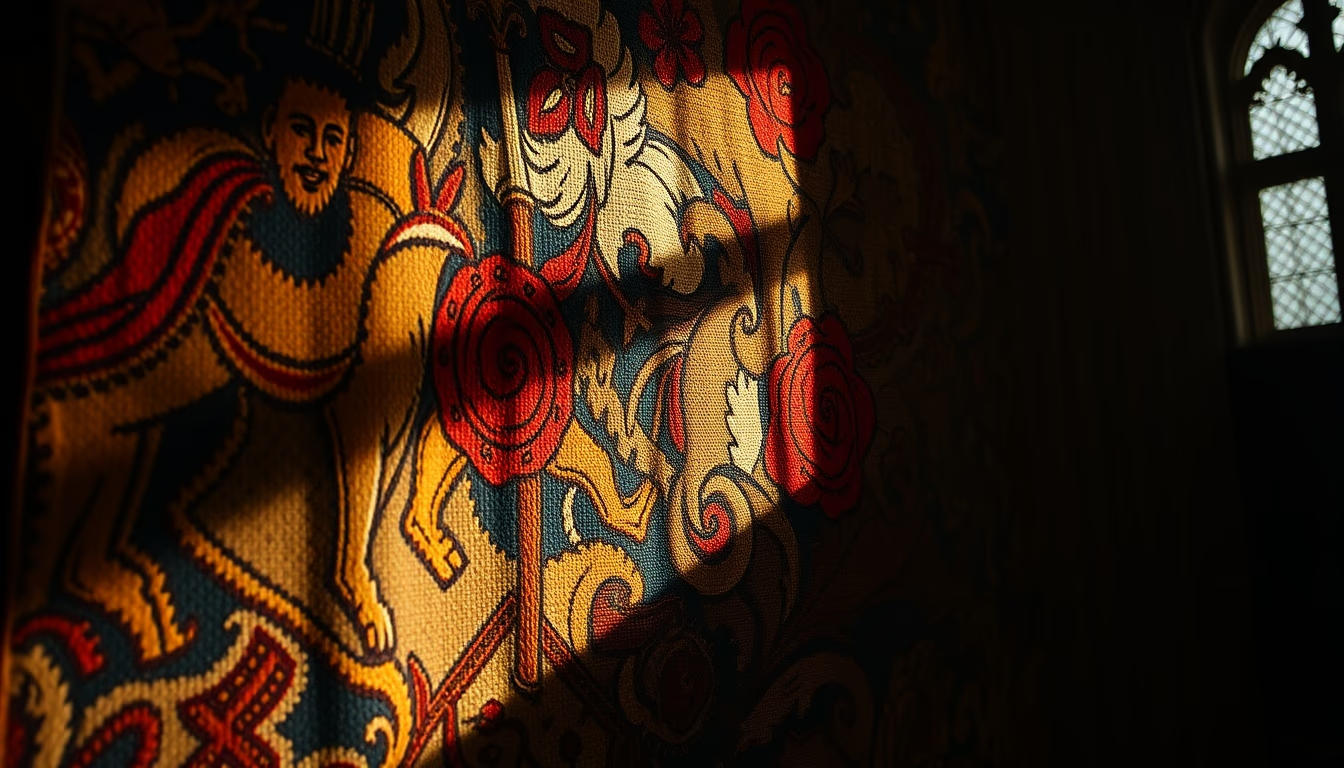
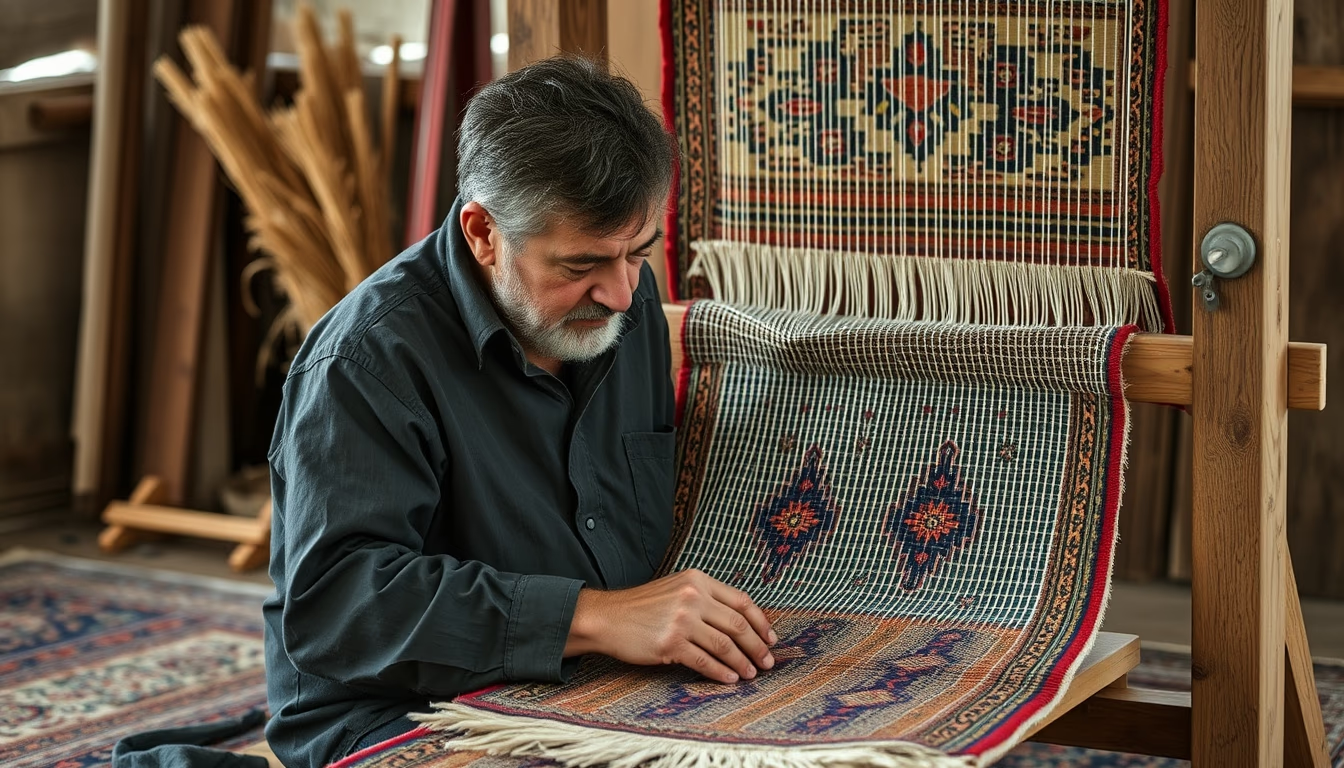
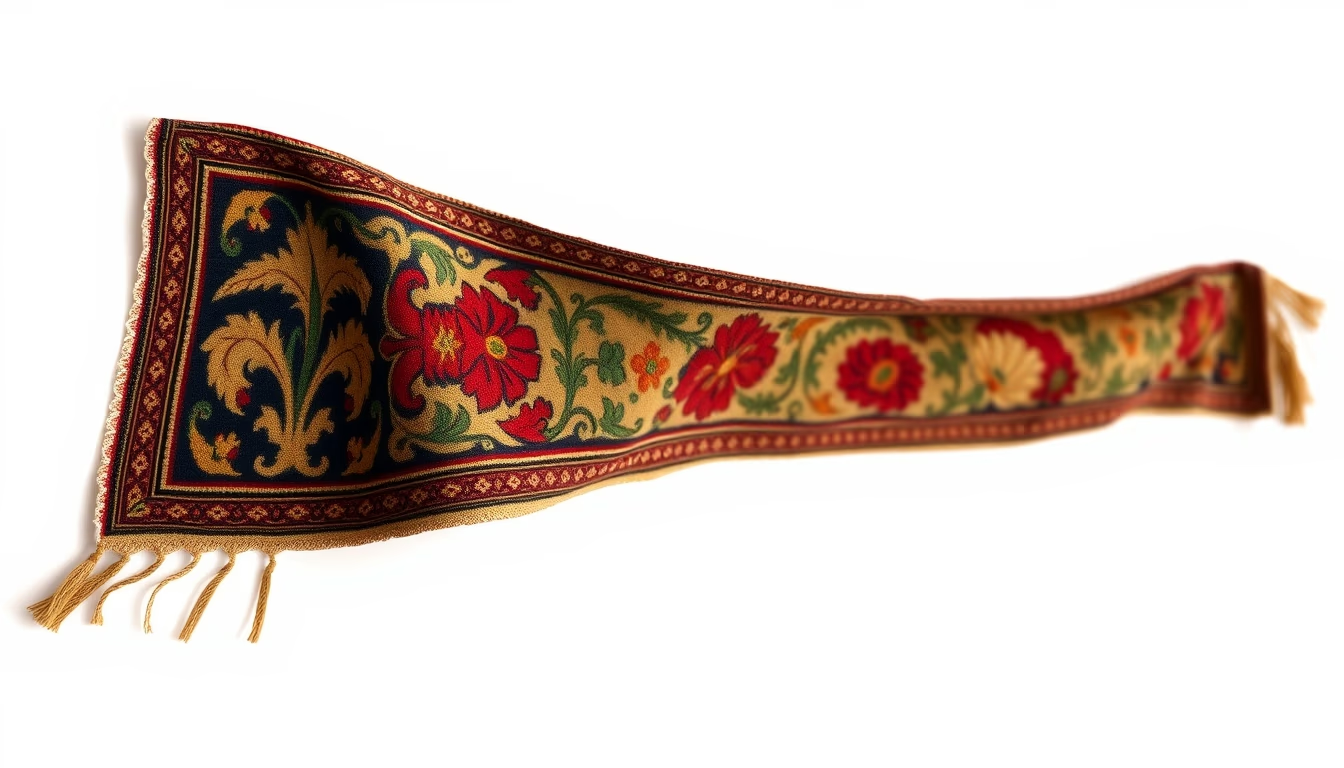
Flemish medieval tapestries are textile masterpieces depicting historical and mythological scenes with refined technique and rich detail.
About this subject
Flemish medieval tapestries, produced mainly in the 15th and 16th centuries in present-day Belgium, France, and the Netherlands, represent one of the pinnacles of European textile art. These pieces were handwoven on looms, typically using wool and silk, and could reach monumental dimensions, some exceeding 10 meters in length. The city of Brussels, followed by Tournai and Arras, became the most important center for this craft, supplying royal courts and nobility across the continent.
The creation process involved artists who designed the cartoons (full-scale models), often inspired by paintings from great masters like Van der Weyden and Memling. Weavers then translated these images into threads, using techniques such as straight stitch and tapestry stitch, which allowed sophisticated color gradients and shading. The famous series "The Lady and the Unicorn" from the late 15th century is an emblematic example, blending allegory and religious symbolism.
Beyond aesthetic value, these tapestries had practical functions: they insulated stone walls in castles, divided spaces, and displayed political or religious power. Scenes of battles, hunts, classical mythology, and peasant daily life were recurring themes. The lighting technique known as "Rembrandt lighting," with dramatic contrasts of light and shadow, though associated with 17th-century Baroque painting, finds parallels in the chiaroscuro effects already explored by Flemish weavers to give volume to figures.
Production declined from the 17th century onward due to competition from wallpaper and changing tastes, but surviving pieces are treasures in museums such as the Metropolitan Museum of Art, the Louvre, and the Musée de Cluny in Paris. Each tapestry required months or years of work, and their value often exceeded that of contemporary paintings.
Frequently Asked Questions
What distinguishes a Flemish tapestry from other European tapestries?
Flemish tapestries stand out for the use of high-quality silk and wool, the complexity of designs (often based on renowned paintings), and the weaving technique that allowed subtle color gradations and shading, creating almost pictorial effects.
How were medieval tapestries preserved in castles?
They were hung on wooden or metal rods and frequently removed for cleaning and airing. To avoid damage from moisture or light, they were stored rolled in canvas when not in use. Dust was removed with soft brushes.
What themes were most common in Flemish tapestries?
Themes included biblical and religious scenes, historical episodes like battles, allegories (such as the five senses), depictions of courtly life, hunts, and in later pieces, landscapes and mythological scenes.
Direct URL
https://pub-c7d6a6ea828543ac903a74a341ccb2e1.r2.dev/imagens/tapestry-medieval-flemish-rembrandt-lighting-dramatic-shadows-fresh9.avifHow to credit
Include a visible link back to UtilizAí. Copy one of the snippets below:
<a href="https://xn--utiliza-eza.com/en/midia/imagens/tapestry-medieval-flemish-rembrandt-lighting-dramatic-shadows-fresh9">Tapestry medieval flemish</a> by <a href="https://xn--utiliza-eza.com">UtilizAí</a>, licensed under <a href="https://creativecommons.org/licenses/by/4.0/">CC BY 4.0</a>.
[Tapestry medieval flemish](https://xn--utiliza-eza.com/en/midia/imagens/tapestry-medieval-flemish-rembrandt-lighting-dramatic-shadows-fresh9) by [UtilizAí](https://xn--utiliza-eza.com), CC BY 4.0
License: CC-BY-4.0