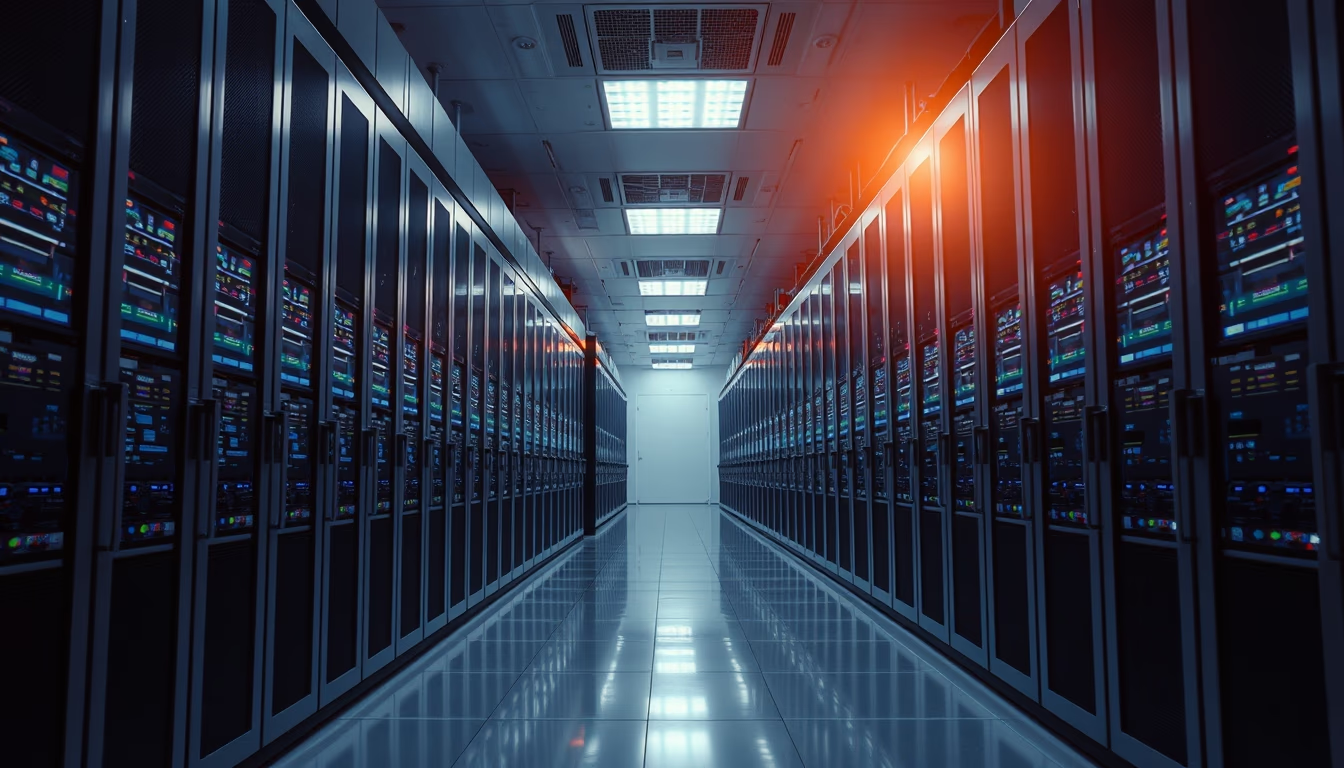
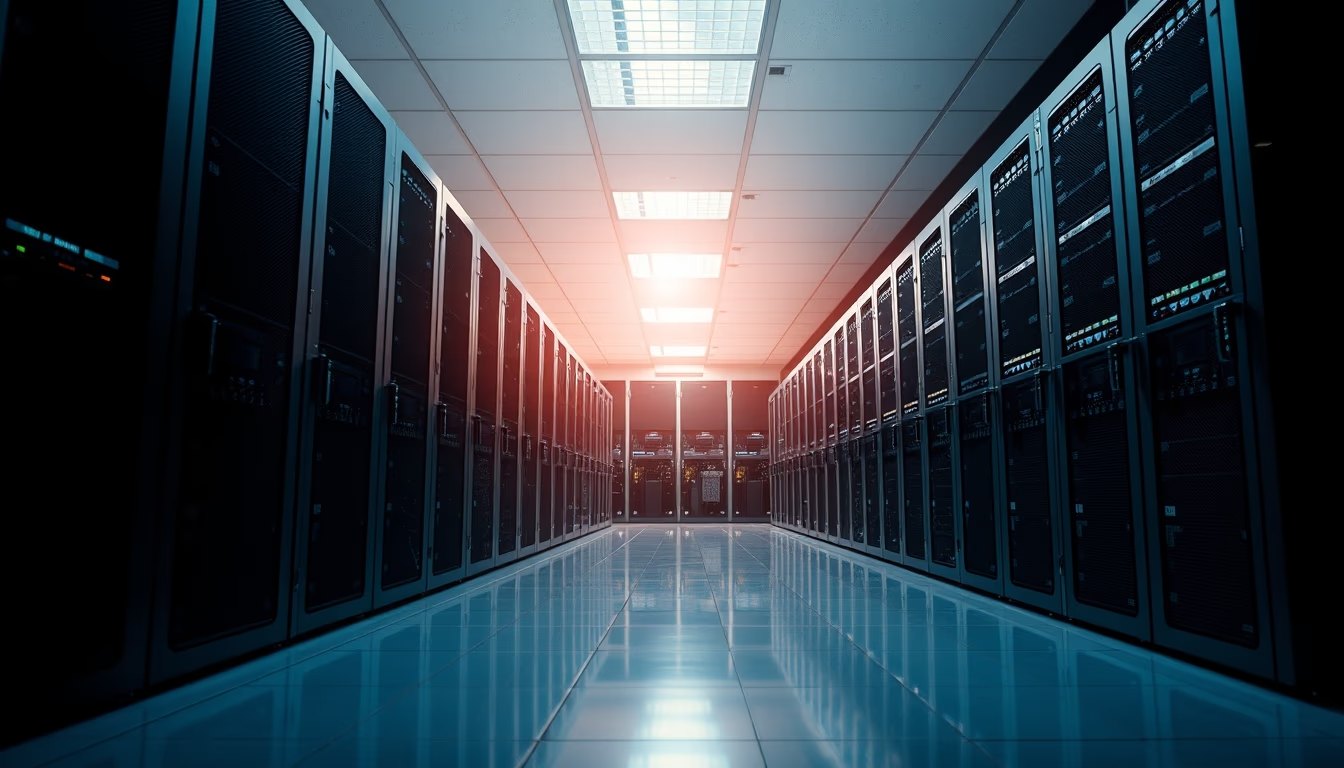
Supercomputer hall
1344×768 · AVIF · CC BY 4.0
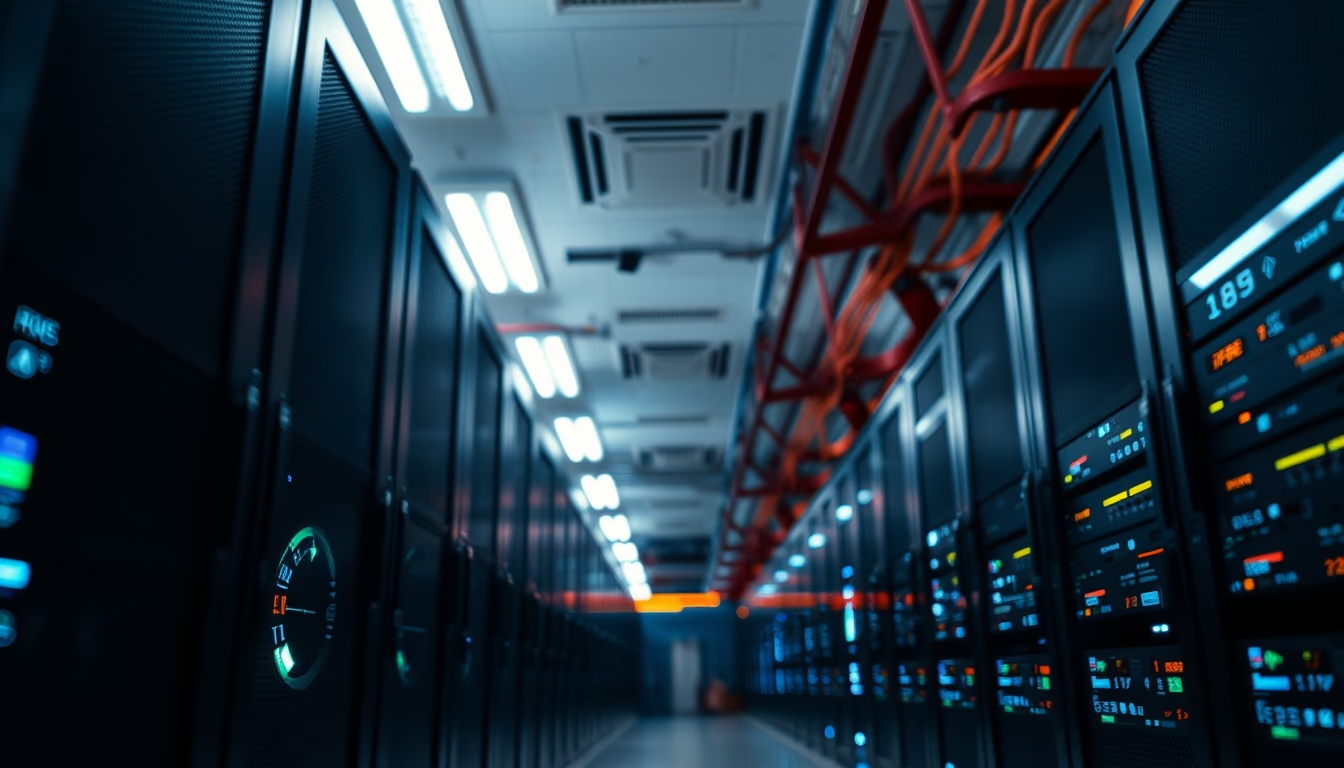
Supercomputer halls house machines capable of processing data at exascale, essential for scientific research and climate modeling.
About this subject
A supercomputer hall is a specially designed environment to house high-performance computing systems. These facilities require robust cooling infrastructure, power supply, and network connectivity to keep the equipment running 24/7. Supercomputers, such as Fugaku in Japan or Summit in the United States, consist of thousands of processors interconnected by high-speed networks, enabling complex calculations in areas like molecular simulation, weather forecasting, and artificial intelligence.
Temperature and humidity are strictly controlled, as the heat generated by processors can damage components. Liquid cooling systems and precision air conditioning are common. Additionally, energy consumption is enormous: El Capitan, expected in 2024, may consume around 30 megawatts. Thus, energy efficiency is a priority, with designs that optimize airflow and use renewable sources.
Historically, early supercomputers occupied entire rooms with cables and tape drives. With miniaturization, modern ones take up less physical space but still require dedicated environments. Modern data centers are built in strategic locations, near cheap energy sources or in mild climates to reduce cooling costs.
In Brazil, the Santos Dumont supercomputer at the National Laboratory for Scientific Computing is an example of national infrastructure for research. Maintaining these halls involves specialized teams in electrical engineering, cooling, and cybersecurity, ensuring the supercomputer runs uninterrupted to meet scientific and business demands.
Frequently Asked Questions
What is the difference between a supercomputer and a regular computer?
Supercomputers are thousands of times more powerful, perform massive parallel calculations, and are used for scientific research, while regular computers handle individual tasks.
How is cooling done in a supercomputer hall?
Direct liquid cooling on processors, precision air conditioning, and optimized airflow systems are used to dissipate the heat generated.
How much does it cost to maintain a supercomputer?
Costs involve electricity (millions of dollars per year), hardware maintenance, cooling, and specialized technical staff.
Direct URL
https://pub-c7d6a6ea828543ac903a74a341ccb2e1.r2.dev/imagens/supercomputer-hall-macro-closeup-p9.avifHow to credit
Include a visible link back to UtilizAí. Copy one of the snippets below:
<a href="https://xn--utiliza-eza.com/en/midia/imagens/supercomputer-hall-macro-closeup-p9">Supercomputer hall</a> by <a href="https://xn--utiliza-eza.com">UtilizAí</a>, licensed under <a href="https://creativecommons.org/licenses/by/4.0/">CC BY 4.0</a>.
[Supercomputer hall](https://xn--utiliza-eza.com/en/midia/imagens/supercomputer-hall-macro-closeup-p9) by [UtilizAí](https://xn--utiliza-eza.com), CC BY 4.0
License: CC-BY-4.0