Submarine deep ocean
1344×768 · AVIF · CC BY 4.0
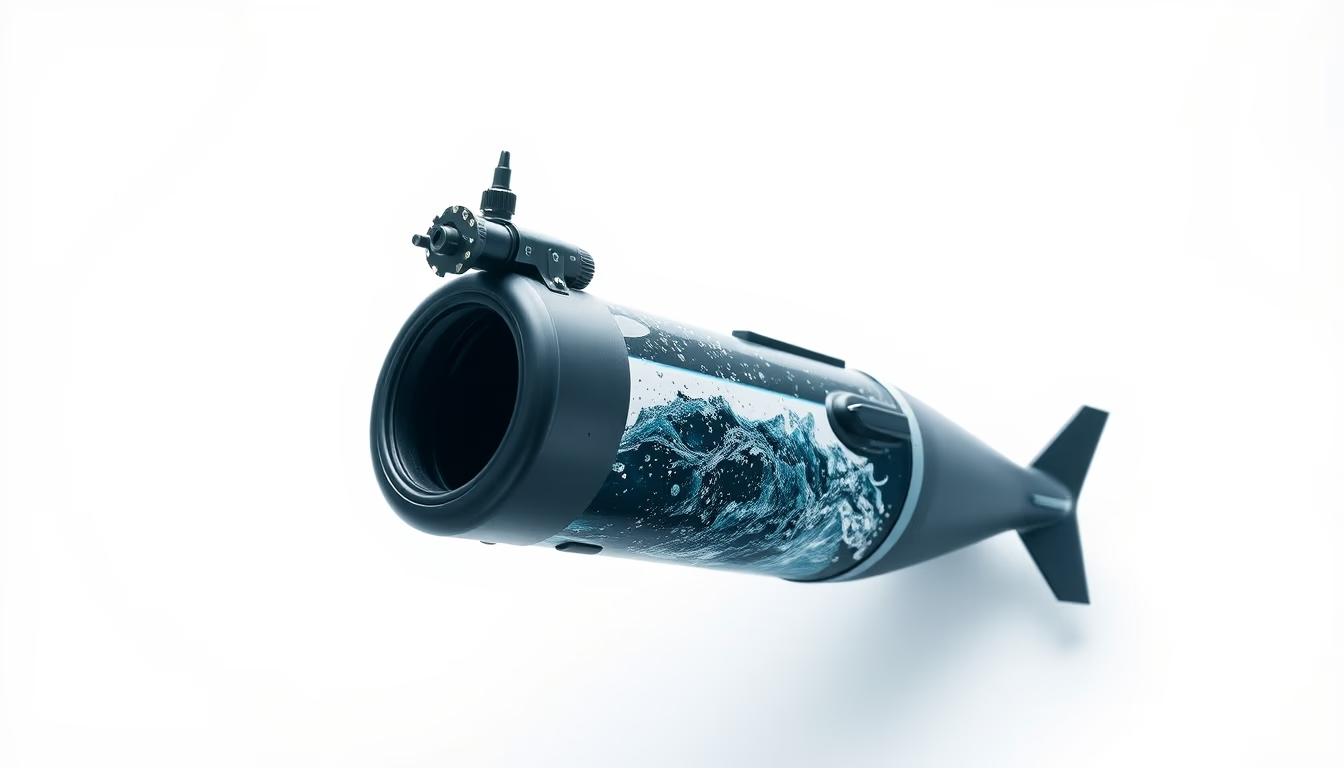
Submarines are underwater vehicles essential for scientific and military exploration of the deep ocean.
About this subject
Submarines are vessels designed to operate underwater, capable of navigating vast depths with autonomy. Unlike submersibles, which rely on support ships, submarines are self-sufficient and can remain submerged for extended periods. This technology transformed ocean exploration, enabling oceanographic studies, seafloor mapping, and data collection on abyssal ecosystems.
The first practical military submarine was the Turtle, used in the American Revolutionary War, but Jules Verne's Nautilus popularized the concept. Today, modern research submarines like Alvin, operated by Woods Hole Oceanographic Institution, reach depths exceeding 4,500 meters, exploring hydrothermal vents and extreme life. Nuclear submarines like the USS Seawolf can dive beyond 600 meters and stay submerged for months.
The deep ocean, including the Mariana Trench (11,034 meters), remains one of Earth's least explored frontiers. Manned submarines and autonomous underwater vehicles (AUVs) help study submarine geology, cold-water corals, and species adapted to high pressure. Exploration contributes to biotechnology, mineral resource discovery, and climate change understanding.
Safety and materials engineering are critical: titanium and special steel hulls withstand enormous pressure. Life support, power generation, and inertial navigation systems enable long missions. The future includes hybrid electric submarines and unmanned vehicles for large-scale mapping.
Frequently Asked Questions
How deep can a submarine go?
Typical military submarines operate at depths of 300 to 600 meters. Research submarines like Alvin reach 4,500 meters, while specialized vehicles like Deepsea Challenger descended to 11,034 meters in the Mariana Trench.
What is the difference between a submarine and a submersible?
Submarines are autonomous, capable of independent long-term operation. Submersibles are usually smaller, rely on a mother ship for launch and recovery, and have limited endurance.
What are research submarines used for?
They study marine geology, abyssal biodiversity, hydrothermal vents, and climate impacts. They also assist in ocean mapping and exploring historical shipwrecks.
Direct URL
https://pub-c7d6a6ea828543ac903a74a341ccb2e1.r2.dev/imagens/submarine-deep-ocean-commercial-product-photography-p5.avifHow to credit
Include a visible link back to UtilizAí. Copy one of the snippets below:
<a href="https://xn--utiliza-eza.com/en/midia/imagens/submarine-deep-ocean-commercial-product-photography-p5">Submarine deep ocean</a> by <a href="https://xn--utiliza-eza.com">UtilizAí</a>, licensed under <a href="https://creativecommons.org/licenses/by/4.0/">CC BY 4.0</a>.
[Submarine deep ocean](https://xn--utiliza-eza.com/en/midia/imagens/submarine-deep-ocean-commercial-product-photography-p5) by [UtilizAí](https://xn--utiliza-eza.com), CC BY 4.0
License: CC-BY-4.0