Spider web morning dew
1344×768 · AVIF · CC BY 4.0
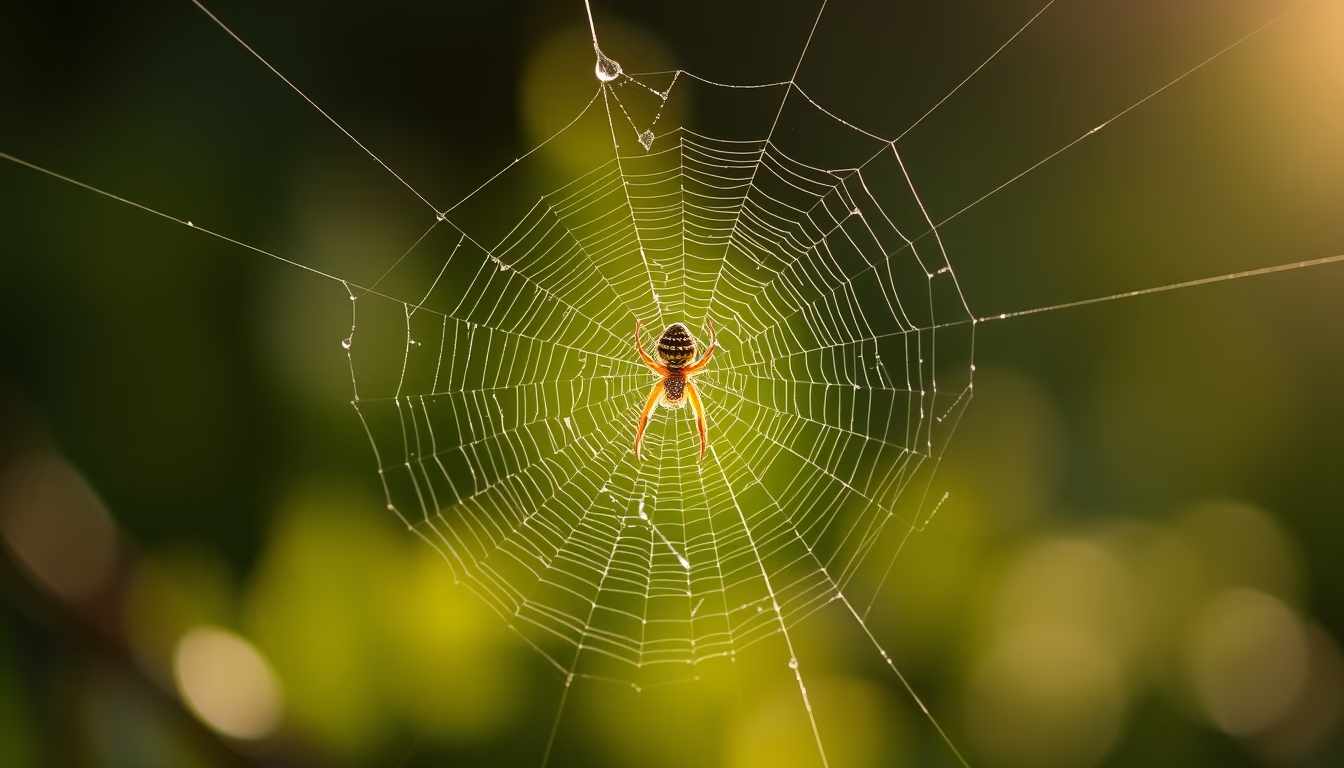
Spider webs covered by morning dew drops create a natural spectacle combining physics, biology, and aesthetics.
About this subject
Spider webs are silk structures produced by spiders, primarily composed of proteins called spidroins. Spider silk is known for its tensile strength comparable to steel and elasticity superior to nylon. When morning dew condenses on the threads, droplets form due to the temperature difference between the web and the humid air. This phenomenon is more common in cold seasons or temperate regions, such as southern Brazil, where relative humidity is high during the early hours.
Each dew drop acts as a spherical lens, refracting light and creating unique visual effects. The distribution of drops is not random: the silk has hydrophilic properties in some areas and hydrophobic in others, influenced by the chemical composition and microstructure of the threads. Studies show that the ability to capture water from mist is an evolutionary adaptation in some spiders, like those of the Uloboridae family, which drink the accumulated dew.
Morning is the ideal time to observe dewy webs because low light intensity and the sun's shallow angle highlight the thin threads. Macro photographers often use magnifying lenses and ring flashes to capture reflections and prismatic colors of the drops. In Brazil, parks and reserves such as Tijuca National Park or Serra do Mar offer favorable settings for this type of recording between May and August.
Beyond beauty, dew on the web has an ecological function: it helps lubricate the threads, maintaining stickiness to capture prey, and provides water for the spider. The longevity of a dewy web is short, as sun and wind quickly evaporate the drops or damage the structure. Therefore, each such image is an ephemeral record of a precise natural process.
Frequently Asked Questions
Why do dew drops stick to spider webs?
The drops adhere due to water surface tension and the hydrophilic properties of certain parts of the silk. The microstructure of the threads also helps retain the droplets.
What is the best time to photograph dewy spider webs?
The best time is just after sunrise, between 5 and 7 AM, when dew is still present and the light is soft and golden.
Are dewy spider webs common throughout Brazil?
They are more common in temperate or subtropical regions, such as the South and Southeast, especially during autumn and winter. In the Northeast, they are rare due to low humidity.
Direct URL
https://pub-c7d6a6ea828543ac903a74a341ccb2e1.r2.dev/imagens/spider-web-morning-dew-magazine-editorial-p2.avifHow to credit
Include a visible link back to UtilizAí. Copy one of the snippets below:
<a href="https://xn--utiliza-eza.com/en/midia/imagens/spider-web-morning-dew-magazine-editorial-p2">Spider web morning dew</a> by <a href="https://xn--utiliza-eza.com">UtilizAí</a>, licensed under <a href="https://creativecommons.org/licenses/by/4.0/">CC BY 4.0</a>.
[Spider web morning dew](https://xn--utiliza-eza.com/en/midia/imagens/spider-web-morning-dew-magazine-editorial-p2) by [UtilizAí](https://xn--utiliza-eza.com), CC BY 4.0
License: CC-BY-4.0