Spectrophotometer cuvettes
1344×768 · AVIF · CC BY 4.0
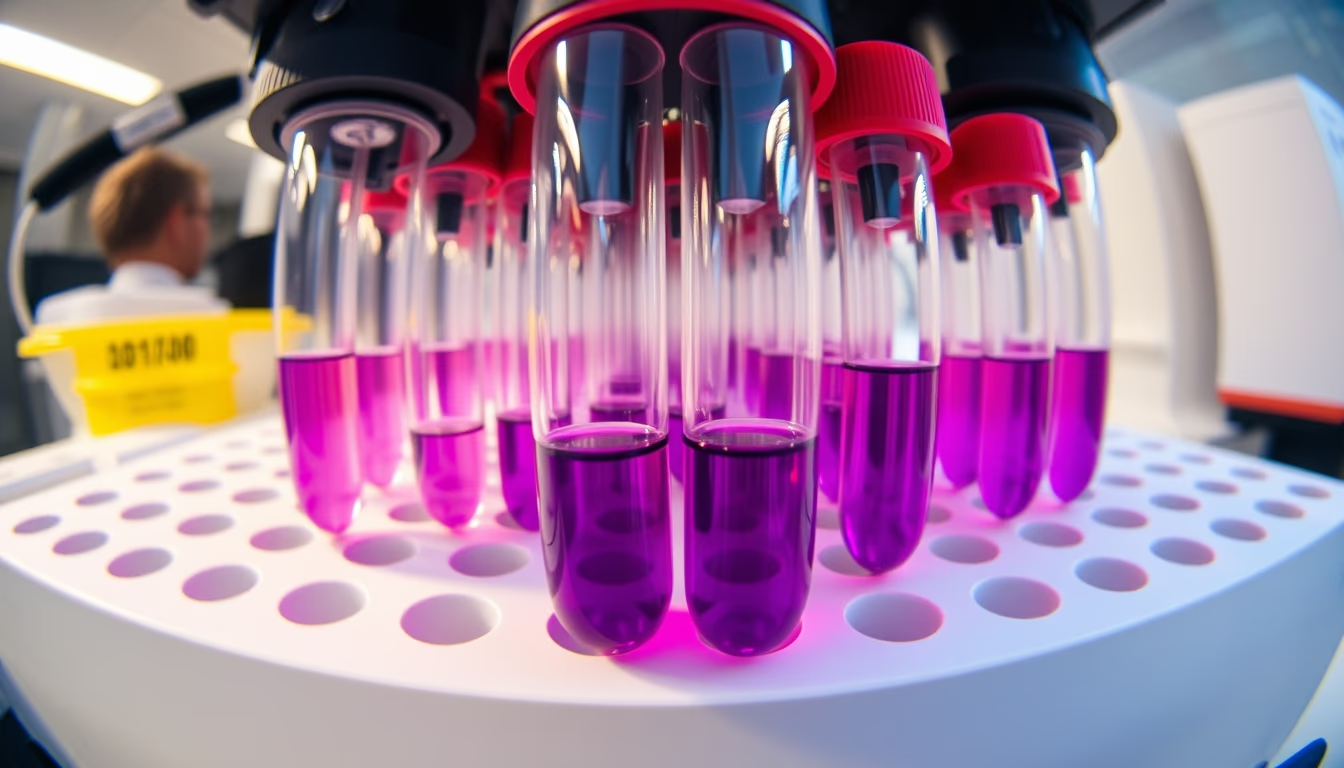
Spectrophotometer cuvettes are optical containers used to hold liquid samples in spectroscopic analysis, with materials varying according to the wavelength range.
About this subject
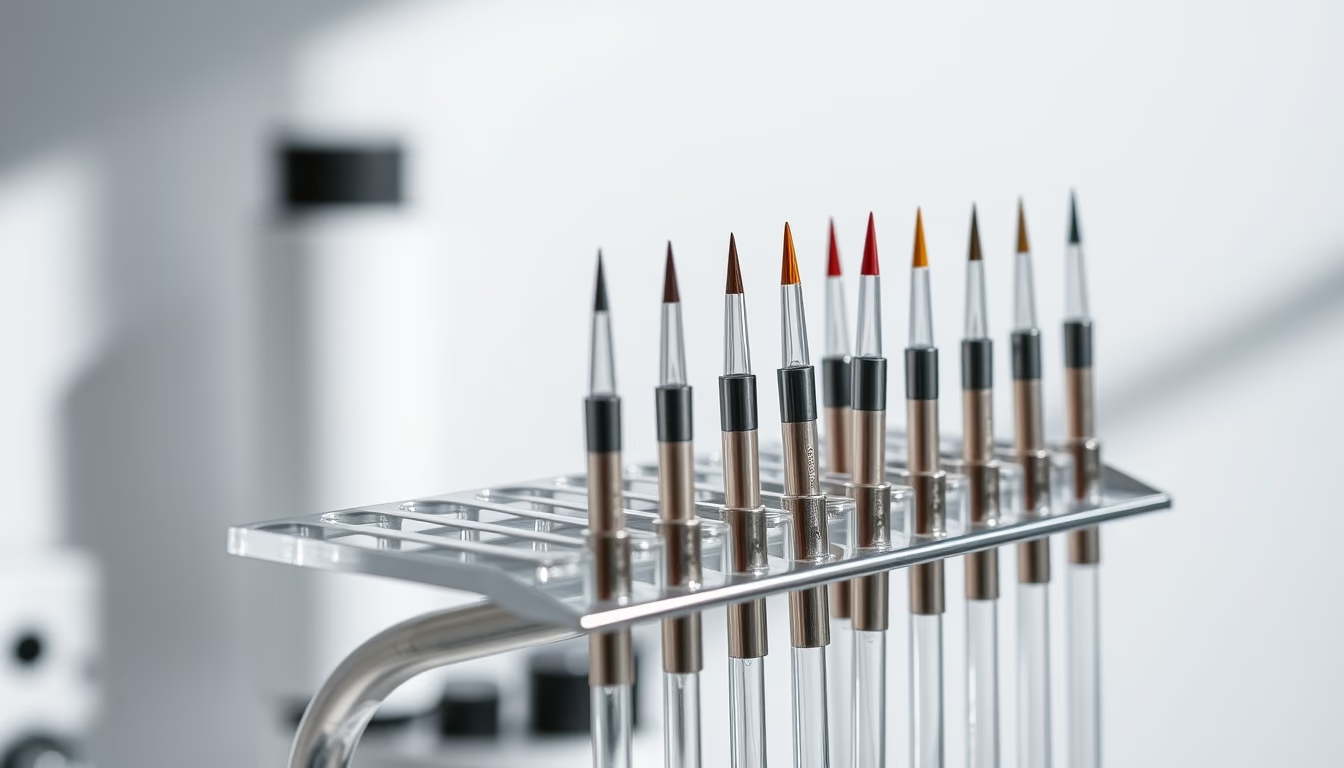
Spectrophotometer cuvettes, also called cells or optical cuvettes, are essential components in chemistry and biology laboratories for absorbance and transmittance measurements. Made from glass, quartz, or plastic (such as polystyrene or polymethyl methacrylate), the choice depends on the spectral range: glass for visible light (380-780 nm), quartz for ultraviolet (below 380 nm), and plastic for disposable visible-light applications. The standard path length is 1 cm, but smaller sizes exist for microvolumes (microcuvettes) or larger ones for diluted samples.
Proper handling of cuvettes is critical for accurate results. They should be held by the frosted (non-polished) sides to avoid fingerprints on the optical window, which interfere with light transmission. Cleaning is done with appropriate solvents (ethanol, acetone) and distilled water, followed by drying with compressed air or in a low-temperature oven. Quartz cuvettes are more expensive and fragile, requiring extra care.
In UV-Vis spectrophotometry, the sample is placed in the cuvette and inserted into the monochromatic light beam. The detector measures transmitted intensity and calculates absorbance according to the Beer-Lambert Law. Cuvettes with lids or septa are used for volatile samples or those that react with oxygen. International standards (e.g., ISO 3810) define dimensions and optical tolerances to ensure reproducibility across laboratories.
A practical curiosity: disposable plastic cuvettes prevent cross-contamination in routine analyses but cannot be reused with aggressive organic solvents. Quartz cuvettes allow measurements in the far ultraviolet (down to 190 nm), essential for determining protein and nucleic acid concentrations. Proper alignment of the cuvette in the spectrophotometer holder is also critical: the indicator mark (arrow or line) must face the light source.
Frequently Asked Questions
What is the difference between glass, quartz, and plastic cuvettes?
Glass cuvettes are used for visible light (380-780 nm), quartz for ultraviolet (190-380 nm), and plastic for disposable visible-light applications. Quartz is more expensive and fragile but essential for UV measurements.
How to properly clean spectrophotometer cuvettes?
Wash with an appropriate solvent (ethanol or acetone), rinse with distilled water, and dry with compressed air or in a low-temperature oven. Avoid detergents that leave residues or scratches on the optical windows.
Why is the 1 cm path length standard?
The 1 cm path length is standard because it provides adequate sensitivity for most UV-Vis analyses, following the Beer-Lambert Law for concentration calculations. Cuvettes with other path lengths are used for very dilute or concentrated samples.
Direct URL
https://pub-c7d6a6ea828543ac903a74a341ccb2e1.r2.dev/imagens/spectrophotometer-cuvettes-fish-eye-wide-angle-fresh5.avifHow to credit
Include a visible link back to UtilizAí. Copy one of the snippets below:
<a href="https://xn--utiliza-eza.com/en/midia/imagens/spectrophotometer-cuvettes-fish-eye-wide-angle-fresh5">Spectrophotometer cuvettes</a> by <a href="https://xn--utiliza-eza.com">UtilizAí</a>, licensed under <a href="https://creativecommons.org/licenses/by/4.0/">CC BY 4.0</a>.
[Spectrophotometer cuvettes](https://xn--utiliza-eza.com/en/midia/imagens/spectrophotometer-cuvettes-fish-eye-wide-angle-fresh5) by [UtilizAí](https://xn--utiliza-eza.com), CC BY 4.0
License: CC-BY-4.0