Solar panel farm in dry Brazilian landscape
1344×768 · AVIF · CC BY 4.0
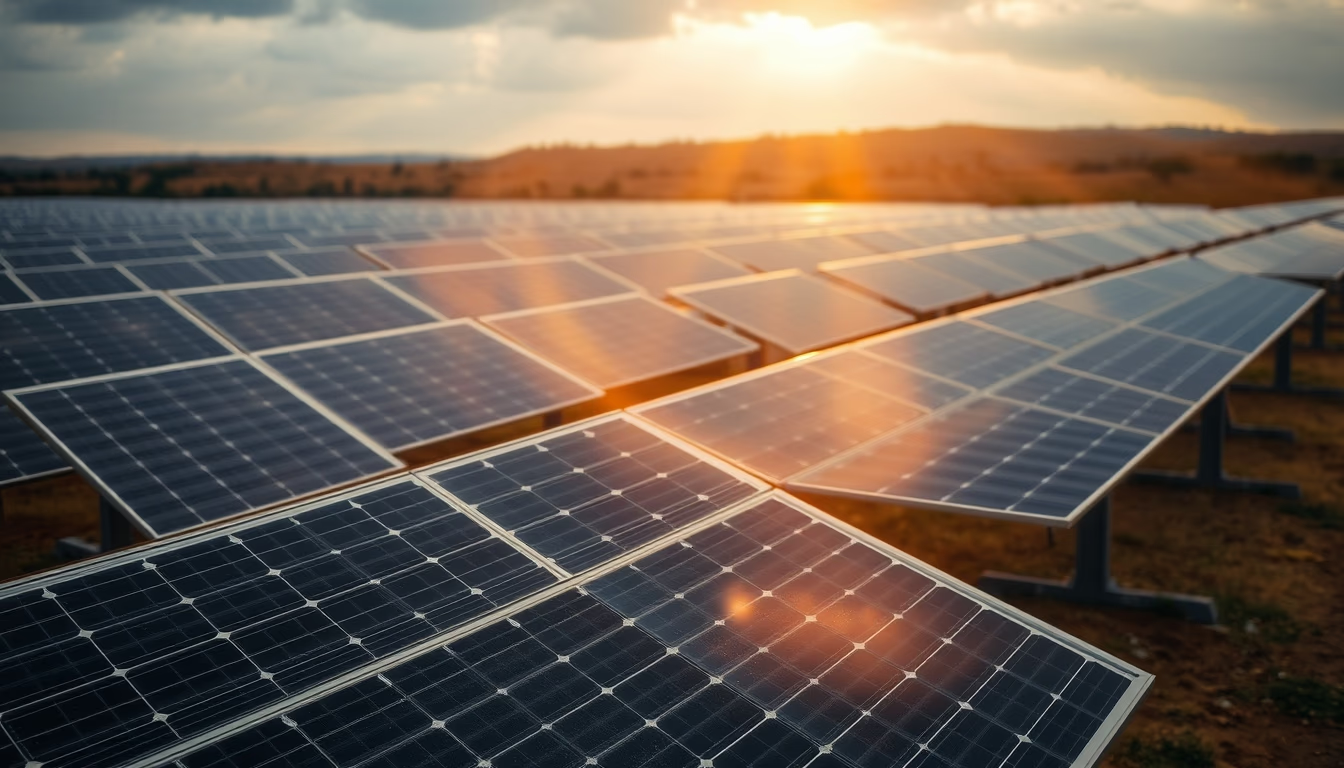
A solar photovoltaic farm in the Brazilian sertão harnesses high irradiation to generate clean energy and boost the local economy.
About this subject
The Brazilian sertão, a semi-arid region in the Northeast, has become a strategic hub for photovoltaic solar energy generation. With solar irradiation levels exceeding 2,000 kWh/m² per year, the area offers ideal conditions for large-scale plants. The image depicts a typical solar farm, with thousands of photovoltaic panels arranged in rows on dry soil and caatinga vegetation, under a cloudy sky suggesting seasonal transition.
Solar energy in the sertão not only harnesses an abundant natural resource but also promotes regional development. Projects like the Juazeiro Solar Complex in Bahia and the Coremas Solar Plant in Paraíba generate direct and indirect jobs, as well as revenue for municipalities with low HDI. Panel installation requires low maintenance and can coexist with agricultural activities such as goat farming and forage palm cultivation.
Despite the potential, challenges remain. Generation intermittency due to cloud cover and the need for storage systems are technical barriers. However, Brazil has invested in transmission lines and incentive policies, such as tax reductions for solar equipment. In 2023, the country's installed solar capacity surpassed 30 GW, with the Northeast accounting for over 40% of that total.
The sertão landscape, once associated with drought and underdevelopment, now symbolizes innovation and sustainability. Integrating solar farms with caatinga conservation, a uniquely Brazilian biome, shows that economic progress and environmental preservation can go hand in hand. Each installed panel represents not only electricity but also hope for a region marked by climatic adversities.
Frequently Asked Questions
Why is the Brazilian sertão ideal for solar farms?
The sertão has high solar irradiation, averaging over 2,000 kWh/m² per year, and low cloud cover, maximizing energy generation. Additionally, flat and low-cost land is widely available.
Does solar energy in the sertão benefit local communities?
Yes, projects generate direct jobs in construction and maintenance, as well as indirect jobs in services and trade. Some energy also supplies remote rural communities, improving quality of life.
How does solar energy coexist with caatinga vegetation?
Panels are installed on elevated structures, allowing light and rain to reach the ground. Native vegetation can be maintained between rows, helping to prevent erosion and preserve the ecosystem.
Direct URL
https://pub-c7d6a6ea828543ac903a74a341ccb2e1.r2.dev/imagens/solar-panel-farm-in-brazilian-sertao-landscape-editorial-overcast-daytime-3.avifHow to credit
Include a visible link back to UtilizAí. Copy one of the snippets below:
<a href="https://xn--utiliza-eza.com/en/midia/imagens/solar-panel-farm-in-brazilian-sertao-landscape-editorial-overcast-daytime-3">Solar panel farm in dry Brazilian landscape</a> by <a href="https://xn--utiliza-eza.com">UtilizAí</a>, licensed under <a href="https://creativecommons.org/licenses/by/4.0/">CC BY 4.0</a>.
[Solar panel farm in dry Brazilian landscape](https://xn--utiliza-eza.com/en/midia/imagens/solar-panel-farm-in-brazilian-sertao-landscape-editorial-overcast-daytime-3) by [UtilizAí](https://xn--utiliza-eza.com), CC BY 4.0
License: CC-BY-4.0