Solar panel farm in dry Brazilian landscape
1344×768 · AVIF · CC BY 4.0
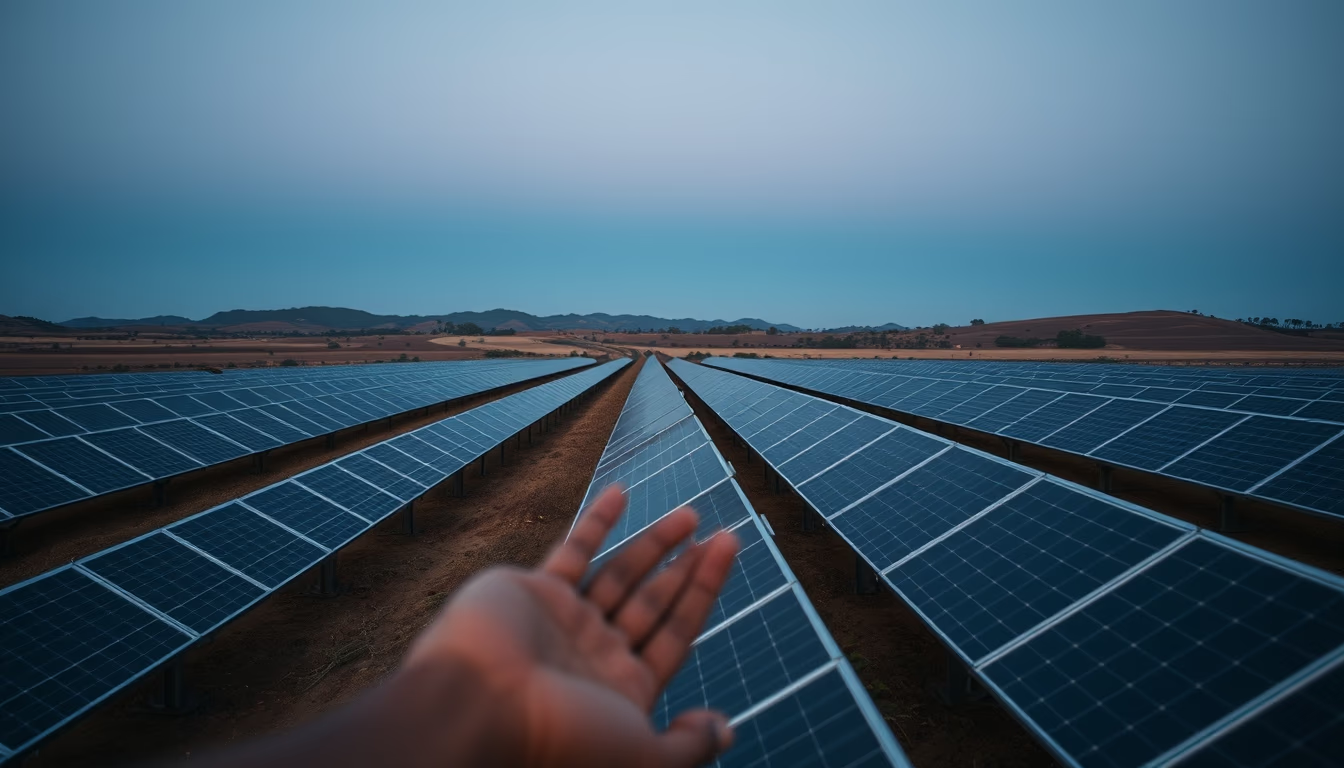
Solar photovoltaic farm in the Brazilian hinterland, with tilted panels under an orange twilight sky.
About this subject
The Brazilian sertão, a semi-arid region covering much of the Northeast, has become a strategic hub for solar power generation. With an average annual solar irradiation above 2,000 kWh/m², one of the highest in the world, the area offers ideal conditions for photovoltaic farms. Large-scale projects such as the Juazeiro Solar Complex (Bahia) and the São Gonçalo Solar Park (Piauí) already operate in the region, helping to diversify Brazil's electricity matrix, which historically relies on hydroelectric dams.
Installing solar panels in the sertão also provides an economic alternative for areas affected by prolonged droughts. While agriculture suffers from water scarcity, solar energy harnesses the region's most abundant resource: the sun. Many plants are built on previously degraded pastureland, generating local jobs and income for small landowners through leasing. Brazil's installed solar capacity surpassed 30 GW in 2023, with the Northeast accounting for about 40% of that total.
Technically, the tilted panels (with angles between 15° and 30°) optimize solar radiation capture throughout the year, considering the local latitude. The twilight hour, with diffuse light and cooler temperatures, reduces losses from module heating, a phenomenon that can decrease efficiency by up to 0.5% per degree Celsius above 25°C. Automated cleaning systems are common to remove the typical sertão dust, which can reduce generation by up to 7% per month.
Beyond energy benefits, solar farms contribute to decarbonization. Each installed MW avoids about 1,200 tons of CO₂ emissions per year compared to fossil fuel thermal generation. Brazil, a signatory to the Paris Agreement, sees solar expansion as a key tool to meet its climate goals while bringing development to one of the country's most vulnerable regions.
Frequently Asked Questions
Why is the Brazilian sertão ideal for solar energy?
The sertão has high solar irradiation, averaging over 2,000 kWh/m² per year, low cloud cover, and vast flat areas, all factors that maximize photovoltaic panel efficiency.
What are the largest solar parks in Brazil?
Notable ones include the Juazeiro Solar Complex (BA) with over 400 MW capacity, and the São Gonçalo Solar Park (PI), one of the largest in Latin America at over 600 MW.
Does solar energy in the sertão generate local jobs?
Yes, the construction and operation of solar plants employ local labor, and also generate income for rural landowners through land leasing.
Direct URL
https://pub-c7d6a6ea828543ac903a74a341ccb2e1.r2.dev/imagens/solar-panel-farm-in-brazilian-sertao-landscape-closeup-twilight-4.avifHow to credit
Include a visible link back to UtilizAí. Copy one of the snippets below:
<a href="https://xn--utiliza-eza.com/en/midia/imagens/solar-panel-farm-in-brazilian-sertao-landscape-closeup-twilight-4">Solar panel farm in dry Brazilian landscape</a> by <a href="https://xn--utiliza-eza.com">UtilizAí</a>, licensed under <a href="https://creativecommons.org/licenses/by/4.0/">CC BY 4.0</a>.
[Solar panel farm in dry Brazilian landscape](https://xn--utiliza-eza.com/en/midia/imagens/solar-panel-farm-in-brazilian-sertao-landscape-closeup-twilight-4) by [UtilizAí](https://xn--utiliza-eza.com), CC BY 4.0
License: CC-BY-4.0