Smart contract code on monitor with solidity syntax highlighted
1344×768 · AVIF · CC BY 4.0

Smart contract code in Solidity displayed on a monitor with syntax highlighting, in a blockchain development environment.
About this subject
Solidity is the predominant programming language for developing smart contracts on the Ethereum platform, created in 2014 by Gavin Wood and later developed by the Ethereum Foundation. It is a high-level, contract-oriented language with syntax inspired by JavaScript, C++, and Python, designed to run on the Ethereum Virtual Machine (EVM). The image shows a monitor displaying Solidity code with colorful syntax highlighting, typical of integrated development environments (IDEs) like Remix, Visual Studio Code with extensions, or Hardhat. Syntax highlighting helps programmers quickly identify variables, functions, modifiers, and control structures, reducing errors and boosting productivity.
Smart contracts are self-executing programs that automate agreements without intermediaries, forming the basis for decentralized applications (dApps), non-fungible tokens (NFTs), and decentralized finance (DeFi). Ethereum, launched in 2015, was the first blockchain to support general-purpose smart contracts, but today other blockchains like BNB Smart Chain, Polygon, and Avalanche also use Solidity. The language has undergone several versions; the current one is 0.8.x, which introduced improvements such as automatic overflow and underflow checking and the removal of unsafe transfer functions.
In Brazil, the use of Solidity has grown with the increase in blockchain projects, such as tokenization of real estate assets and the creation of social currencies. Hackathons and online courses, like those from Alura and DIO, teach Solidity to Brazilian developers. Security is a critical aspect: bugs in smart contracts can lead to million-dollar losses, such as the 2016 DAO attack that resulted in the Ethereum hard fork. Therefore, static analysis tools and testing are essential in the development workflow.
Fun fact: the name "Solidity" was chosen by community suggestion, referring to the solidity of the code. The language is open-source and maintained by the Ethereum Foundation, with contributions from global developers.
Frequently Asked Questions
What is Solidity and what is it used for?
Solidity is a high-level programming language used to write smart contracts on Ethereum Virtual Machine (EVM) compatible blockchains like Ethereum, Polygon, and BNB Smart Chain. It enables the creation of decentralized applications, tokens, and NFTs.
What are the main features of Solidity?
Solidity is contract-oriented, supporting inheritance, libraries, and complex types. It includes function modifiers, events, and error handling. The current version (0.8.x) has automatic overflow and underflow checking.
Where can I learn Solidity in Brazil?
Platforms like Alura, DIO (Digital Innovation One), and Udemy offer Solidity courses in Portuguese. There are also bootcamps and hackathons promoted by Brazilian blockchain communities, such as Ethereum Rio.
Direct URL
https://pub-c7d6a6ea828543ac903a74a341ccb2e1.r2.dev/imagens/smart-contract-code-on-monitor-with-solidity-syntax-highlighted-editorial-portrait-twilight-blue-hour.avifHow to credit
Include a visible link back to UtilizAí. Copy one of the snippets below:
<a href="https://xn--utiliza-eza.com/en/midia/imagens/smart-contract-code-on-monitor-with-solidity-syntax-highlighted-editorial-portrait-twilight-blue-hour">Smart contract code on monitor with solidity syntax highlighted</a> by <a href="https://xn--utiliza-eza.com">UtilizAí</a>, licensed under <a href="https://creativecommons.org/licenses/by/4.0/">CC BY 4.0</a>.
[Smart contract code on monitor with solidity syntax highlighted](https://xn--utiliza-eza.com/en/midia/imagens/smart-contract-code-on-monitor-with-solidity-syntax-highlighted-editorial-portrait-twilight-blue-hour) by [UtilizAí](https://xn--utiliza-eza.com), CC BY 4.0
License: CC-BY-4.0
Tags
Related images
 Smart contract code on monitor with solidity syntax highlighted
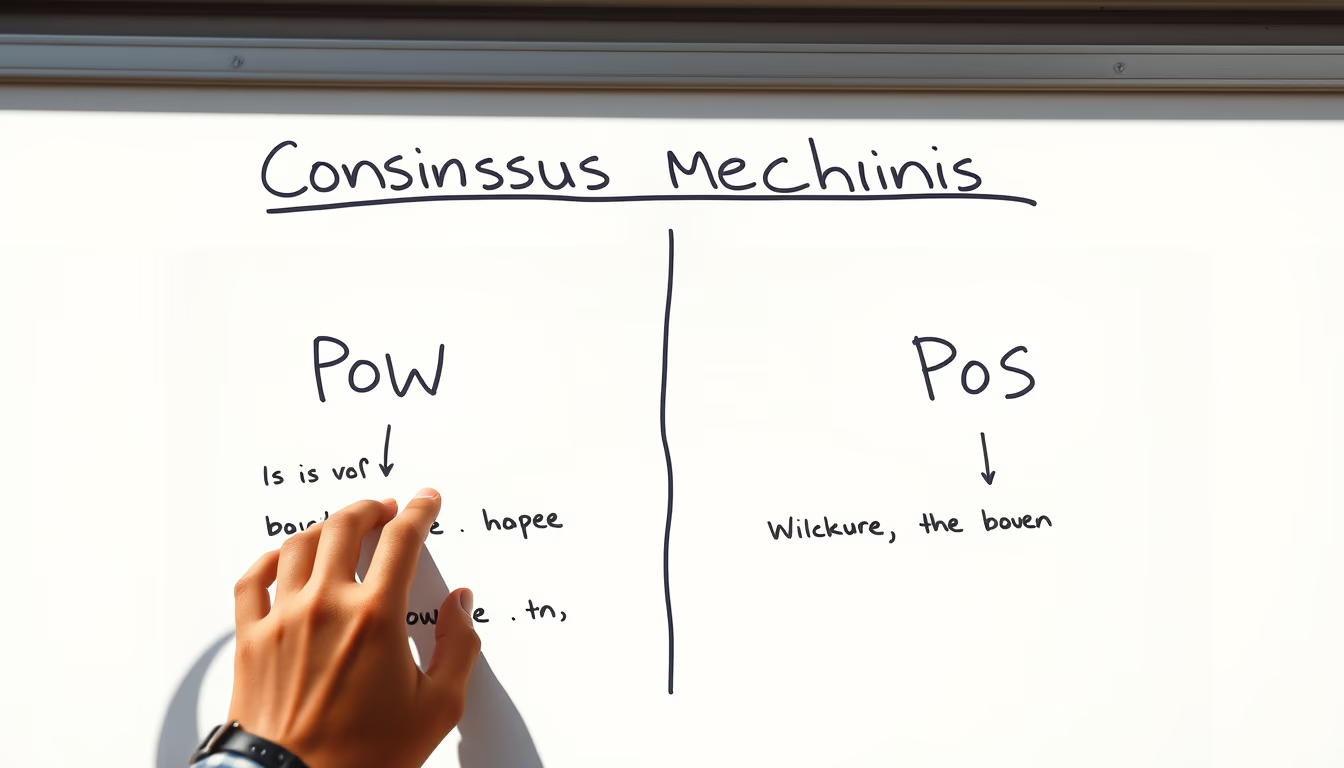 Consensus mechanism diagram on whiteboard showing PoW vs PoS
 Distributed ledger multiple servers in data center
 Hash function visualization cryptographic equations on glass screen
 Hash function visualization cryptographic equations on glass screen
 Hash function visualization cryptographic equations on glass screen