Smart contract code on monitor with solidity syntax highlighted
1344×768 · AVIF · CC BY 4.0
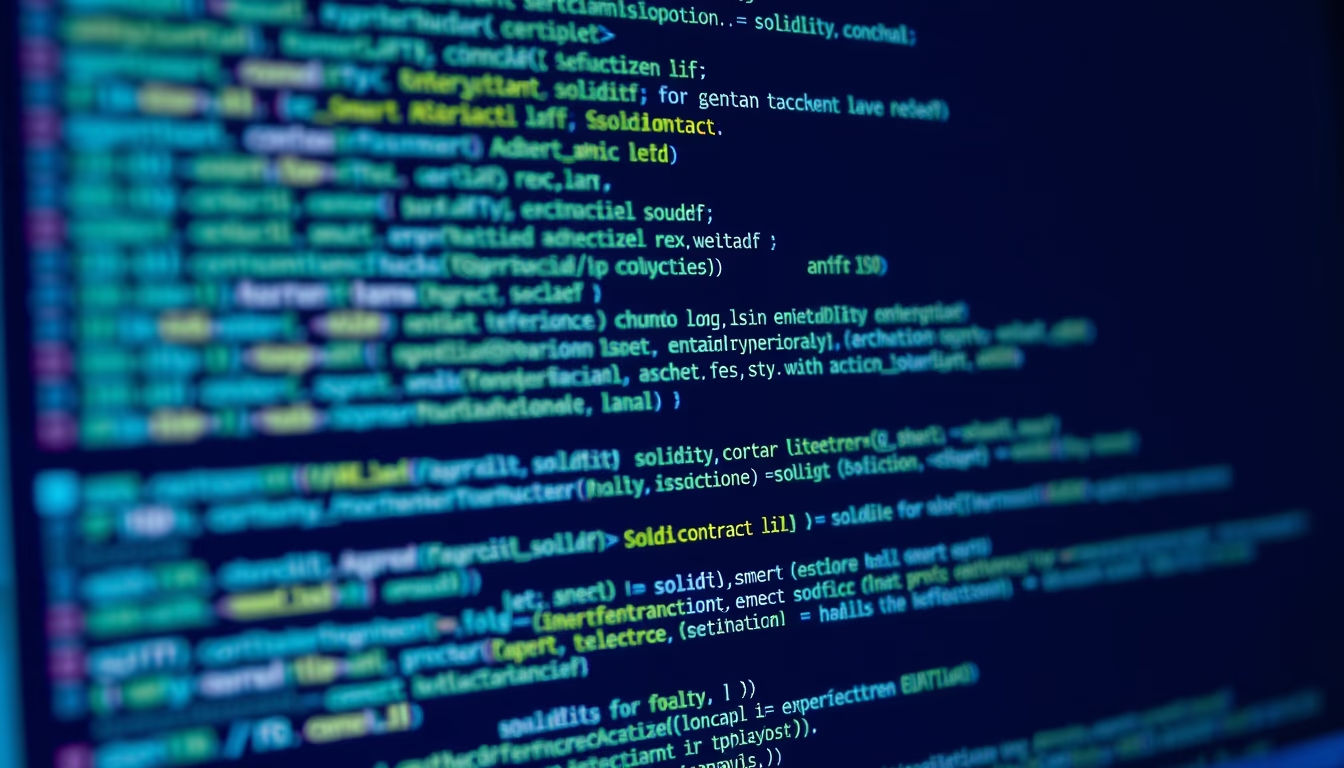
Smart contract code written in Solidity displayed on a studio monitor, with syntax highlighting for readability and auditing.
About this subject
Solidity is a high-level, contract-oriented programming language created specifically for the Ethereum platform. It was developed by Gavin Wood, Christian Reitwiessner, and other members of the Ethereum team in 2014 to enable the implementation of smart contracts on the blockchain. Solidity's syntax is influenced by C++, Python, and JavaScript, making it accessible to developers familiar with these languages.
Smart contracts written in Solidity are self-executing code that runs on the Ethereum Virtual Machine (EVM). They enable the creation of decentralized applications (dApps) for various purposes, such as decentralized finance (DeFi), non-fungible tokens (NFTs), voting systems, and more. Syntax highlighting, with colors for keywords, variables, and functions, is essential for code readability and maintenance, especially in complex projects.
Security in smart contracts is critical, as bugs can lead to irreversible financial losses. Therefore, static analysis tools, linters, and auditing practices are widely used. Syntax highlighting helps developers quickly identify parts of code that need review. Additionally, Ethereum has undergone significant upgrades, such as the transition to Proof of Stake (The Merge), which impact Solidity development.
Interestingly, Solidity is not the only language for smart contracts; alternatives include Vyper (also for Ethereum) and Rust for blockchains like Solana and Polkadot. However, Solidity remains the most adopted due to its maturity, extensive documentation, and active community. The code highlighted in the image likely includes functions like 'transfer', 'balanceOf', or 'mint', common in ERC-20 or ERC-721 token contracts.
Frequently Asked Questions
What is Solidity?
Solidity is a smart contract programming language for the Ethereum platform. It was created in 2014 and is the primary language for developing decentralized applications on the Ethereum blockchain.
Why is syntax highlighting important in Solidity code?
Syntax highlighting improves code readability, allowing developers to quickly identify elements such as keywords, variables, and functions. This is crucial for auditing and maintaining smart contracts, where errors can have financial consequences.
What are the main uses of smart contracts in Solidity?
Smart contracts in Solidity are used in decentralized finance (DeFi), non-fungible tokens (NFTs), voting systems, blockchain games, and more. They automate agreements without intermediaries, ensuring transparency and security.
Direct URL
https://pub-c7d6a6ea828543ac903a74a341ccb2e1.r2.dev/imagens/smart-contract-code-on-monitor-with-solidity-syntax-highlighted-closeup-macro-shot-studio-professional-lighting.avifHow to credit
Include a visible link back to UtilizAí. Copy one of the snippets below:
<a href="https://xn--utiliza-eza.com/en/midia/imagens/smart-contract-code-on-monitor-with-solidity-syntax-highlighted-closeup-macro-shot-studio-professional-lighting">Smart contract code on monitor with solidity syntax highlighted</a> by <a href="https://xn--utiliza-eza.com">UtilizAí</a>, licensed under <a href="https://creativecommons.org/licenses/by/4.0/">CC BY 4.0</a>.
[Smart contract code on monitor with solidity syntax highlighted](https://xn--utiliza-eza.com/en/midia/imagens/smart-contract-code-on-monitor-with-solidity-syntax-highlighted-closeup-macro-shot-studio-professional-lighting) by [UtilizAí](https://xn--utiliza-eza.com), CC BY 4.0
License: CC-BY-4.0
Tags
Related images
 Smart contract code on monitor with solidity syntax highlighted
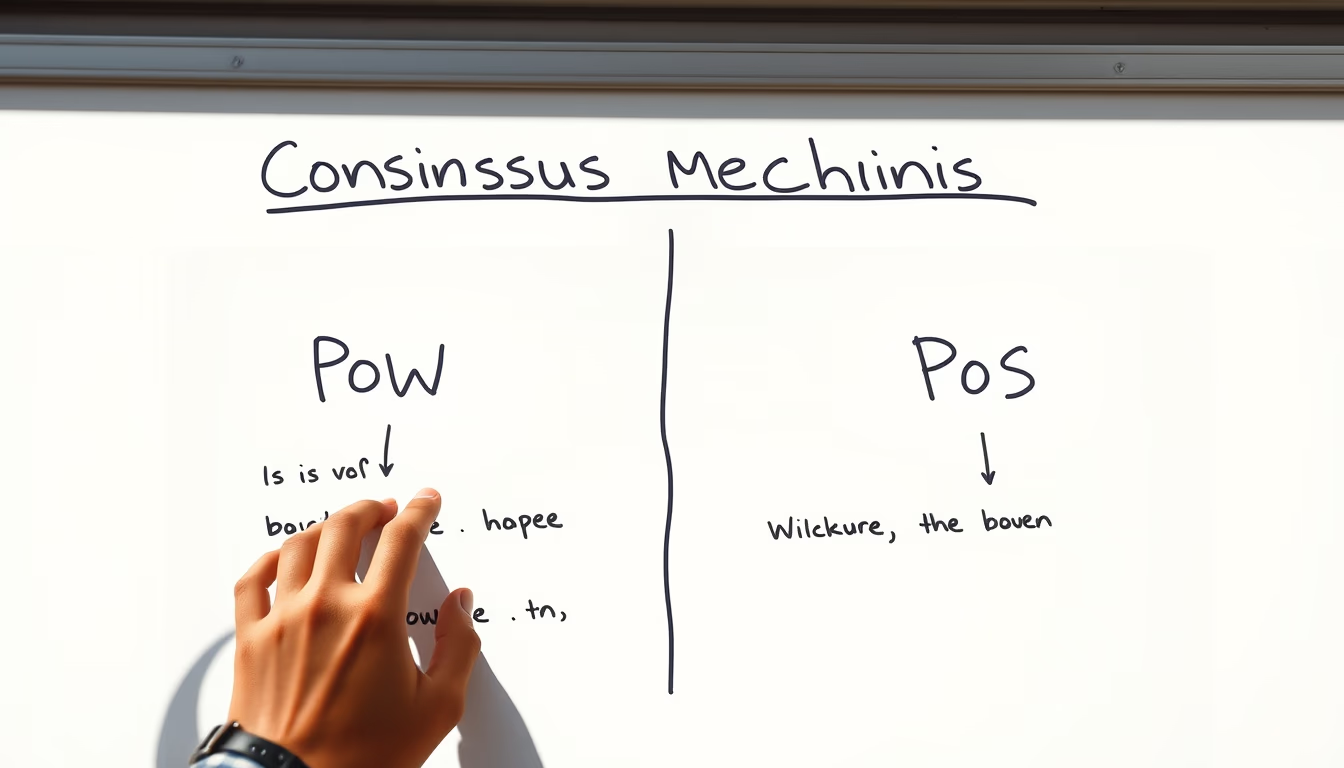 Consensus mechanism diagram on whiteboard showing PoW vs PoS
 Distributed ledger multiple servers in data center
 Hash function visualization cryptographic equations on glass screen
 Hash function visualization cryptographic equations on glass screen
 Hash function visualization cryptographic equations on glass screen