Runes viking stone
1344×768 · AVIF · CC BY 4.0
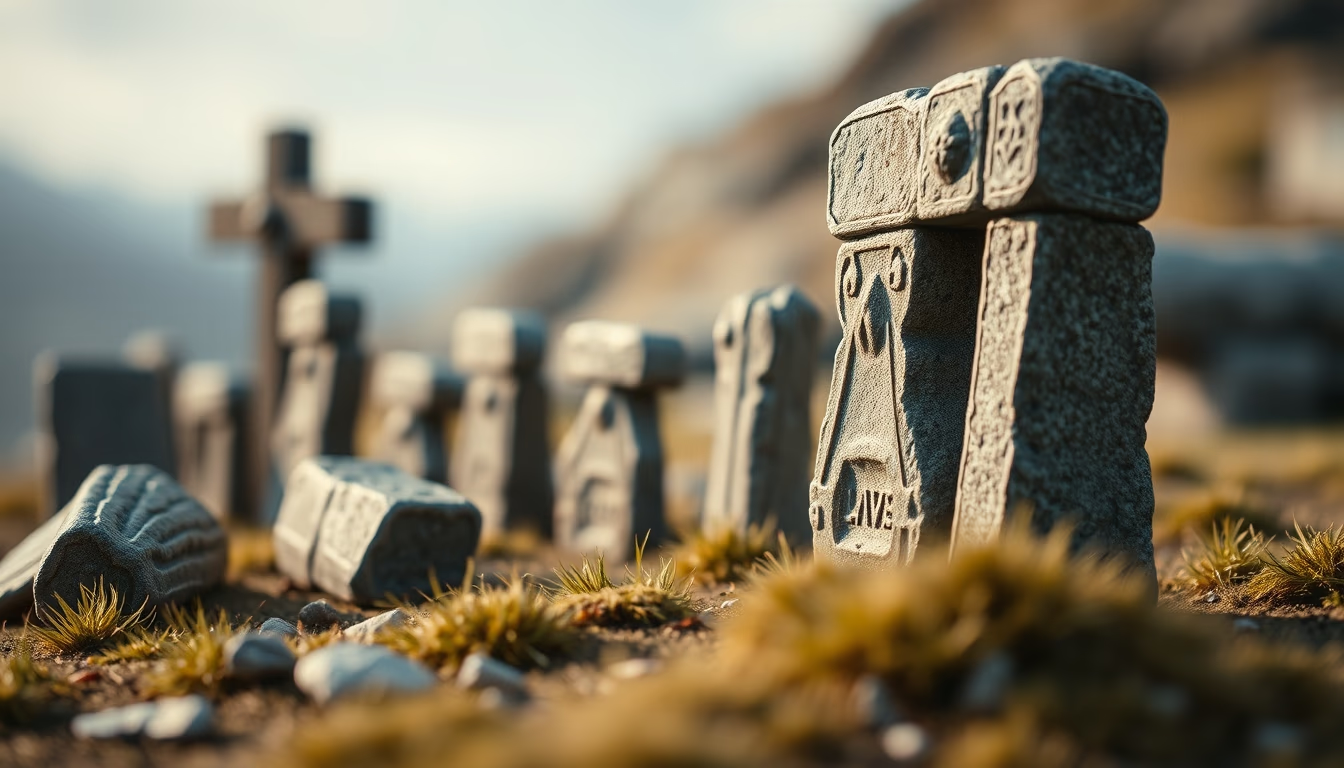
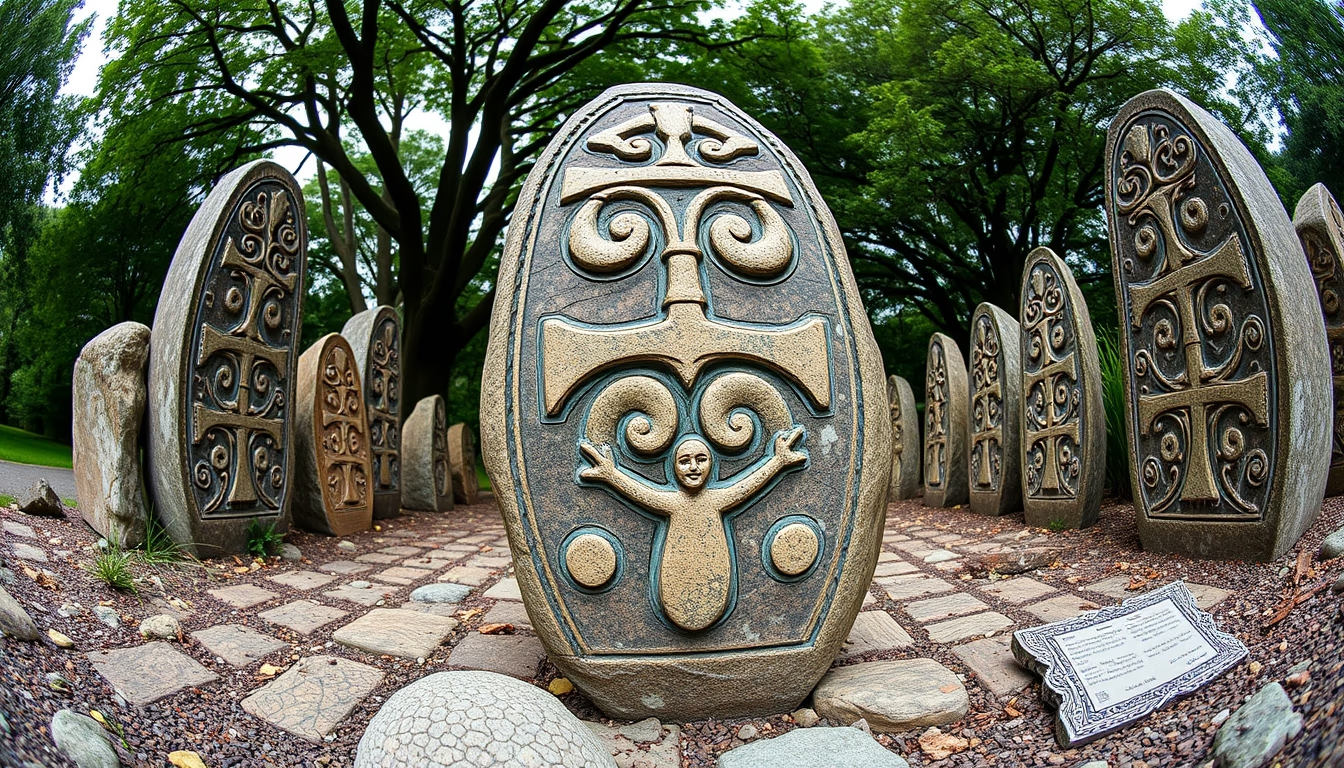
Viking runestone displays inscriptions in Younger Futhark runes, used in Scandinavia during the Viking Age (8th-11th centuries).
About this subject
Runestones are stone monuments erected mainly during the Viking Age, between the 8th and 11th centuries, in Scandinavia. They served as memorials to honor deceased individuals, mark territories, or celebrate important events such as conquests and conversions to Christianity. The majority of known runestones are in Sweden, with over 2,500 recorded examples, followed by Denmark and Norway. The inscriptions were made in runes, Germanic alphabets like the Elder Futhark (used until the 8th century) and the Younger Futhark, which simplified the system to 16 characters during the Viking Age.
The carving technique involved chisel and hammer on granite or sandstone surfaces, often featuring decorative interlace patterns. Some stones, like the Rök Runestone (Sweden), contain long poetic texts and mythological references, while others, like the Jelling stones (Denmark), mark the Christianization of the region. The content ranges from family tributes to historical records, offering a window into Norse society and beliefs.
The tilt-shift miniature photographic style applied to the image gives the runestone a miniature appearance but does not alter the historical significance of the object. In reality, these stones can measure 1 to 4 meters in height and are often found on slopes, in cemeteries, or near ancient roads. Runestone preservation depends on climate and natural wear, and many have been rediscovered and studied by archaeologists since the 19th century.
Interestingly, the tradition of raising runestones declined after the Christianization of Scandinavia, but it influenced modern popular culture, appearing in films, series, and games. The study of runes also reveals linguistic connections between Old Norse and other Germanic languages, helping to understand Viking migration and influence across Europe.
Frequently Asked Questions
What are runestones?
They are stone monuments with runic inscriptions, mainly erected in Scandinavia during the Viking Age to honor the dead, mark territories, or record events.
What is the difference between Elder and Younger Futhark?
The Elder Futhark has 24 characters and was used until the 8th century. The Younger Futhark, with 16 runes, was adopted during the Viking Age, being more simplified.
Where are most runestones found?
Sweden has the highest concentration, with over 2,500 examples. Denmark and Norway also have thousands, totaling about 6,000 known runestones.
Direct URL
https://pub-c7d6a6ea828543ac903a74a341ccb2e1.r2.dev/imagens/runes-viking-stone-tilt-shift-miniature-fresh0.avifHow to credit
Include a visible link back to UtilizAí. Copy one of the snippets below:
<a href="https://xn--utiliza-eza.com/en/midia/imagens/runes-viking-stone-tilt-shift-miniature-fresh0">Runes viking stone</a> by <a href="https://xn--utiliza-eza.com">UtilizAí</a>, licensed under <a href="https://creativecommons.org/licenses/by/4.0/">CC BY 4.0</a>.
[Runes viking stone](https://xn--utiliza-eza.com/en/midia/imagens/runes-viking-stone-tilt-shift-miniature-fresh0) by [UtilizAí](https://xn--utiliza-eza.com), CC BY 4.0
License: CC-BY-4.0