Maya glyphs codex
1344×768 · AVIF · CC BY 4.0

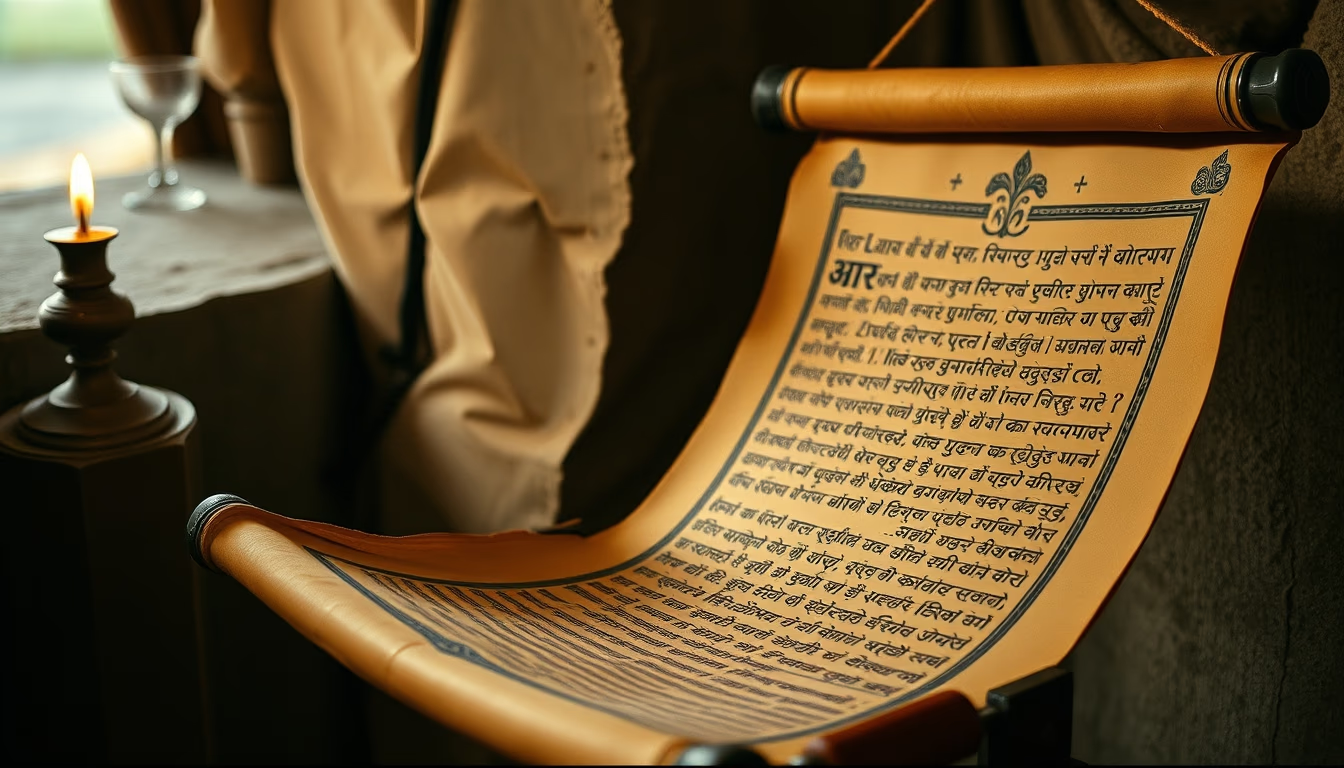
Maya glyphs represent one of the most complex writing systems of Mesoamerica, preserved in bark-paper codices.
About this subject
Maya writing was a logosyllabic system comprising about 800 glyphs, combining logograms (symbols representing entire words) and syllabograms (phonetic signs). Unlike the Western alphabet, each glyph could represent a syllable or a concept. Maya scribes recorded historical events, religious rituals, astronomical observations, and commercial transactions on various supports, such as stone monuments (stelae), pottery, and especially codices made from fig bark (amatl). Only four pre-Columbian Maya codices survived the destruction by the conquistadors and time: the Dresden Codex, the Madrid Codex, the Paris Codex, and the Grolier Codex (the authenticity of which is debated). The most famous is the Dresden Codex, from the 11th or 12th century, containing detailed astronomical tables, including eclipse predictions and the cycle of the planet Venus, essential for the Maya calendar.
The decipherment of Maya glyphs was a long, collaborative process. In the 19th century, figures like John Lloyd Stephens and Frederick Catherwood documented ruins, but major advances came in the 20th century. Russian linguist Yuri Knórosov proposed in the 1950s that Maya writing was largely phonetic, an idea initially rejected by epigraphers such as Eric Thompson. Knórosov based his work on the manuscript of Diego de Landa, a Spanish bishop who recorded the Maya “alphabet” in the 16th century. From the 1970s onward, a new generation of scholars, including Linda Schele and David Stuart, confirmed the phonetic approach and deciphered hundreds of glyphs, revealing previously unknown historical narratives about dynasties and battles.
The cultural importance of Maya glyphs goes beyond language: they are a window into the Maya worldview, their gods, rituals, and mathematical knowledge. For instance, the Maya numeral system was vigesimal (base 20) and used the concept of zero, a rarity in ancient civilizations. Glyphs also recorded the Long Count, the 260-day calendar (Tzolk'in), and the 365-day solar calendar (Haab'). Today, Maya communities in Guatemala and Mexico seek to revitalize the use of the original script, although the descendant spoken language is Yucatec Maya. The study of glyphs continues, with new discoveries made by epigraphers using technologies such as long-exposure photography and multispectral imaging to read worn or hidden texts.
Frequently Asked Questions
How many glyphs are there in Maya writing?
The Maya writing system is estimated to contain about 800 glyphs, of which roughly 200 are syllabograms (phonetic) and the rest are logograms (representing words or concepts).
What is the Dresden Codex and why is it important?
The Dresden Codex is one of the four surviving pre-Columbian Maya codices, dating from the 11th or 12th century. It is famous for its detailed astronomical tables, including the Venus cycle and eclipse predictions, showcasing advanced Maya astronomical knowledge.
Has Maya writing been completely deciphered?
Not completely. Although about 60-70% of known glyphs are readable, many are still not understood. Decipherment continues, with new discoveries based on technologies such as multispectral imaging and long-exposure photography.
Direct URL
https://pub-c7d6a6ea828543ac903a74a341ccb2e1.r2.dev/imagens/maya-glyphs-codex-long-exposure-fresh18.avifHow to credit
Include a visible link back to UtilizAí. Copy one of the snippets below:
<a href="https://xn--utiliza-eza.com/en/midia/imagens/maya-glyphs-codex-long-exposure-fresh18">Maya glyphs codex</a> by <a href="https://xn--utiliza-eza.com">UtilizAí</a>, licensed under <a href="https://creativecommons.org/licenses/by/4.0/">CC BY 4.0</a>.
[Maya glyphs codex](https://xn--utiliza-eza.com/en/midia/imagens/maya-glyphs-codex-long-exposure-fresh18) by [UtilizAí](https://xn--utiliza-eza.com), CC BY 4.0
License: CC-BY-4.0