Rotary dial phone
1344×768 · AVIF · CC BY 4.0
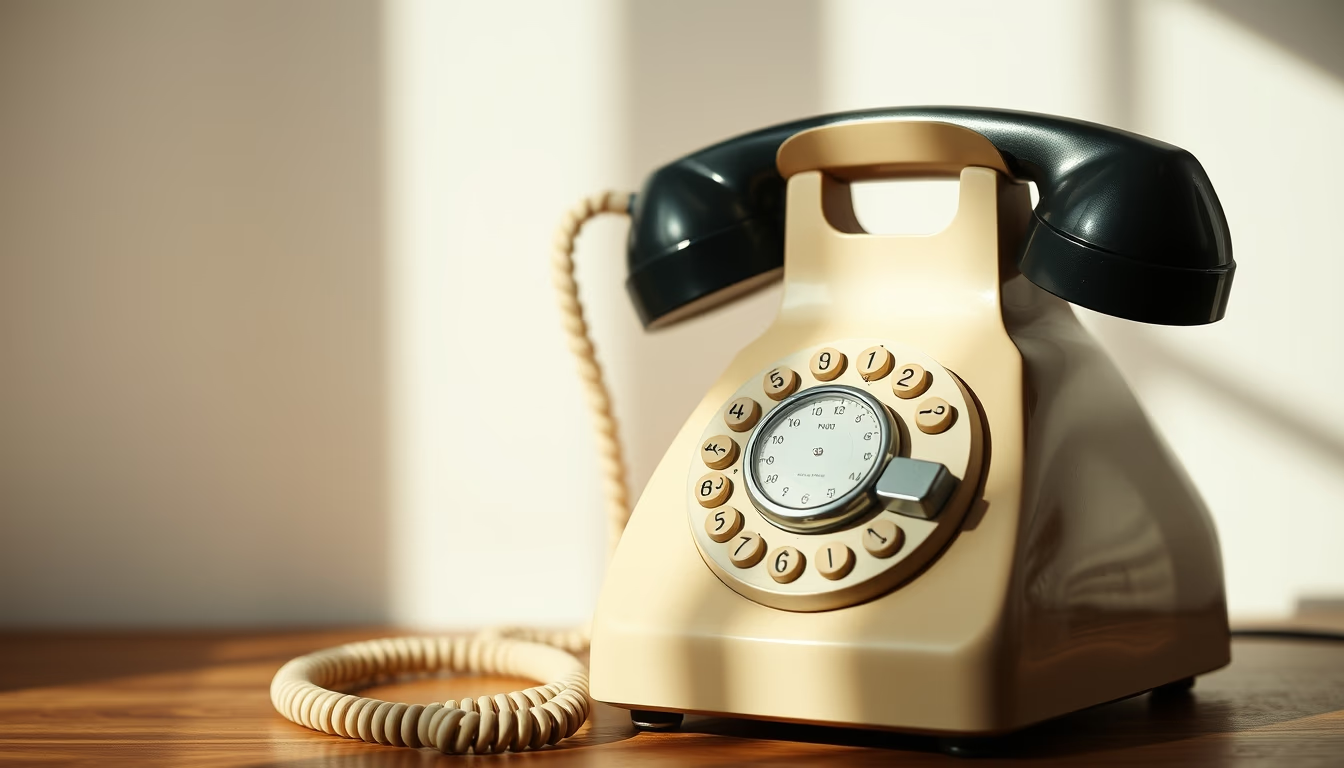
Rotary dial phone, an icon of 20th-century telecommunications, defined decades of analog communication before the digital age.
About this subject
The rotary dial phone, also known as the dial telephone, revolutionized communication by replacing operator-assisted calls with an automated dialing system. Its mechanism is based on generating electrical pulses that correspond to the dialed digits. Each number from 1 to 9 sends a specific number of pulses, while 0 sends ten pulses. This pulse dialing system was invented by Almon Strowger in 1891, an undertaker looking to eliminate human intervention in telephone connections.
The iconic design of the rotary dial phone became ubiquitous in homes and offices throughout much of the 20th century. Made of Bakelite or plastic, these devices varied in color and style but retained the rotating disk as the central element. Dialing required the user to insert a finger into the hole corresponding to the number and rotate the disk until it hit the stop, producing a characteristic clicking sound. This process, though slower than modern keypads, was intuitive and reliable.
Culturally, the rotary phone is a symbol of an analog era, appearing in films, TV shows, and photographs portraying the mid-20th century. Its rounded shape and mechanical disk motion are often associated with nostalgia and vintage aesthetics. With the introduction of touch-tone (DTMF) dialing in the 1960s, rotary phones gradually lost ground, but many countries still maintained pulse systems until the turn of the millennium. Today, they are collector's items and decorative pieces that evoke the history of telecommunications.
Interestingly, the rotary dial design has even influenced smartphone interfaces, with apps that simulate the gesture of rotating a disk to dial. The durability of these devices is remarkable: even decades after manufacture, many still work if connected to a compatible phone line. The rotary dial phone represents not just technology, but a milestone in the democratization of instant communication.
Frequently Asked Questions
How does a rotary dial phone work?
A rotary dial phone uses pulse dialing. When you rotate the dial, a switch opens and closes an electrical circuit, generating pulses that correspond to the dialed digit. For example, number 1 sends one pulse, 2 sends two, and so on, with 0 sending ten pulses. The telephone exchange interprets these pulses to connect the call.
When was the rotary dial phone invented?
The first rotary dial phone was invented by Almon Strowger in 1891. Strowger, an undertaker from Kansas City, created the system to automate calls and prevent operators from misdirecting them. The design was patented and began appearing in telephone exchanges in the early 20th century.
Why did rotary dial phones become obsolete?
Rotary dial phones were replaced by push-button (touch-tone) models starting in the 1960s. Tone dialing is faster and more reliable, and it enables additional services like automated menus. Pulse technology became outdated as telephone exchanges fully migrated to the DTMF system.
Direct URL
https://pub-c7d6a6ea828543ac903a74a341ccb2e1.r2.dev/imagens/rotary-dial-phone-minimalist-composition-p2.avifHow to credit
Include a visible link back to UtilizAí. Copy one of the snippets below:
<a href="https://xn--utiliza-eza.com/en/midia/imagens/rotary-dial-phone-minimalist-composition-p2">Rotary dial phone</a> by <a href="https://xn--utiliza-eza.com">UtilizAí</a>, licensed under <a href="https://creativecommons.org/licenses/by/4.0/">CC BY 4.0</a>.
[Rotary dial phone](https://xn--utiliza-eza.com/en/midia/imagens/rotary-dial-phone-minimalist-composition-p2) by [UtilizAí](https://xn--utiliza-eza.com), CC BY 4.0
License: CC-BY-4.0