Roman mosaic floor
1344×768 · AVIF · CC BY 4.0
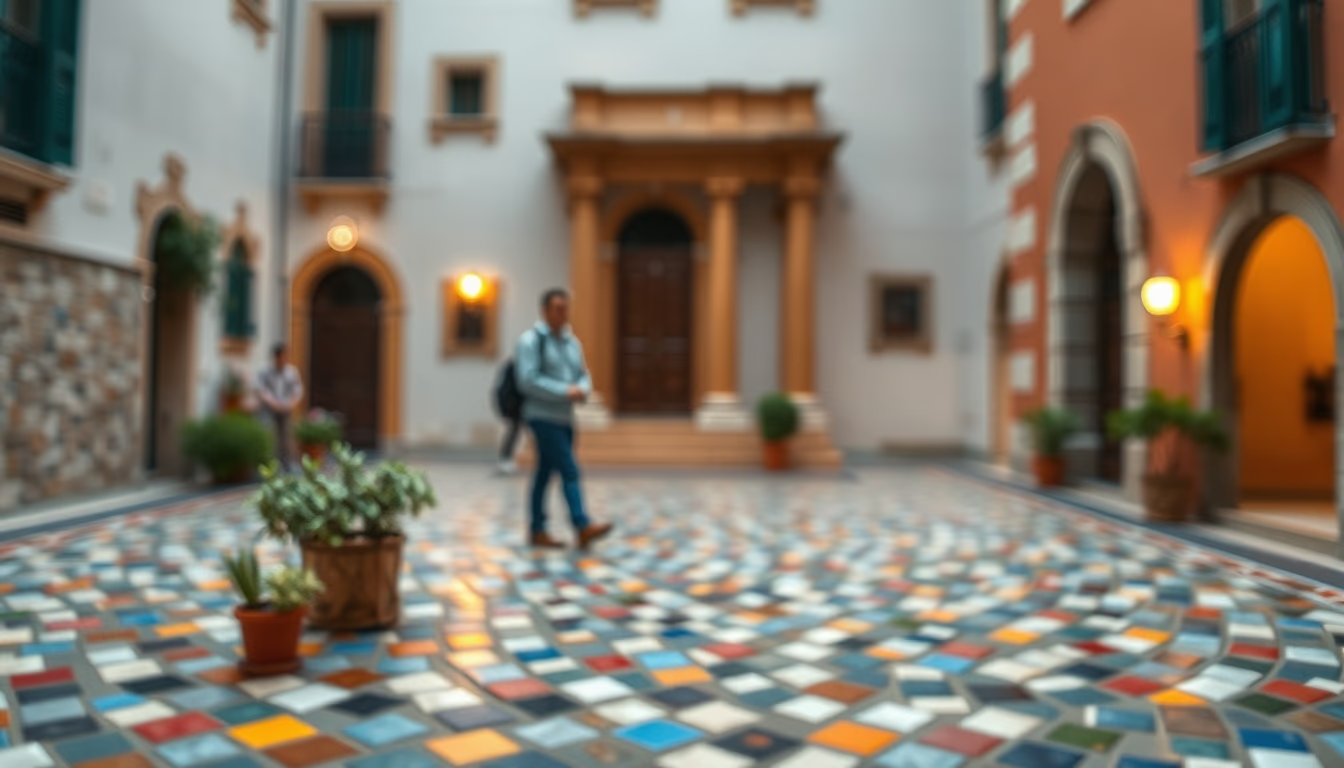
Roman mosaics, like this tilt-shift miniature floor, reveal the technical and artistic sophistication of the Roman Empire from the 2nd century BCE to the 5th century CE.
About this subject
Roman mosaics were crafted using small pieces of stone, glass, or ceramic called tesserae, which formed geometric patterns, mythological figures, or daily life scenes. The technique peaked during the Roman Empire, especially between the 2nd century BCE and the 5th century CE, decorating villas, baths, and temples across the Mediterranean. The floor depicted, with its tilt-shift effect, simulates the reduced scale of an actual mosaic but highlights the complexity of patterns found at sites like Pompeii and the Villa del Casale in Sicily. These mosaics were not merely decorative: they indicated the owner's wealth, status, and erudition, often reproducing famous artworks or hunting and mythological scenes. Production required specialized artisans, the musivarii, who planned the design on cartoons before embedding tesserae into fresh mortar. Many mosaics survived intact, buried by volcanic ash or the abandonment of Roman structures, providing today valuable insights into ancient life. In Brazil, replicas of Roman mosaics can be seen at museums such as the National Museum of Fine Arts in Rio de Janeiro and the São Paulo Museum of Art, attesting to the enduring influence of this art form.
Frequently Asked Questions
What is the difference between Roman and Greek mosaics?
While Greek mosaics mostly used pebbles, Romans introduced cut tesserae, allowing for more detail and vivid colors. Romans also spread the technique across the empire, creating geometric patterns and realistic scenes on floors and walls.
What is the most famous Roman mosaic in the world?
One of the most famous is the 'Alexander Mosaic' in Pompeii, depicting Alexander the Great's victory over Darius III of Persia. Another notable is the 'Gladiator Mosaic' at the Borghese Gallery in Rome.
How were Roman mosaics preserved?
Mosaics were protected by layers of dirt and rubble after the empire's fall. Many were rediscovered in excavations and are now preserved with modern techniques, such as mortar consolidation and gentle chemical cleaning, exhibited in situ or in museums.
Direct URL
https://pub-c7d6a6ea828543ac903a74a341ccb2e1.r2.dev/imagens/roman-mosaic-floor-tilt-shift-miniature-p9.avifHow to credit
Include a visible link back to UtilizAí. Copy one of the snippets below:
<a href="https://xn--utiliza-eza.com/en/midia/imagens/roman-mosaic-floor-tilt-shift-miniature-p9">Roman mosaic floor</a> by <a href="https://xn--utiliza-eza.com">UtilizAí</a>, licensed under <a href="https://creativecommons.org/licenses/by/4.0/">CC BY 4.0</a>.
[Roman mosaic floor](https://xn--utiliza-eza.com/en/midia/imagens/roman-mosaic-floor-tilt-shift-miniature-p9) by [UtilizAí](https://xn--utiliza-eza.com), CC BY 4.0
License: CC-BY-4.0