Roman mosaic floor
1344×768 · AVIF · CC BY 4.0
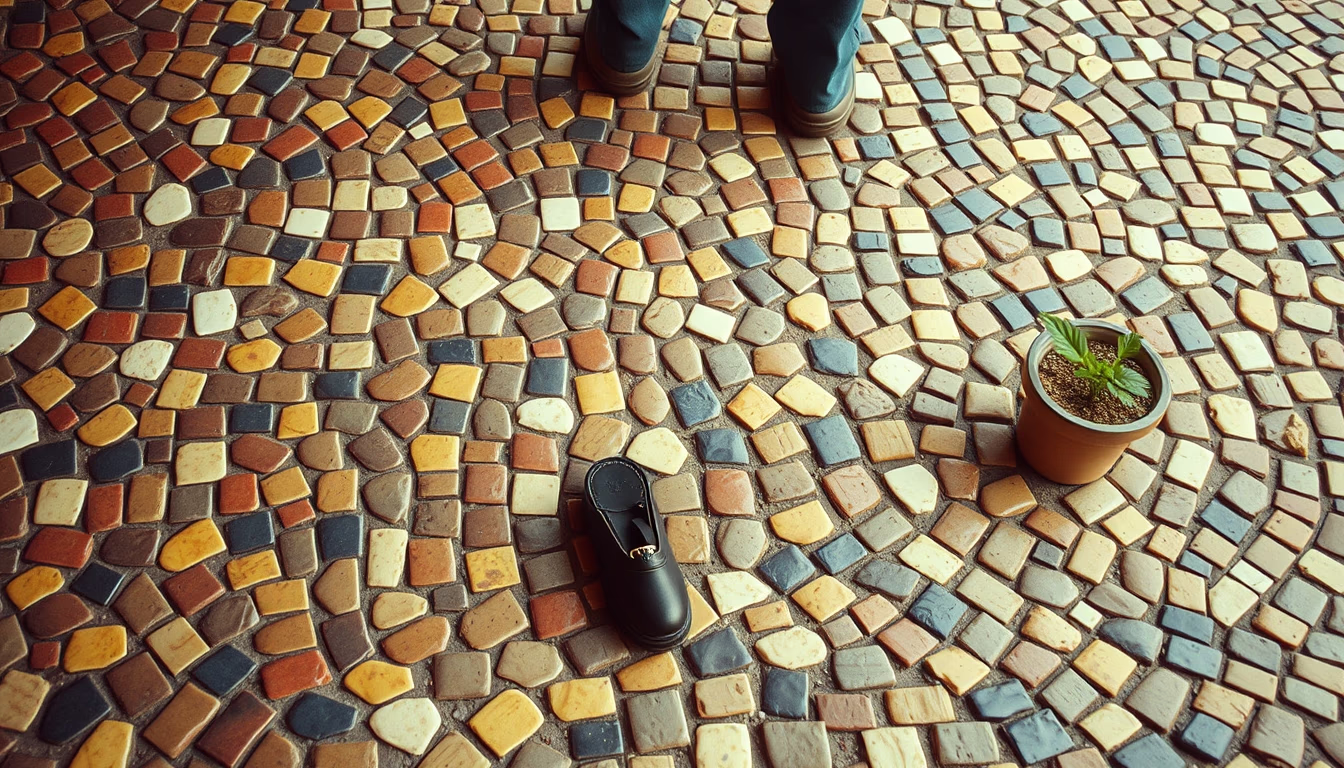
Roman mosaic floors, made with thousands of colored tesserae, adorned villas and public buildings across the Roman Empire, depicting mythological scenes and daily life.
About this subject
Roman mosaic floors represent one of the most sophisticated artistic expressions of antiquity, combining refined technique and visual storytelling. Made with tesserae (small cubes of stone, glass, or ceramic), these floors adorned aristocratic residences, baths, and temples. The technique known as opus tessellatum, with regularly cut pieces, allowed complex designs and vibrant colors that have endured for centuries.
Creating a Roman mosaic required careful planning. First, a mortar base was prepared; then, artists placed tesserae following a sketch or cartoon. Common themes included Greco-Roman gods and heroes, hunting scenes, gladiator games, and geometric patterns. Notable examples survive at Pompeii, the Villa Romana del Casale (Sicily), and archaeological sites in Turkey and North Africa.
Roman mosaics also served social and political purposes: they displayed the owner's wealth and erudition while reinforcing cultural values. Many were uncovered in modern excavations, allowing archaeologists to understand aspects of daily life, such as religious rituals, clothing, and domestic architecture. Preserving these floors is challenging, as exposure to elements can damage the tesserae.
Today, museums like the Museo Nazionale Romano and the British Museum exhibit sections of Roman mosaics, while replicas are used in historical reconstructions. The influence of this art persists in modern mosaic techniques, and each archaeological discovery adds knowledge about Roman engineering and aesthetics.
Frequently Asked Questions
How were Roman mosaics made?
They were made with tesserae (small cubes of stone, glass, or ceramic) set into a mortar base. The artist followed a sketch and used natural material colors.
Where can I see original Roman mosaics?
At archaeological sites like Pompeii and the Villa Romana del Casale, or in museums such as the Museo Nazionale Romano and the British Museum.
Why are Roman mosaics important for archaeology?
They provide insights into Roman art, religion, daily life, and technology, help date buildings, and reveal cultural influences.
Direct URL
https://pub-c7d6a6ea828543ac903a74a341ccb2e1.r2.dev/imagens/roman-mosaic-floor-lo-fi-disposable-camera-p4.avifHow to credit
Include a visible link back to UtilizAí. Copy one of the snippets below:
<a href="https://xn--utiliza-eza.com/en/midia/imagens/roman-mosaic-floor-lo-fi-disposable-camera-p4">Roman mosaic floor</a> by <a href="https://xn--utiliza-eza.com">UtilizAí</a>, licensed under <a href="https://creativecommons.org/licenses/by/4.0/">CC BY 4.0</a>.
[Roman mosaic floor](https://xn--utiliza-eza.com/en/midia/imagens/roman-mosaic-floor-lo-fi-disposable-camera-p4) by [UtilizAí](https://xn--utiliza-eza.com), CC BY 4.0
License: CC-BY-4.0