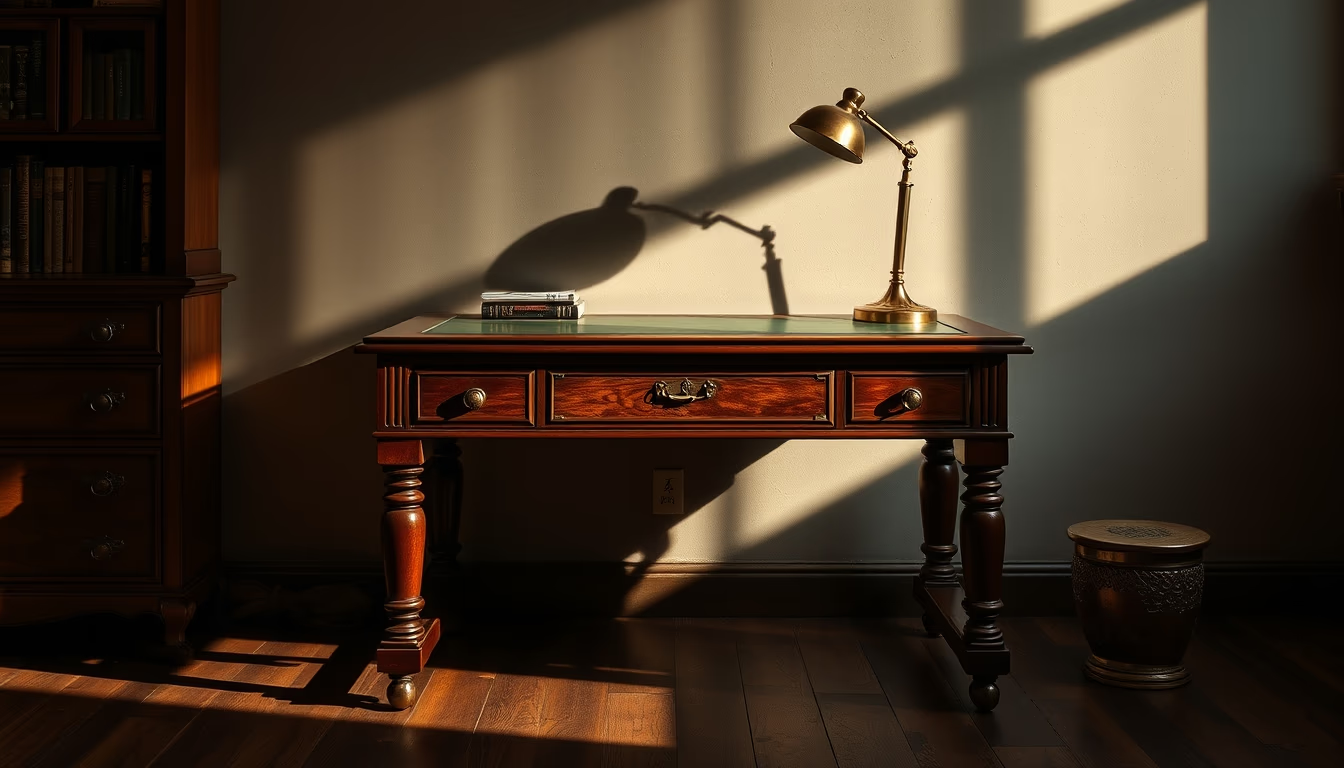
Rocking chair mid century
1344×768 · AVIF · CC BY 4.0

The mid-century rocking chair is an icon of modern design, blending organic curves, molded wood, and Scandinavian functionalism.
About this subject
The mid-century rocking chair represents a golden chapter in furniture design, particularly from the 1940s to 1960s. Rooted in the modernist movement, it embodies principles like form follows function, use of new materials, and industrial techniques. Designers such as Charles and Ray Eames, Hans Wegner, and George Nakashima explored molded plywood, creating lightweight, ergonomic pieces that challenged earlier Victorian aesthetics. Steam-bending techniques allowed smooth curves that cradle the body, while solid wood rockers ensure stability.
Culturally, these chairs symbolize postwar optimism, the valorization of home life, and the democratization of good design. Unlike heavy traditional rocking chairs, the mid-century version was sleeker, fit smaller spaces, and was often mass-produced. Brands like Knoll, Herman Miller, and Danish Fritz Hansen made these objects accessible to the middle class. Color palettes ranged from natural walnut and teak to vibrant reds, blacks, and yellows in lacquer or varnish finishes.
Today, mid-century rocking chairs are highly collectible, with pieces by renowned designers fetching thousands at auction. The Eames 'Rocking Stool' (1950) and Hans Wegner's 'CH25' (1950) are milestones. Their influence persists in contemporary reinterpretations that maintain the curved profile while incorporating sustainability and new materials like aluminum and recycled polymers. For enthusiasts, the piece is both a functional seat and a livable sculpture, a testament to material innovation and the pursuit of elegant comfort.
Frequently Asked Questions
What defines a mid-century rocking chair?
Organic curves, use of molded wood (laminated plywood or bentwood), lightweight ergonomic profile, and minimal ornamentation. It prioritizes function and spatial integration.
What materials are most common in these chairs?
Molded plywood (walnut, teak, oak), tubular metal (in some models), and lacquer or varnish finishes. Upholstery in leather or fabric appears in padded seat versions.
Why are mid-century rocking chairs so highly valued today?
Due to their historical significance in modern design, craftsmanship, period authenticity, and timeless aesthetic. Pieces by renowned designers like Eames or Wegner are collector's items.
Direct URL
https://pub-c7d6a6ea828543ac903a74a341ccb2e1.r2.dev/imagens/rocking-chair-mid-century-magazine-editorial-fresh6.avifHow to credit
Include a visible link back to UtilizAí. Copy one of the snippets below:
<a href="https://xn--utiliza-eza.com/en/midia/imagens/rocking-chair-mid-century-magazine-editorial-fresh6">Rocking chair mid century</a> by <a href="https://xn--utiliza-eza.com">UtilizAí</a>, licensed under <a href="https://creativecommons.org/licenses/by/4.0/">CC BY 4.0</a>.
[Rocking chair mid century](https://xn--utiliza-eza.com/en/midia/imagens/rocking-chair-mid-century-magazine-editorial-fresh6) by [UtilizAí](https://xn--utiliza-eza.com), CC BY 4.0
License: CC-BY-4.0