Rocking chair mid century
1344×768 · AVIF · CC BY 4.0
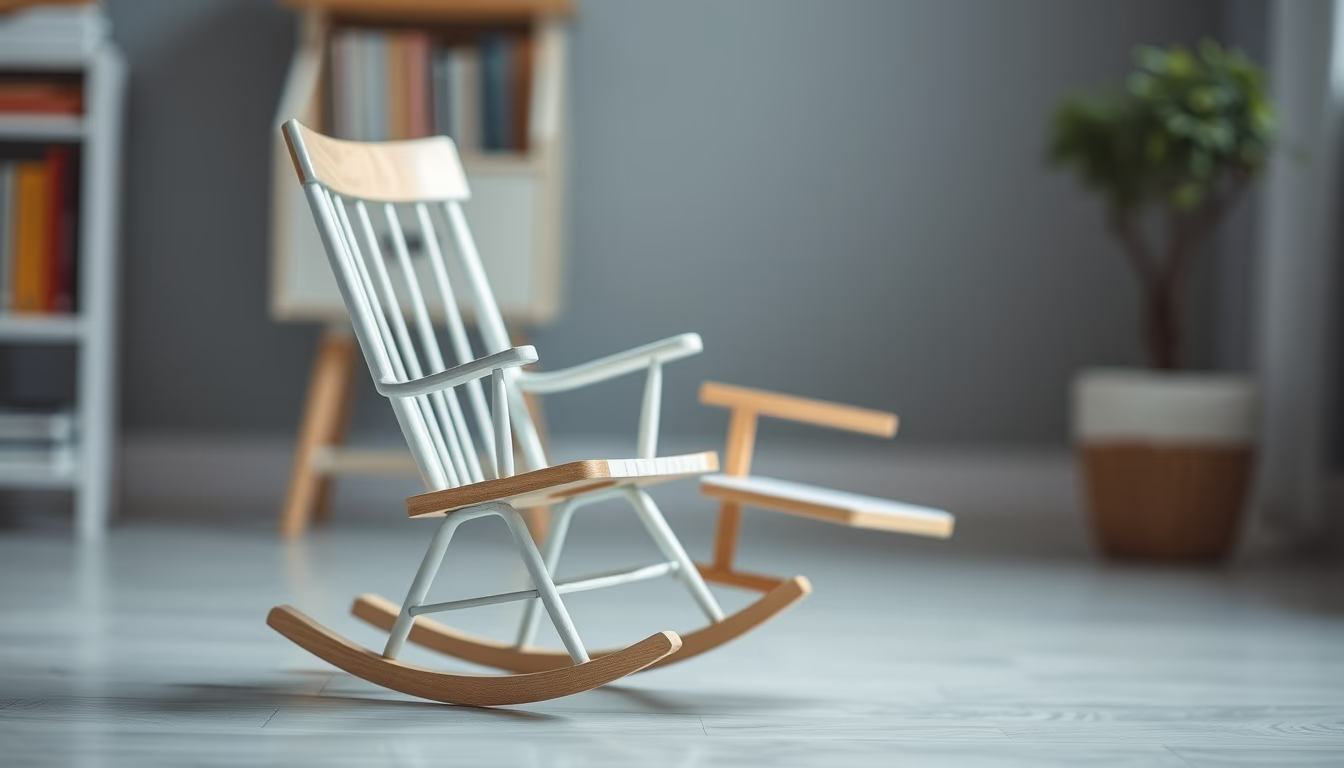
A cadeira de balanço mid-century é um ícone do design moderno, combinando curvas ergonômicas e madeira maciça com simplicidade elegante.
Sobre o tema
A cadeira de balanço mid-century representa um dos momentos mais celebrados do design de móveis. Surgida no período pós-Segunda Guerra Mundial, entre as décadas de 1940 e 1960, ela refletia a busca por formas orgânicas, funcionalidade e acessibilidade. Diferente das cadeiras de balanço tradicionais, muitas vezes ornamentadas, o modelo mid-century apostava em linhas limpas, estrutura aparente e uso inteligente de materiais como madeira compensada moldada, teca, nogueira e carvalho.
Designers como Charles e Ray Eames, Hans Wegner e George Nakashima exploraram a cadeira de balanço como um objeto de experimentação formal. A famosa rocking chair de Wegner, com seu assento em vime e curvatura suave, ou os modelos laminados dos Eames, são exemplos clássicos. O diferencial estava na ergonomia: os encostos e assentos seguiam o contorno do corpo humano, proporcionando conforto sem estofamento volumoso.
Culturalmente, a cadeira de balanço mid-century tornou-se símbolo de um estilo de vida moderno e descontraído. Era presença comum em salas de estar integradas, varandas e quartos infantis. Sua popularidade ultrapassou as fronteiras americanas e escandinavas, influenciando fabricantes brasileiros como a Móveis Cimo e a L'Atelier, que adaptaram o design às madeiras tropicais.
Curiosamente, o conceito de cadeira de balanço é muito anterior, datado do século XVIII, mas foi no mid-century que ela ganhou status de obra de arte funcional. Hoje, peças originais são disputadas em leilões e réplicas contemporâneas mantêm viva a estética atemporal. O tilt-shift miniature, técnica fotográfica que reduz a escala aparente, realça a pureza das linhas e a textura da madeira, convidando o observador a apreciar cada detalhe construtivo.
Perguntas frequentes
O que define uma cadeira de balanço mid-century?
Linhas limpas, formas orgânicas, uso de madeira natural e compensada, encosto e assento ergonômicos, e ausência de ornamentos excessivos. Ela prioriza função e simplicidade.
Quais materiais eram comuns nesse tipo de cadeira?
Madeira maciça (teca, nogueira, carvalho), compensado moldado, vime e couro. Frequentemente a estrutura era deixada aparente para valorizar a textura natural.
Quem são os designers mais famosos de cadeiras de balanço mid-century?
Charles e Ray Eames, Hans Wegner, George Nakashima e, no Brasil, Joaquim Tenreiro e Sergio Rodrigues, que criaram versões adaptadas ao gosto local.
URL direta
https://pub-c7d6a6ea828543ac903a74a341ccb2e1.r2.dev/imagens/rocking-chair-mid-century-tilt-shift-miniature-fresh17.avifComo creditar
Inclua um link visível de volta pro UtilizAí. Copie um dos snippets abaixo:
<a href="https://xn--utiliza-eza.com/midia/imagens/rocking-chair-mid-century-tilt-shift-miniature-fresh17">Rocking chair mid century</a> by <a href="https://xn--utiliza-eza.com">UtilizAí</a>, licensed under <a href="https://creativecommons.org/licenses/by/4.0/">CC BY 4.0</a>.
[Rocking chair mid century](https://xn--utiliza-eza.com/midia/imagens/rocking-chair-mid-century-tilt-shift-miniature-fresh17) by [UtilizAí](https://xn--utiliza-eza.com), CC BY 4.0
Licença: CC-BY-4.0