Rna molecule structure
1344×768 · AVIF · CC BY 4.0
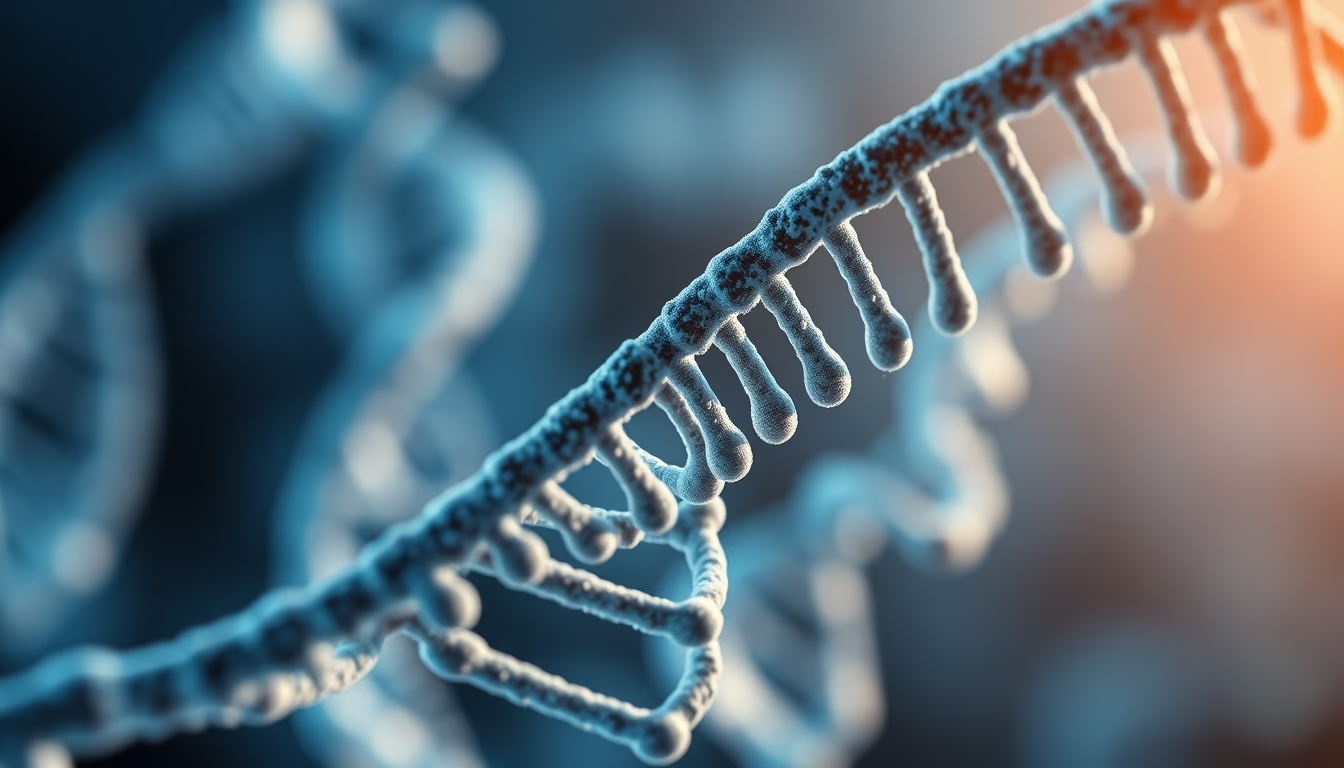
The structure of RNA, an essential molecule for life, differs from DNA by being single-stranded and containing uracil, playing crucial roles in protein synthesis and gene regulation.
About this subject
Ribonucleic acid, or RNA, is a fundamental macromolecule in all living organisms. Unlike DNA, RNA is typically single-stranded, composed of nucleotides where the sugar is ribose (instead of deoxyribose) and the base uracil replaces thymine. The four RNA bases are adenine, uracil, cytosine, and guanine, linked to a phosphate group and ribose to form the polymeric chain.
The three-dimensional structure of RNA is rich and varied. Although single-stranded, it can fold back on itself forming secondary structures such as hairpins, loops, and pseudoknots. These folds are stabilized by hydrogen bonding between complementary bases (A-U and C-G) and stacking interactions. This ability to form complex structures is crucial for the function of many RNAs, such as transfer RNA (tRNA) with its cloverleaf shape, and ribosomal RNA (rRNA) that forms the catalytic core of ribosomes.
There are several types of RNA with specialized functions. Messenger RNA (mRNA) carries genetic information from DNA to ribosomes, where it is translated into protein. Transfer RNA (tRNA) acts as an adapter, bringing specific amino acids during translation. Ribosomal RNA (rRNA) is the structural and catalytic component of ribosomes. Additionally, non-coding RNAs, such as microRNAs and small interfering RNAs, regulate gene expression. The discovery of ribozymes, RNA molecules with enzymatic activity, revolutionized our understanding of life, suggesting an early RNA world.
The structure of RNA is also exploited in biotechnology and medicine. mRNA vaccines, like those against COVID-19, use modified RNA to induce an immune response. Techniques such as CRISPR-Cas9 employ guide RNA for genome editing. Detailed study of RNA structure through X-ray crystallography, nuclear magnetic resonance, or cryo-electron microscopy continues to reveal new molecular mechanisms and therapeutic targets.
Frequently Asked Questions
What is the difference between RNA and DNA?
RNA is usually single-stranded, contains ribose sugar, and uracil instead of thymine. DNA is double-stranded, has deoxyribose, and thymine.
Why does RNA form secondary structures?
Because RNA is single-stranded, it can fold back on itself via complementary base pairing, forming hairpins, loops, and pseudoknots, which are essential for its function.
What are the main types of RNA?
The main types are messenger RNA (mRNA), transfer RNA (tRNA), and ribosomal RNA (rRNA), along with non-coding RNAs such as microRNAs and small interfering RNAs.
Direct URL
https://pub-c7d6a6ea828543ac903a74a341ccb2e1.r2.dev/imagens/rna-molecule-structure-magazine-editorial-p9.avifHow to credit
Include a visible link back to UtilizAí. Copy one of the snippets below:
<a href="https://xn--utiliza-eza.com/en/midia/imagens/rna-molecule-structure-magazine-editorial-p9">Rna molecule structure</a> by <a href="https://xn--utiliza-eza.com">UtilizAí</a>, licensed under <a href="https://creativecommons.org/licenses/by/4.0/">CC BY 4.0</a>.
[Rna molecule structure](https://xn--utiliza-eza.com/en/midia/imagens/rna-molecule-structure-magazine-editorial-p9) by [UtilizAí](https://xn--utiliza-eza.com), CC BY 4.0
License: CC-BY-4.0