Pharmaceutical research lab
1344×768 · AVIF · CC BY 4.0
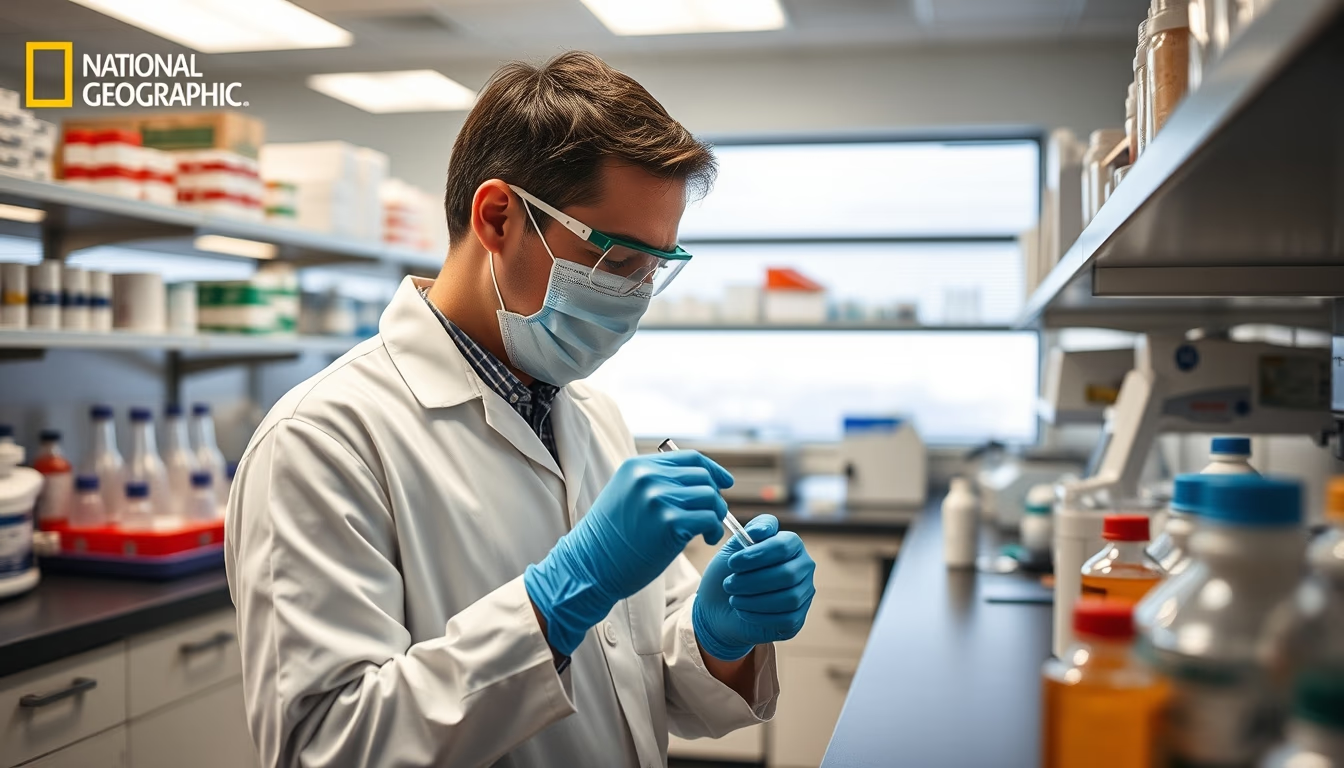
Pharmaceutical research labs are the heart of new drug discovery, combining chemistry, biology, and technology to treat diseases.
About this subject
Pharmaceutical research labs are highly specialized environments where scientists work on developing new drugs. The process begins with identifying a biological target, such as a protein involved in a disease, and then screening thousands of chemical compounds for promising candidates. Essential equipment includes mass spectrometers, liquid chromatography systems, and cell culture setups to analyze the efficacy and safety of molecules.
In Brazil, pharmaceutical research is regulated by ANVISA, which requires rigorous preclinical and clinical trials before drug approval. The country has centers of excellence like Instituto Butantan and Fiocruz, conducting both basic and applied research. Partnerships among universities, startups, and large industries have accelerated innovation, especially in fields like oncology and neglected diseases.
Notably, developing a new drug typically takes 10 to 15 years and costs over US$1 billion. Only 1 in 10,000 tested compounds reaches the market, highlighting the complexity and selectivity of the process. The COVID-19 pandemic boosted the use of new technologies such as mRNA and artificial intelligence to speed up vaccine and treatment discovery, transforming lab routines.
Biosafety is another key pillar. Labs follow containment levels (BSL1 to BSL4) depending on the pathogen handled. Routine techniques include PCR, genetic sequencing, and viral neutralization assays. Pharmaceutical research is not limited to synthetic molecules: it also includes natural products, like plant extracts from the Amazon, which are promising sources of new active compounds.
Frequently Asked Questions
How long does it take to develop a new drug?
On average, it takes 10 to 15 years from initial discovery to final approval. This includes basic research, preclinical testing, clinical trials in humans, and regulatory review.
What are the main equipment used in a pharmaceutical research lab?
Mass spectrometers, high-performance liquid chromatography (HPLC) systems, cell culture setups, microplate readers, and confocal microscopes are common. They enable precise analysis of compounds and biological interactions.
How is artificial intelligence helping in drug discovery?
Artificial intelligence speeds up compound screening, predicts molecular interactions, and optimizes formulations. Machine learning models analyze large databases to identify high-potential candidates, reducing time and costs.
Direct URL
https://pub-c7d6a6ea828543ac903a74a341ccb2e1.r2.dev/imagens/pharmaceutical-research-lab-national-geographic-style-p9.avifHow to credit
Include a visible link back to UtilizAí. Copy one of the snippets below:
<a href="https://xn--utiliza-eza.com/en/midia/imagens/pharmaceutical-research-lab-national-geographic-style-p9">Pharmaceutical research lab</a> by <a href="https://xn--utiliza-eza.com">UtilizAí</a>, licensed under <a href="https://creativecommons.org/licenses/by/4.0/">CC BY 4.0</a>.
[Pharmaceutical research lab](https://xn--utiliza-eza.com/en/midia/imagens/pharmaceutical-research-lab-national-geographic-style-p9) by [UtilizAí](https://xn--utiliza-eza.com), CC BY 4.0
License: CC-BY-4.0