Paramotor flight
1344×768 · AVIF · CC BY 4.0
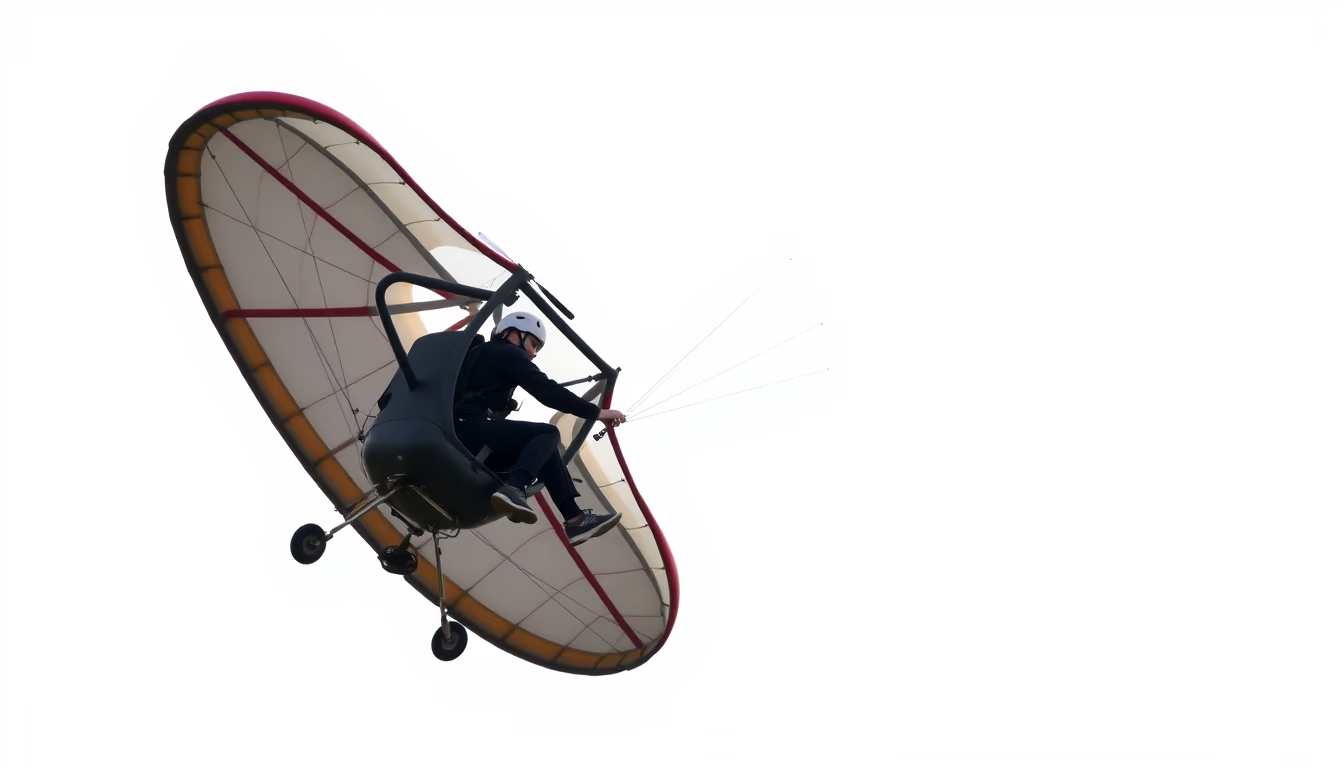
O voo de paramotor combina parapente e motor, permitindo decolagens de solo plano e voos de longa duração. Conheça essa modalidade de aviação ultraleve.
Sobre o tema
O paramotor é uma aeronave ultraleve motorizada composta por um parapente (asa flexível) e um motor acoplado a uma hélice, carregado nas costas do piloto. Diferente do parapente convencional, que depende de correntes térmicas ou declives para decolar, o paramotor permite decolagens a partir de qualquer terreno plano, desde que haja espaço suficiente. Essa característica torna o voo acessível a mais locais e condições meteorológicas.
Desenvolvido na década de 1980 por engenheiros franceses e ingleses, o paramotor rapidamente se popularizou como uma forma de aviação recreativa de baixo custo. Os motores são geralmente de dois tempos, com potência entre 15 e 30 cavalos, e consomem uma mistura de gasolina e óleo. A asa, feita de tecido ripstop, possui entre 20 e 40 metros quadrados, dependendo do peso do piloto. A velocidade de cruzeiro típica fica entre 30 e 60 km/h, e a autonomia pode ultrapassar 2 horas de voo com um tanque de 10 litros.
No Brasil, a prática é regulamentada pela Agência Nacional de Aviação Civil (ANAC) como aeronave experimental ou ultraleve. Existem diversas escolas e clubes, especialmente em regiões de relevo acidentado ou com boas condições de vento, como a Serra da Canastra (MG) e a Chapada Diamantina (BA). Eventos como o Campeonato Brasileiro de Paramotor reúnem pilotos de todo o país em provas de precisão de pouso e navegação.
A segurança no paramotor depende principalmente do treinamento adequado, manutenção do motor e avaliação meteorológica. Acidentes geralmente ocorrem por erro humano, como voar com ventos fortes ou equipamento mal ajustado. Apesar disso, o paramotor é considerado seguro quando praticado com responsabilidade, sendo uma porta de entrada para o sonho de voar por conta própria.
Perguntas frequentes
É necessário ter brevê para pilotar um paramotor?
Sim, a ANAC exige que o piloto tenha um Certificado de Piloto de Aeronave Experimental ou Ultraleve. Para isso, é preciso realizar curso teórico e prático em escola credenciada, além de exames médico e psicotécnico.
O paramotor é mais seguro que o parapente comum?
O paramotor oferece mais autonomia e independência de relevo, mas exige cuidado redobrado com o motor e a hélice. A segurança depende do treinamento, manutenção e condições meteorológicas, não havendo supremacia inerente entre as modalidades.
Qual a autonomia de voo de um paramotor?
Com um tanque padrão de 10 litros, a autonomia média gira em torno de 2 a 3 horas de voo contínuo, podendo chegar a 4 horas com tanques auxiliares e condições favoráveis de vento.
URL direta
https://pub-c7d6a6ea828543ac903a74a341ccb2e1.r2.dev/imagens/paramotor-flight-commercial-product-photography-fresh15.avifComo creditar
Inclua um link visível de volta pro UtilizAí. Copie um dos snippets abaixo:
<a href="https://xn--utiliza-eza.com/midia/imagens/paramotor-flight-commercial-product-photography-fresh15">Paramotor flight</a> by <a href="https://xn--utiliza-eza.com">UtilizAí</a>, licensed under <a href="https://creativecommons.org/licenses/by/4.0/">CC BY 4.0</a>.
[Paramotor flight](https://xn--utiliza-eza.com/midia/imagens/paramotor-flight-commercial-product-photography-fresh15) by [UtilizAí](https://xn--utiliza-eza.com), CC BY 4.0
Licença: CC-BY-4.0