Old map parchment
1344×768 · AVIF · CC BY 4.0
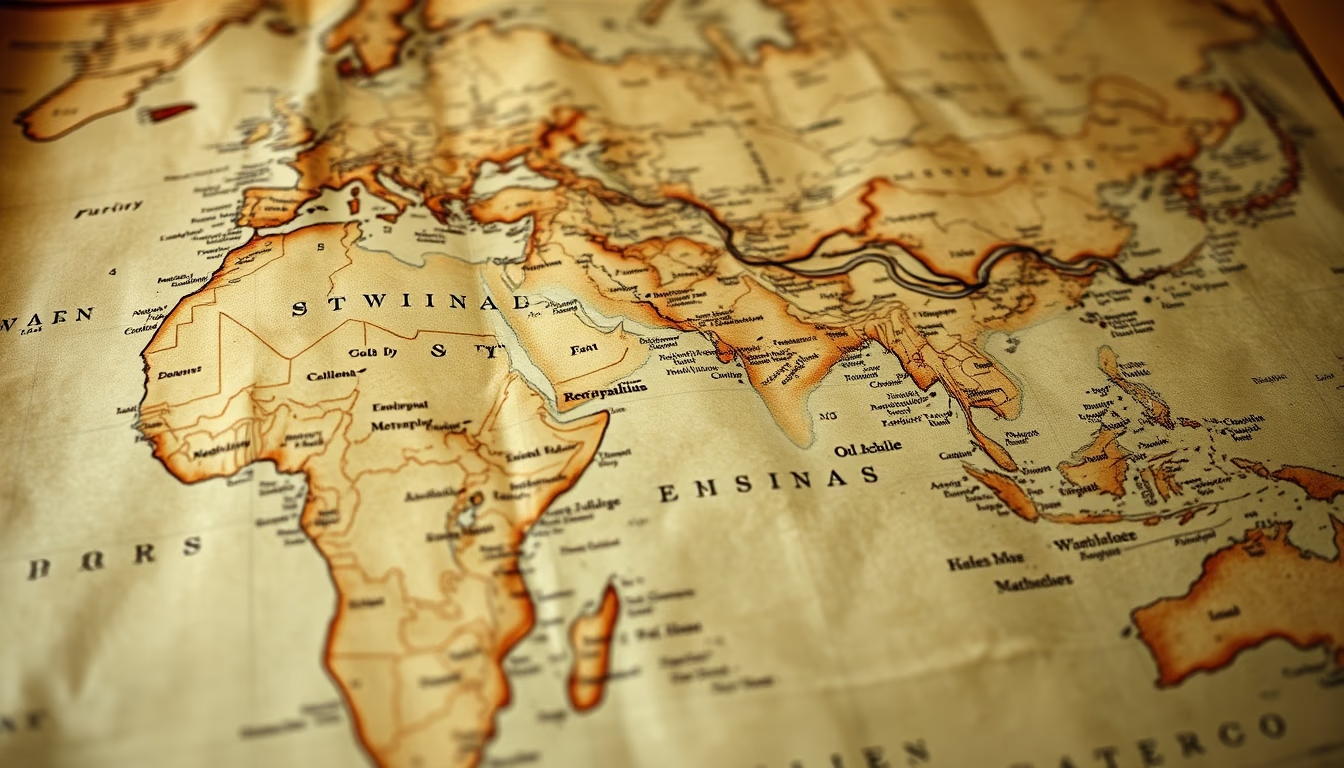
Old map parchments reveal the evolution of cartography and the world view across centuries.
About this subject
Old map parchments are invaluable testimonies to the history of cartography. Made from animal skins such as sheep, goats, or calves, these supports were prepared through a craft process involving washing, stretching, and scraping. The technique, mastered since antiquity, reached its peak in medieval and Renaissance Europe, when maps like the Hereford Mappa Mundi (c. 1300) or Italian portolan charts were hand-drawn with natural pigment inks.
These parchments not only recorded contemporary geographical knowledge but also reflected religious and political beliefs. The Ptolemy world map, for instance, copied on parchment in the 15th century, shaped the worldview until the Age of Discovery. Portolan charts, with their rhumb lines and scales, were practical tools for navigators. Preserving these documents is challenging due to the material's fragility and climatic variations.
Today, many original parchments are housed in museums and libraries such as the Bibliothèque Nationale de France or the Vatican Secret Archives. Modern digitization techniques allow detailed study without damaging the originals. Analysis of pigments, handwriting, and watermarks helps date and authenticate these artifacts. Interest in old parchment maps persists, with collectors and historians seeking to understand how our ancestors perceived the planet.
Frequently Asked Questions
How were old map parchments made?
Parchments were produced from animal skins such as sheep, goats, or calves. The skin was washed, stretched on a frame, scraped to remove hair and grease, then dried and polished. The result was a smooth, durable surface ideal for writing and drawing.
What is the difference between parchment and vellum?
Vellum is a finer type of parchment made specifically from calf or kid skin. Regular parchment may use sheep or other animal skins. Both are prized materials for ancient manuscripts.
Why are old parchment maps so valuable?
Due to their rarity, historical significance, and craftsmanship. Many are unique artifacts documenting geographical and cultural knowledge of past eras. Their preservation and the beauty of illuminations also add to their value.
Direct URL
https://pub-c7d6a6ea828543ac903a74a341ccb2e1.r2.dev/imagens/old-map-parchment-national-geographic-style-p2.avifHow to credit
Include a visible link back to UtilizAí. Copy one of the snippets below:
<a href="https://xn--utiliza-eza.com/en/midia/imagens/old-map-parchment-national-geographic-style-p2">Old map parchment</a> by <a href="https://xn--utiliza-eza.com">UtilizAí</a>, licensed under <a href="https://creativecommons.org/licenses/by/4.0/">CC BY 4.0</a>.
[Old map parchment](https://xn--utiliza-eza.com/en/midia/imagens/old-map-parchment-national-geographic-style-p2) by [UtilizAí](https://xn--utiliza-eza.com), CC BY 4.0
License: CC-BY-4.0