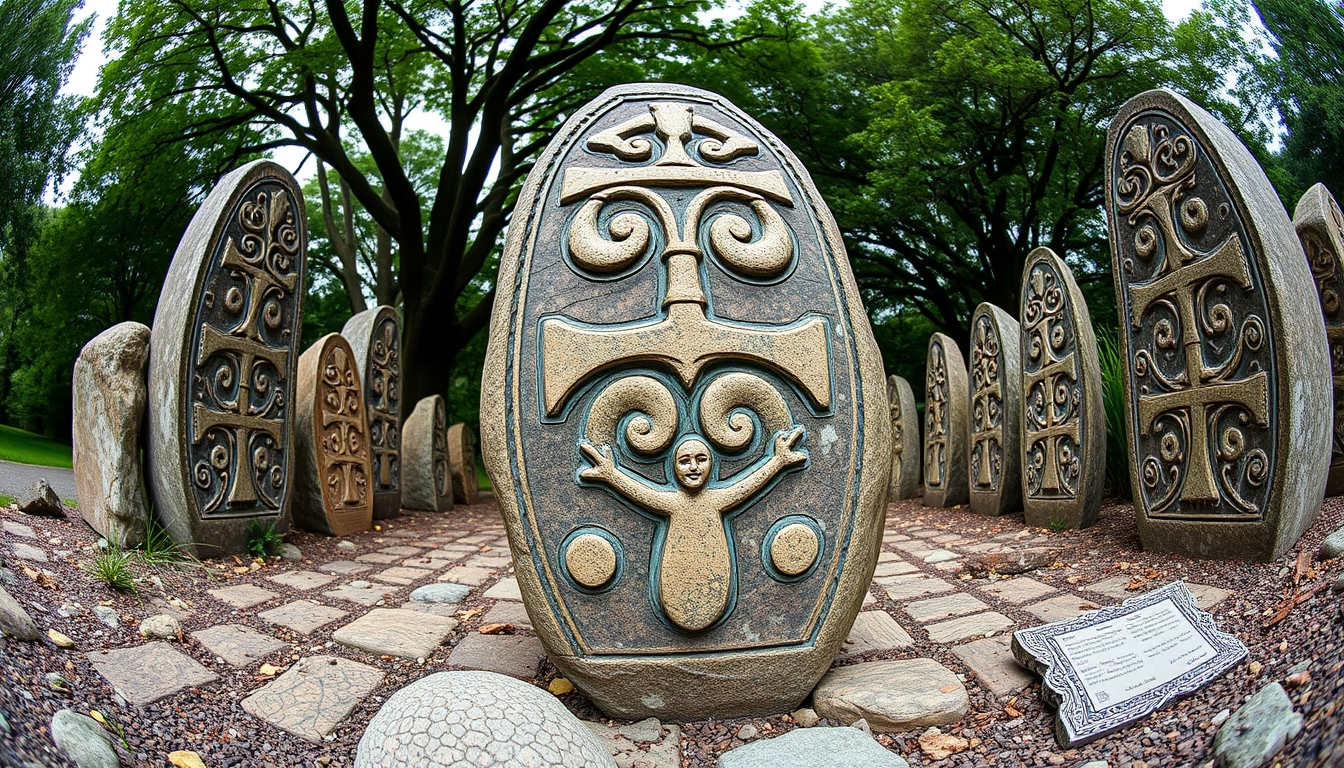
Oghams celtic stone
1344×768 · AVIF · CC BY 4.0
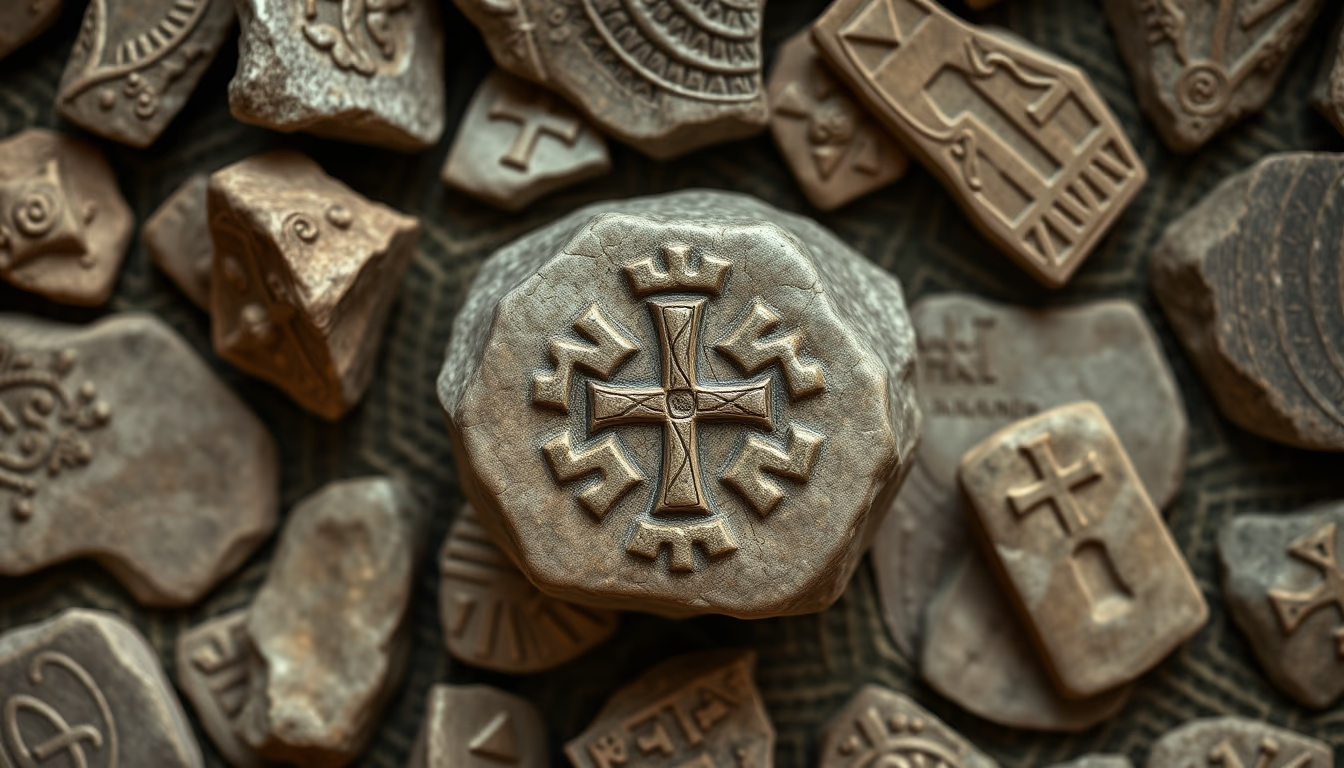
Ogham stones, Irish monuments inscribed with the Ogham alphabet, reveal aspects of Celtic language and culture from the 4th to 9th centuries AD.
About this subject
Ogham stones are stone monuments erected primarily in Ireland, but also in parts of Scotland, Wales, and England, dating from approximately the 4th to 9th centuries AD. They bear inscriptions in the Ogham alphabet, a writing system consisting of lines and notches carved along a central edge, representing letters. Ogham is believed to have been inspired by the Latin alphabet, adapted for the primitive Irish language. These stones served as territorial markers, gravestones, or genealogical records, often mentioning a person's name and their father or clan.
Around 400 Ogham stones survive, most in Ireland, with notable concentrations in County Kerry, Cork, and Waterford. The highest density is on the Dingle Peninsula, where examples include the Dunloe Stone and the Coolmagort Stone. The Ogham alphabet has 20 original letters, grouped into four aicmí (groups of five), each named after a sacred tree: B (Beith), H (Huath), M (Muine), and A (Ailm). This system was also used for short messages on wood or metal objects, but most knowledge comes from the stone inscriptions.
The study of Ogham stones is crucial for understanding the primitive Irish language, which preceded Old Irish. Most inscriptions contain formulas like “X son of Y,” but some mention tribes or historical events. Interpretation is often hindered by natural weathering and line ambiguity. Archaeologists and linguists collaborate to decipher these texts, offering a window into Iron Age and early medieval Celtic society before Christianization brought the Latin alphabet en masse.
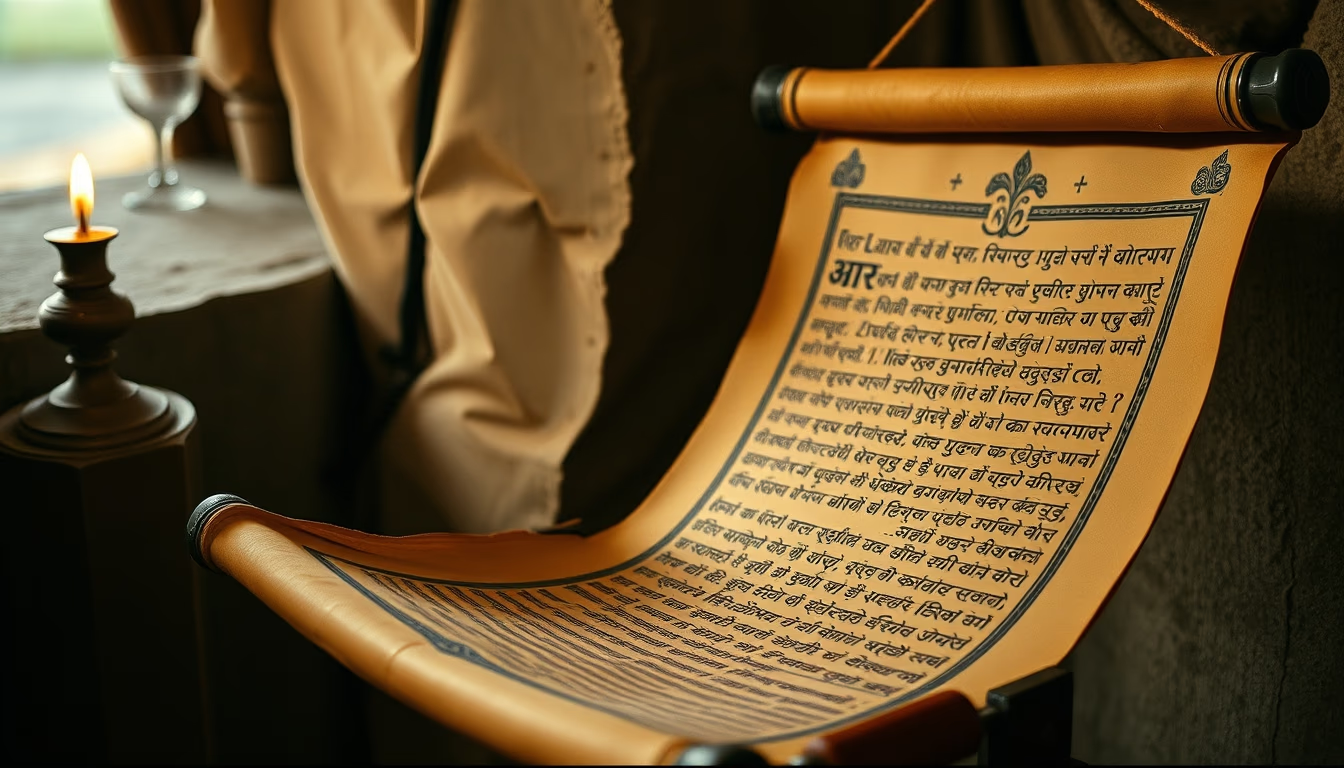
Interestingly, Ogham also appears in medieval manuscripts, such as the Book of Ballymote (14th century), which includes treatises on the alphabet and its use in divination and magic. In popular culture, Ogham is often associated with druids and ancient rituals, though historical evidence shows its practical use for communication and record-keeping.
Frequently Asked Questions
What are Ogham stones?
They are stone monuments inscribed with the Ogham alphabet, erected between the 4th and 9th centuries AD, mainly in Ireland. They served as territorial markers, gravestones, or genealogical records.
How many Ogham stones exist and where can they be found?
About 400 stones survive, mostly in Ireland, especially in counties Kerry, Cork, and Waterford. The Dingle Peninsula has the highest concentration.
What is the historical significance of Ogham inscriptions?
They are crucial for studying the primitive Irish language and provide insights into names, genealogies, and social organization of pre-Christian Celts.
Direct URL
https://pub-c7d6a6ea828543ac903a74a341ccb2e1.r2.dev/imagens/oghams-celtic-stone-isometric-flat-lay-fresh17.avifHow to credit
Include a visible link back to UtilizAí. Copy one of the snippets below:
<a href="https://xn--utiliza-eza.com/en/midia/imagens/oghams-celtic-stone-isometric-flat-lay-fresh17">Oghams celtic stone</a> by <a href="https://xn--utiliza-eza.com">UtilizAí</a>, licensed under <a href="https://creativecommons.org/licenses/by/4.0/">CC BY 4.0</a>.
[Oghams celtic stone](https://xn--utiliza-eza.com/en/midia/imagens/oghams-celtic-stone-isometric-flat-lay-fresh17) by [UtilizAí](https://xn--utiliza-eza.com), CC BY 4.0
License: CC-BY-4.0