Oboe wooden detail
1344×768 · AVIF · CC BY 4.0
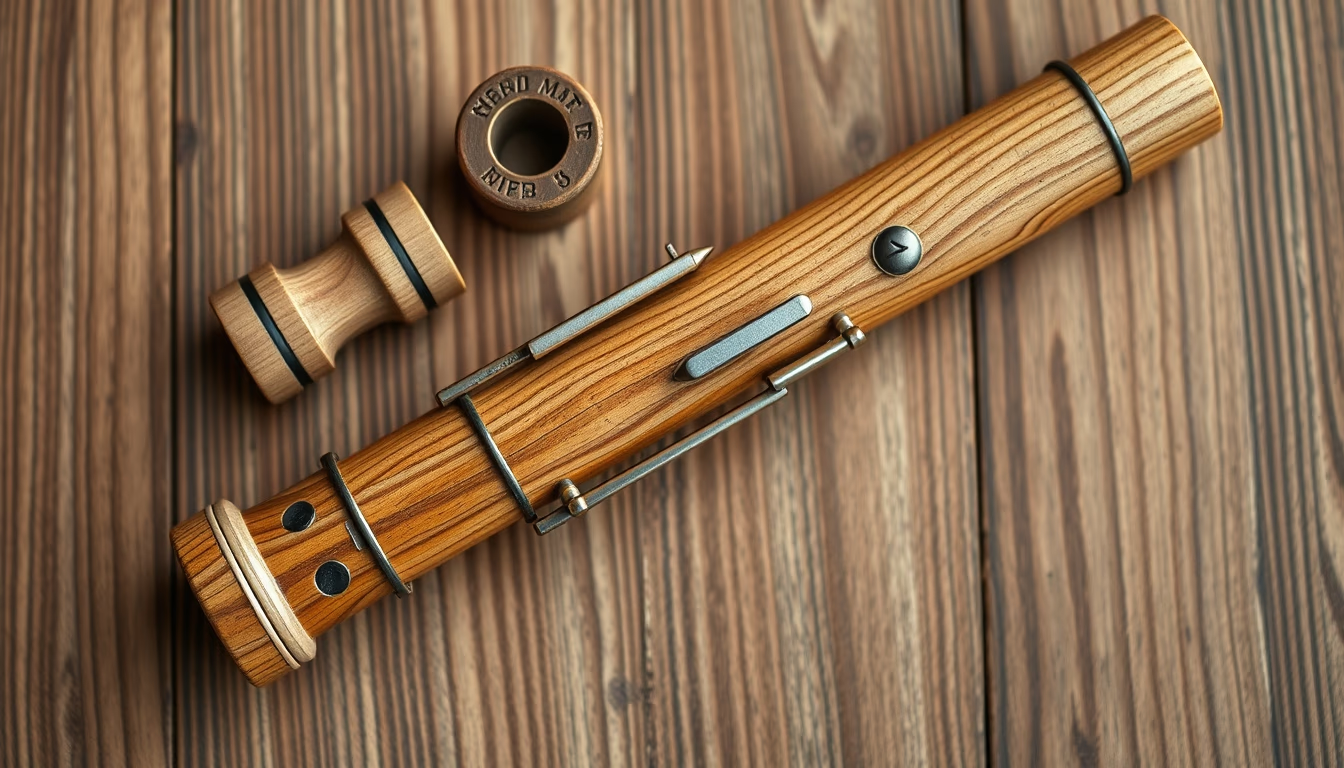
The oboe is a double-reed woodwind instrument, known for its penetrating and expressive tone, essential in symphony orchestras.
About this subject
The oboe is a woodwind instrument that uses a double reed to produce sound, made primarily from dense African blackwood (grenadilla). Its body consists of three main sections: the upper joint, lower joint, and bell, which connect seamlessly. The instrument features a complex system of keys and levers that allow the player to achieve precise pitch and articulation.
Historically, the modern oboe evolved from the medieval shawm, a double-reed instrument used in military and folk music. In the 17th century, the French court of Louis XIV adopted the oboe, which underwent significant refinements, such as the addition of keys, making it more versatile. Composers like Bach, Handel, and Mozart wrote works highlighting the oboe, solidifying its place in the classical orchestra. In Brazil, the oboe is prominent in symphony orchestras and chamber groups, as well as in cultural expressions like choro music.
An interesting fact is that the oboe gives the tuning note (A440) for the entire orchestra during warm-up. This is because its pitch is stable and easily heard by other musicians. Additionally, reed making is a meticulous craft: oboists typically scrape and adjust cane reeds by hand to achieve their desired sound. Maintenance requires extra care, including oiling keys and protecting the instrument from humidity changes to prevent cracking.
Internationally, renowned oboists like Heinz Holliger and Albrecht Mayer have expanded the technical and expressive possibilities of the instrument. The oboe also appears in film scores, often associated with melancholic or pastoral themes. Its versatility ranges from Baroque to experimental jazz, proving that despite its delicate appearance, the oboe is an instrument of great power and subtlety.
Frequently Asked Questions
What is the difference between an oboe and a clarinet?
The oboe uses a double reed (two cane blades vibrating against each other), while the clarinet uses a single reed (one blade vibrating against the mouthpiece). The oboe's sound is more penetrating and nasal, whereas the clarinet has a mellower, rounder tone.
How is an oboe reed made?
The reed is made from Arundo donax cane, cut into two blades, tied onto a metal tube (staple), and scraped by the oboist to adjust resistance and sound quality.
Why is the oboe used to tune the orchestra?
The oboe produces an A note (440 Hz) with a stable timbre and clear projection, easily heard and matched by other instruments. Traditionally, the oboe gives the tuning note before concerts.
Direct URL
https://pub-c7d6a6ea828543ac903a74a341ccb2e1.r2.dev/imagens/oboe-wooden-detail-isometric-flat-lay-p4.avifHow to credit
Include a visible link back to UtilizAí. Copy one of the snippets below:
<a href="https://xn--utiliza-eza.com/en/midia/imagens/oboe-wooden-detail-isometric-flat-lay-p4">Oboe wooden detail</a> by <a href="https://xn--utiliza-eza.com">UtilizAí</a>, licensed under <a href="https://creativecommons.org/licenses/by/4.0/">CC BY 4.0</a>.
[Oboe wooden detail](https://xn--utiliza-eza.com/en/midia/imagens/oboe-wooden-detail-isometric-flat-lay-p4) by [UtilizAí](https://xn--utiliza-eza.com), CC BY 4.0
License: CC-BY-4.0