Northeast wind farm turbines against scrubland vegetation
1344×768 · AVIF · CC BY 4.0
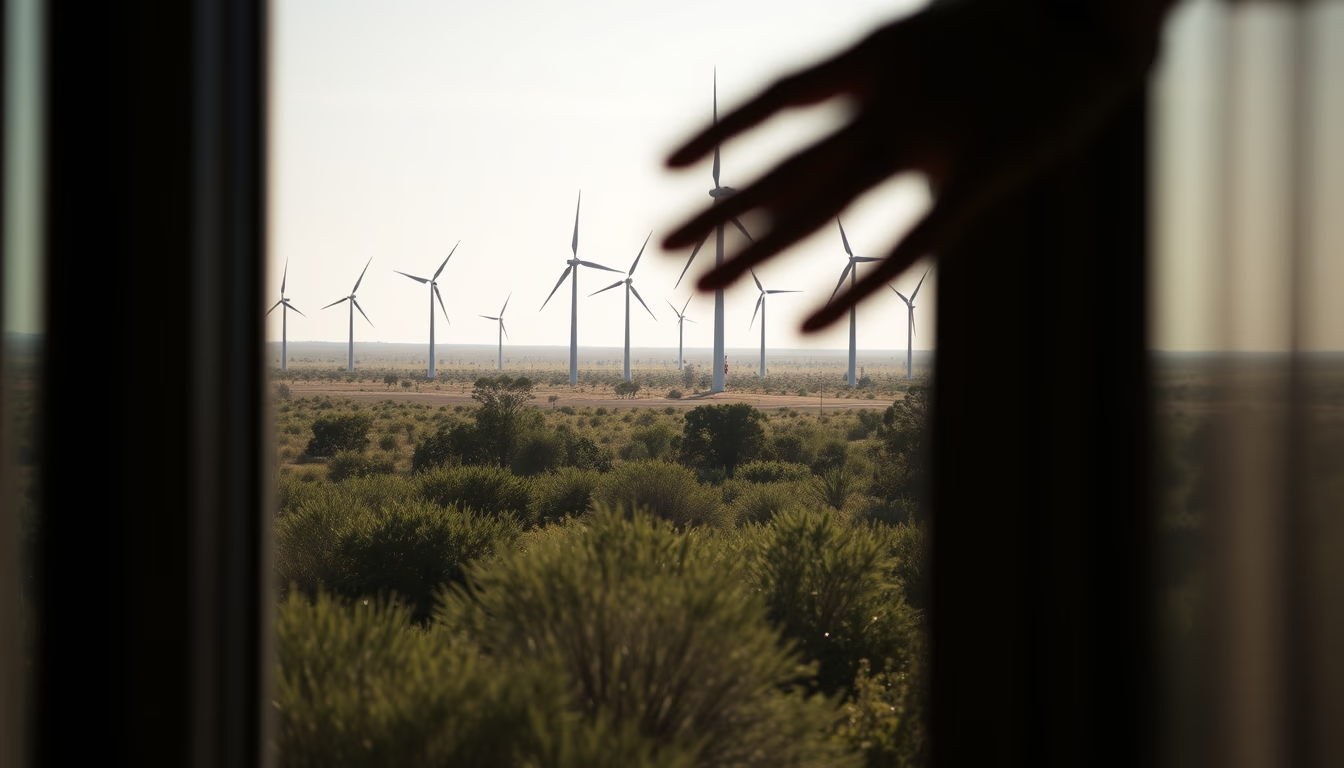
Wind farms in Northeast Brazil combine clean energy with the unique Caatinga landscape.
About this subject
Northeast Brazil concentrates about 85% of the country's installed wind capacity, with highlights in Rio Grande do Norte, Bahia, Ceará, and Piauí. These wind farms harness strong, constant winds, especially during winter when cold air masses from the South Atlantic accelerate over the semi-arid region. The towers, reaching up to 100 meters in height, are installed amidst Caatinga vegetation, a biome exclusive to Brazil that covers about 10% of the national territory. Caatinga is characterized by drought-adapted plants such as cacti, bromeliads, and small trees that shed leaves during the dry season to reduce water loss. The coexistence of turbines and native flora requires environmental impact studies to minimize habitat fragmentation and bird mortality. In 2022, wind energy represented 12% of Brazil's electricity matrix, with the Northeast region accounting for over 40% of the country's total generation. The installation of these parks has also brought economic development to rural areas, generating jobs and royalty revenues for municipalities. However, challenges remain, such as the need for transmission lines to carry energy to consumer centers in the Southeast and integration with other renewable sources like solar. The landscape of turbines against the dry green Caatinga has become a symbol of Brazil's energy transition, combining cutting-edge technology with the resilience of one of the country's most threatened biomes.
Frequently Asked Questions
Why is the Northeast ideal for wind energy?
The Northeast has strong, constant winds, especially in winter, due to the pressure difference between the ocean and the continent. The flat topography and low population density also facilitate the installation of wind farms.
Does turbine installation affect the Caatinga?
Yes, it requires environmental impact studies to mitigate damage such as habitat fragmentation and bird collisions. Measures like ecological corridors and monitoring are adopted to reduce effects.
How many wind farms are there in the Northeast?
In 2023, there were over 600 wind farms operating in Northeast Brazil, with installed capacity exceeding 20 GW, according to the Brazilian Wind Energy Association (ABEEólica).
Direct URL
https://pub-c7d6a6ea828543ac903a74a341ccb2e1.r2.dev/imagens/northeast-wind-farm-turbines-against-caatinga-vegetation-documentary-morning.avifHow to credit
Include a visible link back to UtilizAí. Copy one of the snippets below:
<a href="https://xn--utiliza-eza.com/en/midia/imagens/northeast-wind-farm-turbines-against-caatinga-vegetation-documentary-morning">Northeast wind farm turbines against scrubland vegetation</a> by <a href="https://xn--utiliza-eza.com">UtilizAí</a>, licensed under <a href="https://creativecommons.org/licenses/by/4.0/">CC BY 4.0</a>.
[Northeast wind farm turbines against scrubland vegetation](https://xn--utiliza-eza.com/en/midia/imagens/northeast-wind-farm-turbines-against-caatinga-vegetation-documentary-morning) by [UtilizAí](https://xn--utiliza-eza.com), CC BY 4.0
License: CC-BY-4.0