Noise cancelling headphones desk
1344×768 · AVIF · CC BY 4.0
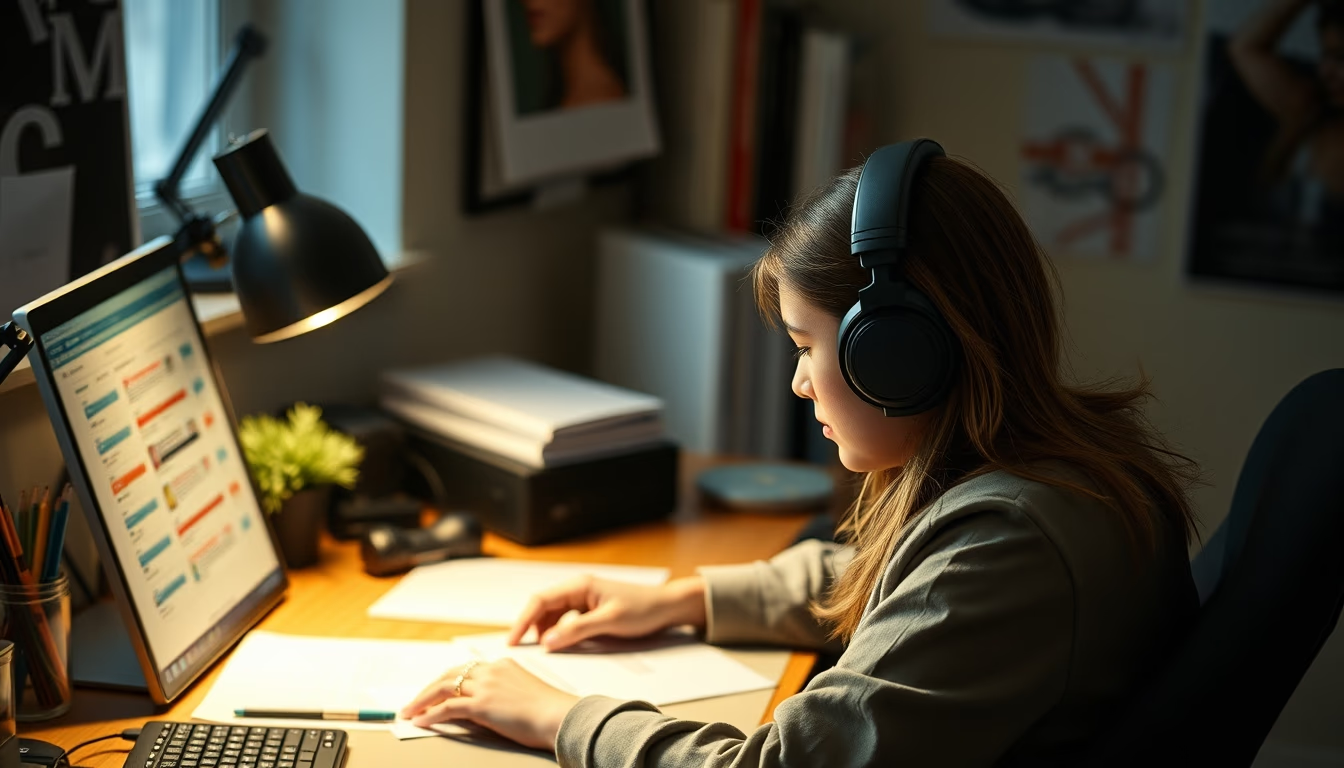
Noise cancelling headphones transform the audio experience in offices and travel, integrating signal processing technology to create quiet spaces.
About this subject
Active noise cancelling (ANC) headphones revolutionized how we consume audio in noisy environments. The technology was originally developed in the 1950s by engineer Lawrence Jerome Fogel for aviation pilots, using microphones to capture ambient sound and speakers to generate an inverted sound wave that cancels noise through destructive interference. Today, ANC is a common feature in consumer headphones, especially from brands like Bose, Sony, and Apple, which lead innovation and patents in the sector.
In the context of remote work and modern offices, these headphones have become essential productivity tools. Studies show background noise can reduce focus by up to 30% on cognitive tasks, and ANC creates a personal acoustic bubble without increasing music volume, protecting hearing. Many models also offer transparency modes that selectively amplify important sounds like conversations or announcements, balancing isolation and safety.
The evolution of semiconductor components and falling costs of digital signal processors (DSP) popularized the feature. By 2024, the global ANC headphone market exceeded US$15 billion, with projected annual growth above 10% through 2030. In Brazil, demand rose 25% just in the last year, driven by home office and public transportation. Culturally, ANC headphones have also become a status symbol and a sign of introspection, often seen in subways and airports as a “do not disturb” cue. However, the technology is not perfect: cancellation is most effective for constant sounds (engines, fans) rather than sudden noises or conversations, where adaptive algorithms still face physical and real-time processing limitations.
Frequently Asked Questions
How does active noise cancellation work in headphones?
External microphones capture ambient noise, and a digital processor generates an inverted sound wave (180 degrees out of phase) played through the speakers. This wave combines with the original noise, canceling it through destructive interference, reducing low and mid frequencies by up to 30-40 dB.
Does active noise cancellation eliminate all sounds?
No. It is most effective for constant, low-frequency noises like airplane engines, fans, or traffic. High-pitched and irregular sounds, such as conversations or keyboard clicks, are harder to cancel because they require near-instantaneous real-time processing.
Is it harmful to use ANC headphones for long periods?
On the contrary, ANC can protect hearing by allowing lower volume levels in noisy environments. However, prolonged use at high volumes (above 85 dB) still poses a risk. Some users also report pressure or dizziness due to the cancellation processing, especially during flights.
Direct URL
https://pub-c7d6a6ea828543ac903a74a341ccb2e1.r2.dev/imagens/noise-cancelling-headphones-desk-film-grain-authentic-p1.avifHow to credit
Include a visible link back to UtilizAí. Copy one of the snippets below:
<a href="https://xn--utiliza-eza.com/en/midia/imagens/noise-cancelling-headphones-desk-film-grain-authentic-p1">Noise cancelling headphones desk</a> by <a href="https://xn--utiliza-eza.com">UtilizAí</a>, licensed under <a href="https://creativecommons.org/licenses/by/4.0/">CC BY 4.0</a>.
[Noise cancelling headphones desk](https://xn--utiliza-eza.com/en/midia/imagens/noise-cancelling-headphones-desk-film-grain-authentic-p1) by [UtilizAí](https://xn--utiliza-eza.com), CC BY 4.0
License: CC-BY-4.0