Music sheet handwritten antique
1344×768 · AVIF · CC BY 4.0
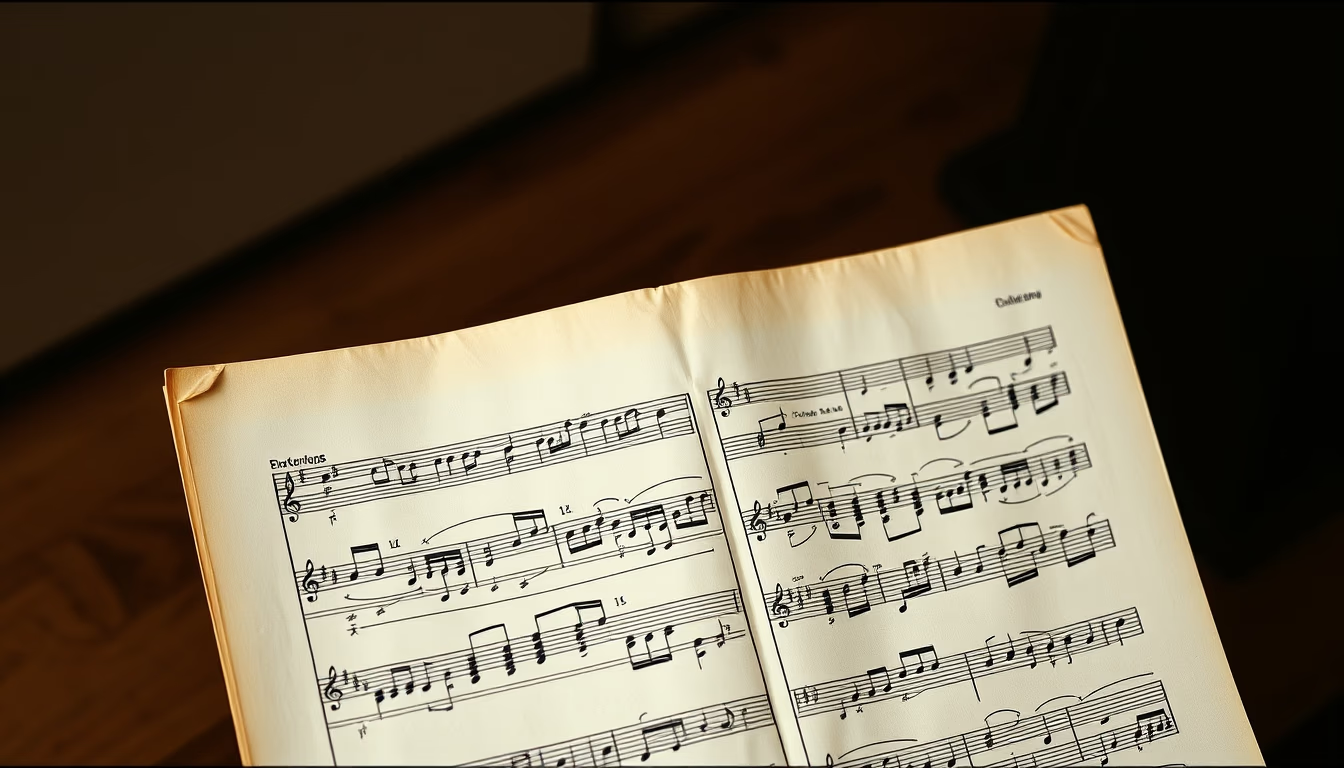
Ancient handwritten music sheets are historical documents that reveal musical practices, notation, and culture of bygone eras, preserving original compositions and traditions.
About this subject
Ancient handwritten music sheets are valuable cultural treasures, tracing the evolution of musical notation from the Middle Ages to the 19th century. Before the advent of music printing (popularized in the 16th century), music was primarily transmitted through manual copies made by professional scribes or composers themselves. These manuscripts often contain unique details such as ornaments, performance indications, and variations absent in later printed editions. The ink, paper, and handwriting help date and authenticate the piece, while also revealing its geographical origin and social context.
Famous manuscripts survive in cathedral archives, monasteries, and libraries, such as the Codex of Las Huelgas (Spain, 13th century) or the manuscripts of Johann Sebastian Bach (Germany, 18th century). However, the fragility of paper and ink poses constant preservation challenges. Institutions like the Bibliothèque nationale de France and the British Library digitize their collections to ensure public access without harming the originals. In Brazil, the Museu da Música in Mariana (MG) holds handwritten scores from the colonial period, reflecting European influence adapted to local context.
Beyond historical value, the aesthetic of these scores attracts contemporary artists who use them in collages, album covers, or as inspiration for compositions. The texture of aged paper, scribbles, and annotations create a tangible connection to the past, reminding us that music was once a handcrafted medium before digitalization. The lo-fi movement and disposable camera aesthetic, referenced in the tags, revive this imperfection and authenticity, valuing the organic and ephemeral nature of musical recording.
Frequently Asked Questions
What distinguishes an antique handwritten music sheet from a printed one?
Handwritten scores are unique manual copies that often contain personal annotations, variations, and performance details not found in printed editions. They are also rarer and more fragile, requiring special preservation care.
How do historians date ancient handwritten music sheets?
Dating is done by analyzing handwriting, paper type, watermarks, ink, and sometimes through historical references or musical style. Musical paleography is a specialized field that studies these characteristics.
Where can I see digitized ancient handwritten music sheets?
Institutions like the World Digital Library, the International Music Score Library Project (IMSLP), and national library collections (e.g., Brazilian National Digital Library) offer thousands of digitized manuscripts for free.
Direct URL
https://pub-c7d6a6ea828543ac903a74a341ccb2e1.r2.dev/imagens/music-sheet-handwritten-antique-lo-fi-disposable-camera-p5.avifHow to credit
Include a visible link back to UtilizAí. Copy one of the snippets below:
<a href="https://xn--utiliza-eza.com/en/midia/imagens/music-sheet-handwritten-antique-lo-fi-disposable-camera-p5">Music sheet handwritten antique</a> by <a href="https://xn--utiliza-eza.com">UtilizAí</a>, licensed under <a href="https://creativecommons.org/licenses/by/4.0/">CC BY 4.0</a>.
[Music sheet handwritten antique](https://xn--utiliza-eza.com/en/midia/imagens/music-sheet-handwritten-antique-lo-fi-disposable-camera-p5) by [UtilizAí](https://xn--utiliza-eza.com), CC BY 4.0
License: CC-BY-4.0