Mesa de mixagem studio professional
1344×768 · AVIF · CC BY 4.0
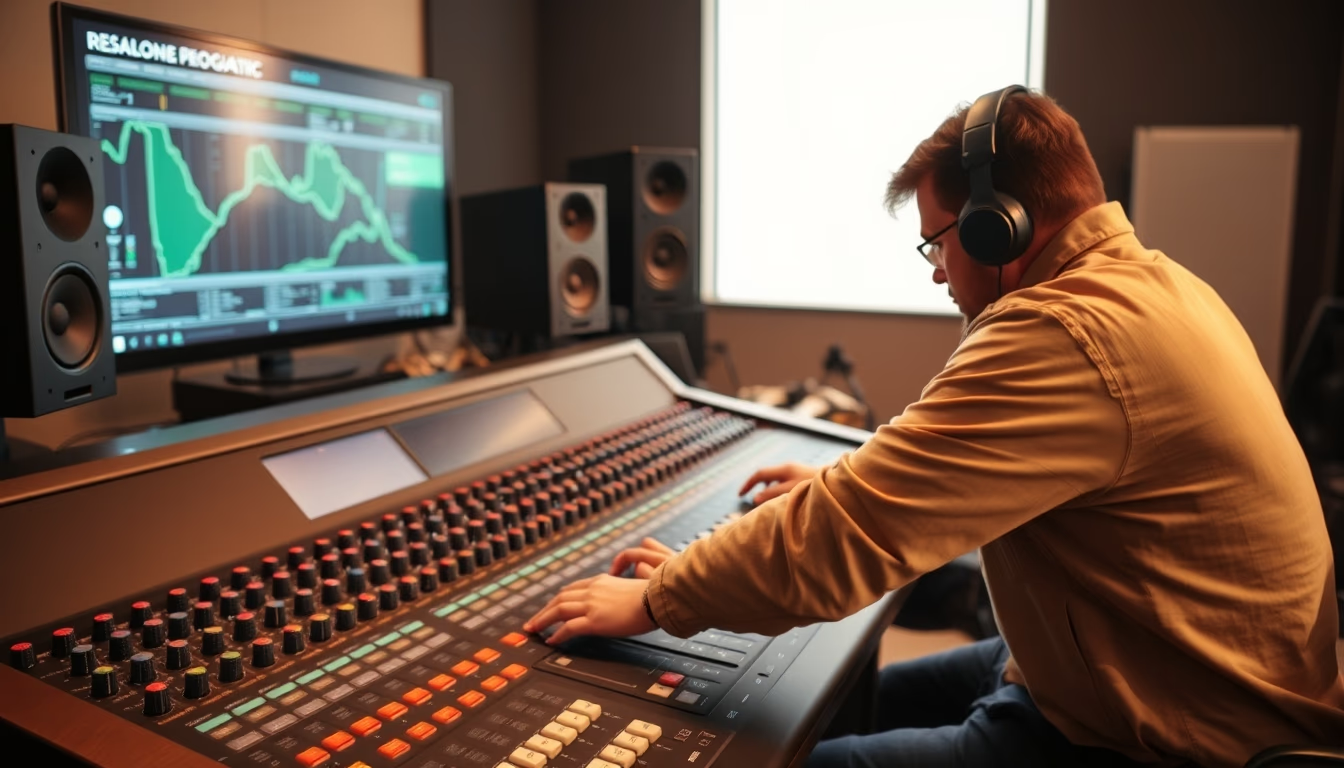
Mesa de mixagem profissional é o coração de um estúdio de gravação, permitindo controle preciso sobre áudio multicanal.
Sobre o tema
Uma mesa de mixagem profissional, também conhecida como console de áudio, é o equipamento central em estúdios de gravação, broadcast e eventos ao vivo. Ela combina e ajusta sinais de microfones, instrumentos e fontes gravadas, permitindo ao engenheiro de som controlar volume, equalização, panorâmica e efeitos. As consoles modernas, como as da SSL, Neve ou API, são referência na indústria musical, tendo sido usadas em álbuns icônicos de artistas como Beatles, Michael Jackson e Radiohead.
A história das mesas de mixagem remonta aos anos 1950, quando os primeiros modelos valvulados surgiram em estações de rádio. Na década de 1970, a introdução de circuitos integrados permitiu maior densidade de canais e recursos como compressão e equalização paramétrica. O formato clássico com faders longos e knobs tornou-se padrão. Atualmente, além das analógicas, existem consoles digitais que oferecem automação total e integração com DAWs.
Curiosamente, o custo de uma mesa de mixagem profissional pode ultrapassar centenas de milhares de dólares, devido aos componentes de alta precisão e construção robusta. Estúdios lendários como Abbey Road, Capitol Studios e Sun Studio possuem consoles históricas preservadas. A manutenção desses equipamentos é frequente, e engenheiros especializados são necessários para calibrar os circuitos.
No contexto geográfico, o Brasil tem estúdios renomados como o Nas Nuvens (RJ) e o Tenda Estúdios (SP), que utilizam mesas Neve e SSL para gravações de artistas nacionais. A cultura musical brasileira, rica em gêneros como samba, MPB e rock, demanda consoles versáteis para capturar a sonoridade única. O conhecimento técnico sobre esses equipamentos é valorizado em cursos de áudio e engenharia de som.
Perguntas frequentes
Qual a diferença entre uma mesa de mixagem analógica e digital?
Mesas analógicas processam o som de forma contínua, com componentes eletrônicos como transistores e capacitores. Já as digitais convertem o áudio em números binários, permitindo automação, recalls precisos e integração com computadores. Muitos engenheiros preferem analógicas pelo som 'quente' e saturação característica.
Quanto custa uma mesa de mixagem profissional?
Os preços variam enormemente: consoles analógicas de 24 canais usadas podem custar de R$ 50.000 a R$ 200.000, enquanto modelos novos de marcas como SSL ou Neve passam de R$ 500.000. Consoles digitais de alto nível, como a Yamaha CL5, giram em torno de R$ 300.000.
Por que as mesas SSL e Neve são tão famosas?
A SSL (Solid State Logic) é conhecida por seus compressores por canal e automação avançada, sendo padrão em estúdios pop e rock. A Neve é reverenciada pelo som clássico e pela equalização, usada em gravações históricas dos Beatles e Pink Floyd. Ambas representam o auge da engenharia de áudio.
URL direta
https://pub-c7d6a6ea828543ac903a74a341ccb2e1.r2.dev/imagens/mixing-console-studio-professional-national-geographic-style-p6.avifComo creditar
Inclua um link visível de volta pro UtilizAí. Copie um dos snippets abaixo:
<a href="https://xn--utiliza-eza.com/midia/imagens/mixing-console-studio-professional-national-geographic-style-p6">Mesa de mixagem studio professional</a> by <a href="https://xn--utiliza-eza.com">UtilizAí</a>, licensed under <a href="https://creativecommons.org/licenses/by/4.0/">CC BY 4.0</a>.
[Mesa de mixagem studio professional](https://xn--utiliza-eza.com/midia/imagens/mixing-console-studio-professional-national-geographic-style-p6) by [UtilizAí](https://xn--utiliza-eza.com), CC BY 4.0
Licença: CC-BY-4.0