Mixing console studio professional
1344×768 · AVIF · CC BY 4.0
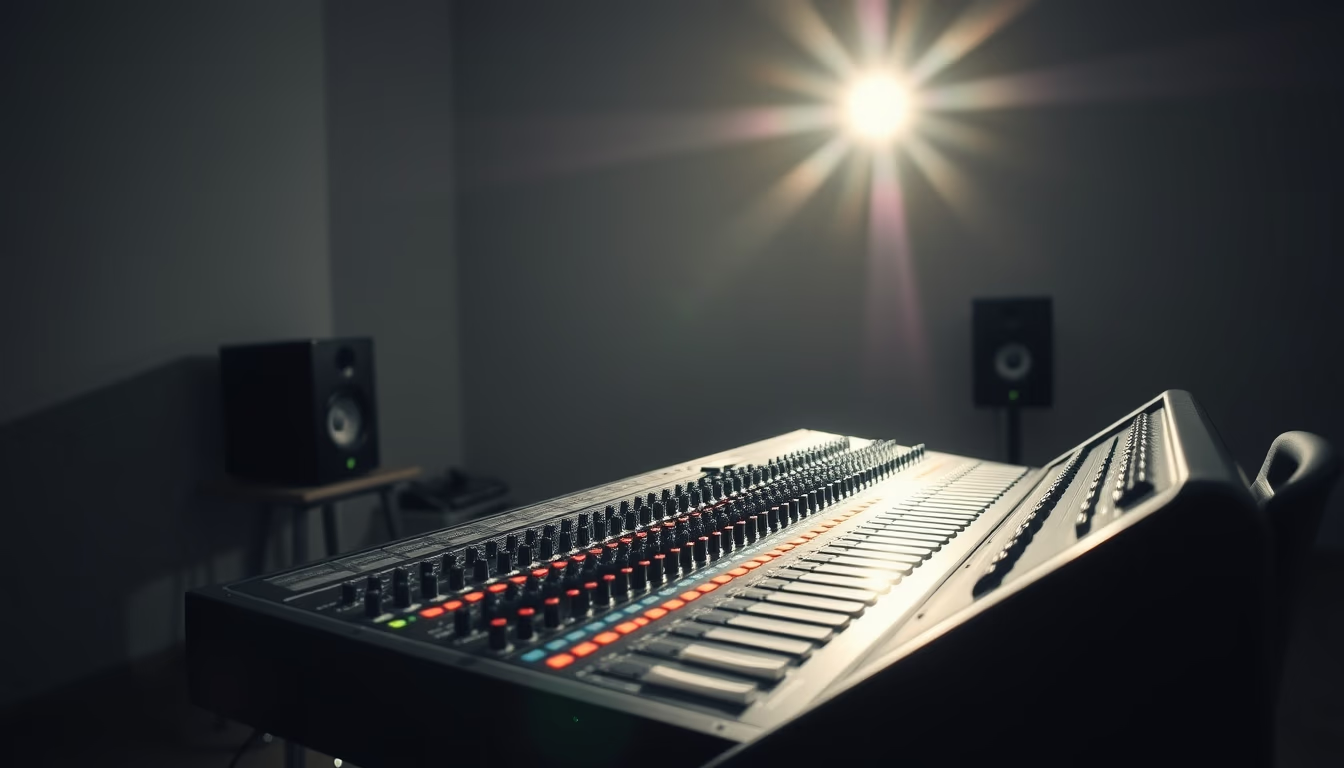
Professional mixing console, the heart of recording studios, offers precise audio control over multiple channels, essential in music production.
About this subject
The mixing console is the nerve center of any professional recording studio. It allows the sound engineer to control volumes, equalization, dynamics, and effects for each captured instrument or voice, combining dozens of signals into a coherent stereo output. These consoles evolved from the large analog panels of the 1960s and 1970s, such as the legendary Neve and SSL models, to modern digital consoles that offer full automation and computer integration.
Each channel features sections like input gain (preamp), parametric EQ, auxiliary sends for external effects, and a sliding fader. In studios, the console is used both during recording and final mixing. For live sound, digital consoles like the Yamaha CL5 or Avid Venue allow scene recalls and remote parameter control. The choice between analog and digital depends on the producer's taste: analog is prized for its unique sonic character, while digital offers flexibility and precise recall of settings.
The cultural importance of the mixing console extends beyond technique. Iconic albums like the Beatles' Abbey Road or Michael Jackson's Thriller were mixed on legendary consoles. The quest for the warm, saturated sound of analog consoles has led to a resurgence of vintage models and software emulations. Even in home studios with simplified interfaces, the mixing concept remains the same: balancing frequencies and levels to create an immersive listening experience.
Frequently Asked Questions
What is the difference between an analog and a digital mixing console?
Analog consoles process audio as continuous electrical signals, offering a warm natural sound but lacking the ability to save settings. Digital consoles convert audio to binary data, enabling automation, full recall of adjustments, built-in effects processing, and integration with DAWs.
Why are Neve consoles so famous in studios?
Neve consoles, especially the 8078 and 8028 models, are revered for their high-quality preamps and equalizers, providing a rich and musical sound. They were used in historic recordings and remain a gold standard in the recording industry.
How many channels does a professional mixing console typically have?
Studio consoles can have from 24 to over 96 channels, depending on scale. Smaller desks (16 to 32 channels) are common in home studios, while large facilities may use modular consoles with hundreds of inputs.
Direct URL
https://pub-c7d6a6ea828543ac903a74a341ccb2e1.r2.dev/imagens/mixing-console-studio-professional-minimalist-composition-p1.avifHow to credit
Include a visible link back to UtilizAí. Copy one of the snippets below:
<a href="https://xn--utiliza-eza.com/en/midia/imagens/mixing-console-studio-professional-minimalist-composition-p1">Mixing console studio professional</a> by <a href="https://xn--utiliza-eza.com">UtilizAí</a>, licensed under <a href="https://creativecommons.org/licenses/by/4.0/">CC BY 4.0</a>.
[Mixing console studio professional](https://xn--utiliza-eza.com/en/midia/imagens/mixing-console-studio-professional-minimalist-composition-p1) by [UtilizAí](https://xn--utiliza-eza.com), CC BY 4.0
License: CC-BY-4.0