Metal corrosion patina
1344×768 · AVIF · CC BY 4.0
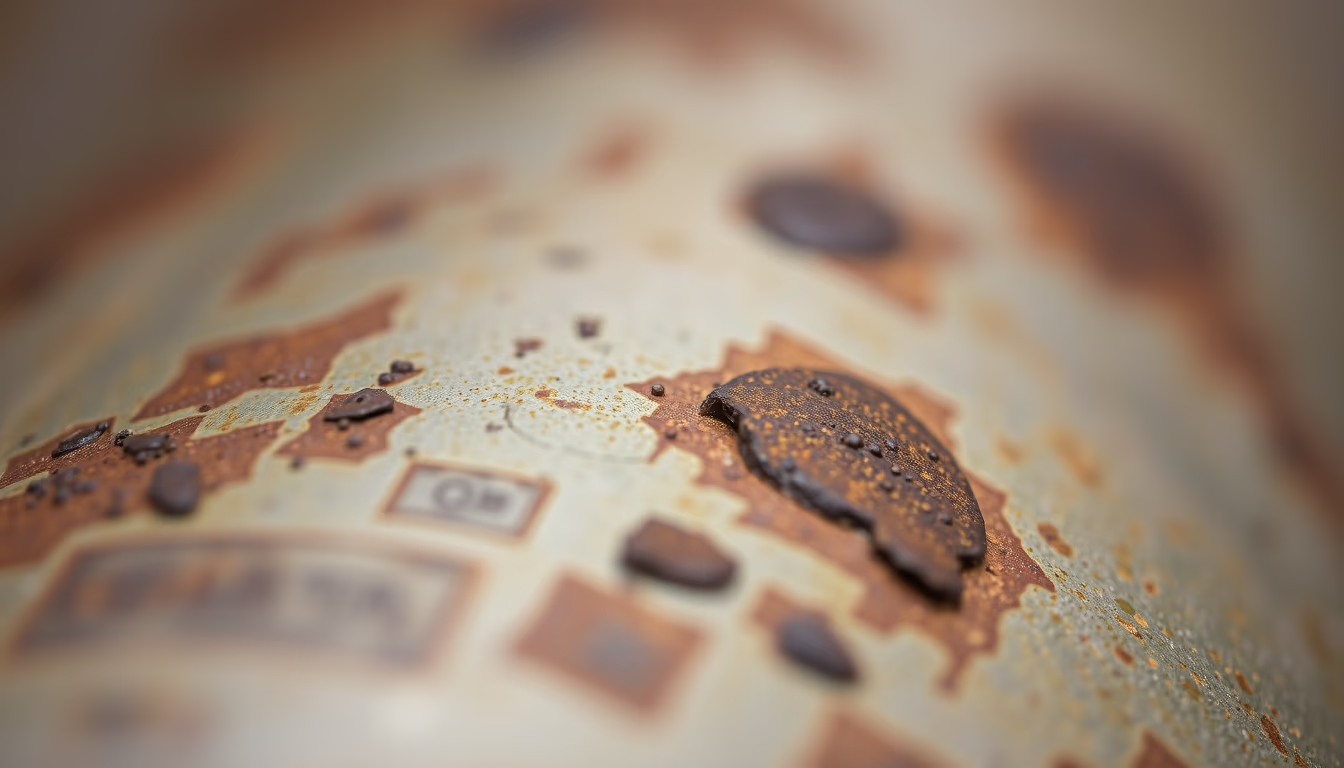
A pátina de corrosão metálica é um fenômeno natural que transforma superfícies de metal, criando camadas protetoras e coloridas.
Sobre o tema
A pátina de corrosão metálica é um processo eletroquímico que ocorre quando metais como cobre, bronze e ferro reagem com o ambiente. No cobre, a exposição prolongada ao ar e à umidade forma uma camada verde-azulada de carbonato de cobre, amplamente conhecida em estátuas como a do Cristo Redentor ou no telhado do Teatro Municipal do Rio de Janeiro. Essa camada não apenas confere uma estética única, mas também protege o metal subjacente de corrosão adicional, funcionando como uma barreira passivadora.
Diferentemente da ferrugem no ferro, que é porosa e acelera a degradação, a pátina em ligas de cobre é aderente e estável. A estátua da Liberdade, por exemplo, originalmente marrom, adquiriu sua tonalidade verde ao longo de décadas devido à formação de pátina. No Brasil, a cúpula do Palácio do Congresso Nacional em Brasília, projetada por Oscar Niemeyer, também exibe essa coloração característica.
A composição química da pátina varia conforme o metal e o ambiente. Em regiões costeiras, a presença de cloretos pode resultar em pátinas de cor verde-maçã ou até mesmo azul. Já em atmosferas poluídas com dióxido de enxofre, formam-se sulfatos que alteram a textura e a cor. Artistas e artesãos frequentemente induzem a pátina artificialmente em esculturas e joias para acelerar esse efeito decorativo, usando soluções ácidas ou amoníaco.
Culturalmente, a pátina é valorizada como sinal de autenticidade e história em objetos antigos e monumentos. Ela representa a passagem do tempo e a interação do metal com o meio. No entanto, a corrosão descontrolada pode comprometer estruturas, exigindo técnicas de conservação como a aplicação de inibidores ou tratamentos mecânicos.
Perguntas frequentes
O que causa a pátina em metais?
A pátina é causada por reações eletroquímicas entre o metal e substâncias no ambiente, como oxigênio, umidade, dióxido de carbono e poluentes. No cobre, forma-se carbonato de cobre; no bronze, compostos de estanho e cobre.
A pátina protege o metal contra corrosão?
Sim, em metais como cobre e bronze, a pátina forma uma camada aderente que isola o metal do ambiente, retardando a corrosão. Já a ferrugem no ferro não oferece proteção e acelera o processo.
Como a pátina é usada em obras de arte?
Artistas usam pátinas naturais ou induzidas quimicamente para dar cor e textura a esculturas e joias. Soluções de ácido nítrico, amoníaco ou enxofre são aplicadas para criar efeitos verdes, azuis ou marrons.
URL direta
https://pub-c7d6a6ea828543ac903a74a341ccb2e1.r2.dev/imagens/metal-corrosion-patina-macro-closeup-p2.avifComo creditar
Inclua um link visível de volta pro UtilizAí. Copie um dos snippets abaixo:
<a href="https://xn--utiliza-eza.com/midia/imagens/metal-corrosion-patina-macro-closeup-p2">Metal corrosion patina</a> by <a href="https://xn--utiliza-eza.com">UtilizAí</a>, licensed under <a href="https://creativecommons.org/licenses/by/4.0/">CC BY 4.0</a>.
[Metal corrosion patina](https://xn--utiliza-eza.com/midia/imagens/metal-corrosion-patina-macro-closeup-p2) by [UtilizAí](https://xn--utiliza-eza.com), CC BY 4.0
Licença: CC-BY-4.0