Medieval armor display
1344×768 · AVIF · CC BY 4.0
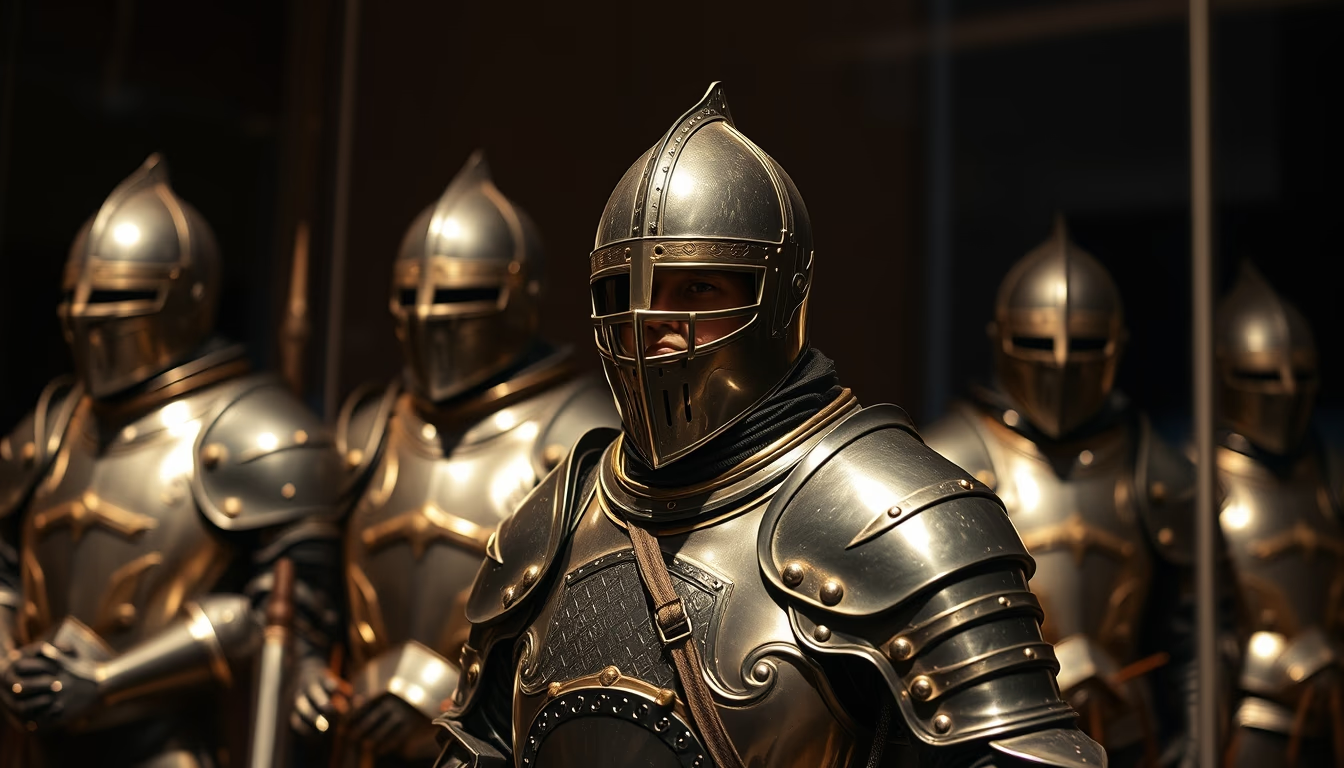
Medieval armor on display reveals the engineering and artistry of military protection between the 14th and 16th centuries.
About this subject
Medieval armor, a centerpiece of any military antiquities collection, reached its technical and aesthetic peak between the 14th and 16th centuries. Contrary to popular imagination, not every warrior wore full plate steel armor; it was a privilege of knights and nobles due to the high production cost. A complete harness could weigh between 20 and 30 kilograms, distributed to allow relative mobility. Armorers specialized in techniques like quenching and tempering to balance hardness and flexibility.
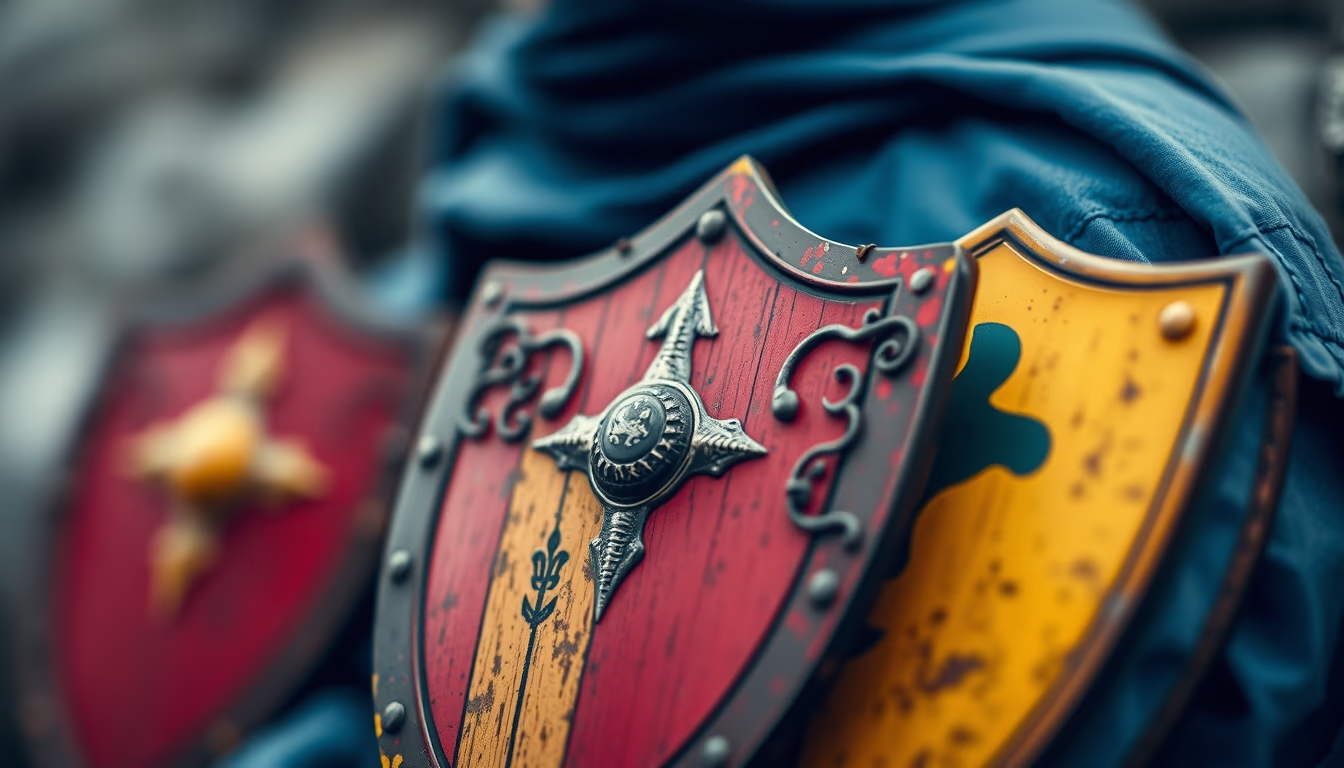
The evolution of armor mirrored changes in offensive weapons. The rise of powerful crossbows and early firearms led to thicker, sloped plates to deflect projectiles. By the 15th century, German Gothic armor and Italian Milanese armor were recognized for their elegant lines and strategic reinforcements. Beyond protection, armor served a symbolic function: crests and ornaments indicated lineage and battle achievements. In tournaments, specific pieces like jousting armor were reinforced to withstand lance impacts.
With the advancement of firearms in the 16th century, plate armor gradually lost battlefield effectiveness, surviving only in ceremonies and displays. Today, original pieces are rare and valuable, preserved in museums such as the Metropolitan Museum of Art and the Musée de l'Armée. Analysis of these pieces provides data on ancient metallurgy, ergonomics, and even the diet of knights, as wear marks indicate repetitive motions and stress points. Displaying these objects allows the public to appreciate both the functionality and intrinsic beauty of these pre-industrial masterpieces.
Frequently Asked Questions
How much did a complete medieval armor weigh?
A full suit of armor typically weighed between 20 and 30 kg, depending on type and period. The weight was distributed across the body to avoid overburdening the wearer.
Why was medieval armor abandoned?
The advancement of firearms like muskets and arquebuses made plate armor ineffective. By the 17th century, its military use was abandoned, surviving only in ceremonial contexts.
Where can I see original medieval armor today?
Museums such as the Metropolitan Museum of Art (New York), the Musée de l'Armée (Paris), and the Royal Armoury (Madrid) hold significant collections of original medieval armor.
Direct URL
https://pub-c7d6a6ea828543ac903a74a341ccb2e1.r2.dev/imagens/medieval-armor-display-fine-art-photography-p3.avifHow to credit
Include a visible link back to UtilizAí. Copy one of the snippets below:
<a href="https://xn--utiliza-eza.com/en/midia/imagens/medieval-armor-display-fine-art-photography-p3">Medieval armor display</a> by <a href="https://xn--utiliza-eza.com">UtilizAí</a>, licensed under <a href="https://creativecommons.org/licenses/by/4.0/">CC BY 4.0</a>.
[Medieval armor display](https://xn--utiliza-eza.com/en/midia/imagens/medieval-armor-display-fine-art-photography-p3) by [UtilizAí](https://xn--utiliza-eza.com), CC BY 4.0
License: CC-BY-4.0