Maritime signal flags
1344×768 · AVIF · CC BY 4.0
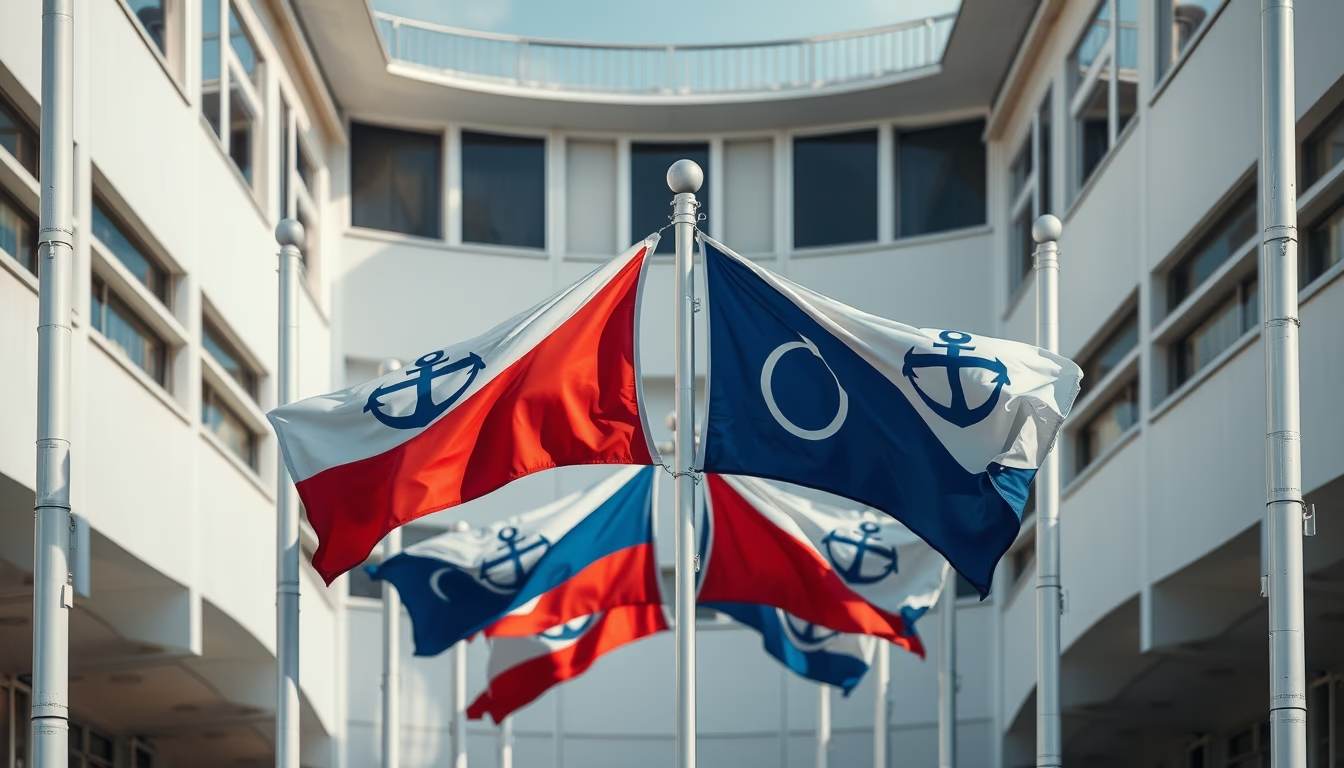
Maritime signal flags are used for communication between ships, with an international system of 40 flags representing letters, numbers and messages.
About this subject
Maritime signal flags, also known as the International Code of Signals (ICS) flags, form a standardized visual communication system used by vessels worldwide. The code was established in 1855 by the British Board of Trade and revised over the years, being adopted internationally in 1931. The complete set includes 26 flags for letters (A to Z), 10 for numbers (0 to 9), 3 substitute flags, and 1 code flag (answering pennant). Each flag has specific shapes and colors, such as the blue-and-white checkerboard of letter A or the red-and-yellow triangular of letter G.
Flag communication allows transmitting simple or complex messages, such as ship identification, requests for assistance, weather warnings, and maneuvers. For instance, the Q flag (yellow) means 'my vessel is healthy' and is used to request free pratique in ports. The system also includes two-flag combinations for standardized messages, like 'AZ' for 'I am drifting' or 'NC' for 'I am in distress and require immediate assistance'. Although modern technologies like radio and satellite have reduced daily use, flags remain mandatory on merchant and naval ships, especially for emergency communications or when electronic equipment fails.
Interestingly, maritime signal flags also inspire decoration and fashion, with their vibrant colors and geometric patterns. Replicas are used in nautical parties, bar decor, and even clothing. Moreover, the flag system is a cultural reference: the expression 'show the flag' means to display nationality or affiliation, and 'flag of convenience' refers to ships registered in countries with more lenient regulations. Knowledge of these flags is essential for sailors and enthusiasts, taught in navigation courses and regulated by the International Maritime Organization (IMO).
Frequently Asked Questions
How many flags make up the International Code of Signals?
There are 40 flags in total: 26 for letters (A to Z), 10 for numbers (0 to 9), 3 substitute flags, and 1 code flag (answering pennant).
Which flag means 'my vessel is healthy' and what is it used for?
The Q flag (yellow) means 'my vessel is healthy' and is hoisted to request free pratique (permission to enter) when the ship arrives at a port, indicating no diseases on board.
Are signal flags still used today?
Yes, they remain mandatory on merchant and naval ships for emergency communications or when electronic equipment fails, though daily use has decreased with radio and satellite.
Direct URL
https://pub-c7d6a6ea828543ac903a74a341ccb2e1.r2.dev/imagens/maritime-signal-flags-architectural-photography-fresh7.avifHow to credit
Include a visible link back to UtilizAí. Copy one of the snippets below:
<a href="https://xn--utiliza-eza.com/en/midia/imagens/maritime-signal-flags-architectural-photography-fresh7">Maritime signal flags</a> by <a href="https://xn--utiliza-eza.com">UtilizAí</a>, licensed under <a href="https://creativecommons.org/licenses/by/4.0/">CC BY 4.0</a>.
[Maritime signal flags](https://xn--utiliza-eza.com/en/midia/imagens/maritime-signal-flags-architectural-photography-fresh7) by [UtilizAí](https://xn--utiliza-eza.com), CC BY 4.0
License: CC-BY-4.0