Manga panels black white
1344×768 · AVIF · CC BY 4.0
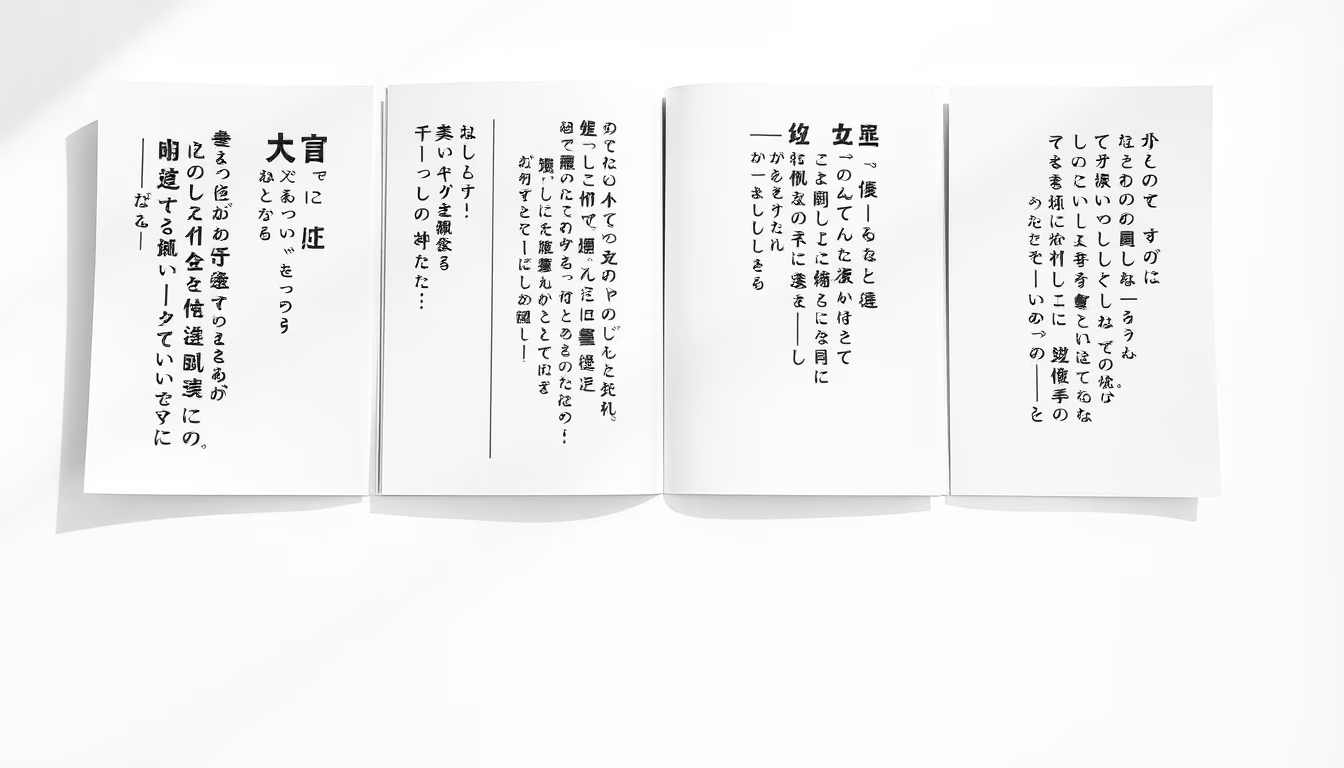
Black and white manga panels exploring minimalism and visual storytelling, characteristic of Japanese sequential art.
About this subject
Manga, as a form of sequential art originating in Japan, frequently uses black and white to tell stories efficiently and impactfully. This aesthetic choice is not only economical but also allows artists to focus on composition, contrast, and visual rhythm. Minimalist panels with clean lines and generous negative space are a hallmark of renowned mangakas such as Jiro Taniguchi and Taiyo Matsumoto. The absence of color forces the reader to interpret shadows, textures, and emotions through linework and the distribution of black and white.
Hatching and screen tones are widely employed to create depth and atmosphere without relying on color. In minimalist compositions, each panel is carefully planned to guide the reader's eye and convey action or emotional states. The use of visual silence, with nearly empty panels, can represent introspection or dramatic pauses. This approach is particularly common in seinen and alternative genres.
Culturally, black-and-white manga is accessible and quick to produce, enabling weekly serialization in magazines like Shonen Jump. Major classics such as "Akira" and "Ghost in the Shell" demonstrate how extreme contrast and simplified forms can create iconic imagery. The minimalist trend in manga also dialogues with the wabi-sabi aesthetic, valuing imperfection and simplicity.
For aspiring illustrators, studying black-and-white manga panels is essential for understanding graphic design fundamentals: balance, reading flow, and visual hierarchy. Minimalist composition challenges the artist to eliminate the superfluous, keeping only what is essential for the narrative.
Frequently Asked Questions
Why is manga traditionally drawn in black and white?
Historical and economic reasons: black-and-white production reduces printing costs and speeds up weekly publication. It also allows artists to focus on linework and visual composition without chromatic distractions.
What characterizes a minimalist composition in manga?
Use of simple lines, ample empty space, stark contrast between black and white, elimination of superfluous details. Each panel communicates only what is essential for emotion or action, valuing visual silence.
Which mangakas are known for their minimalist style?
Jiro Taniguchi (e.g., 'The Walking Man'), Taiyo Matsumoto ('Tekkonkinkreet'), and Naoki Urasawa ('Monster') are examples of artists who master sparse and expressive panels.
Direct URL
https://pub-c7d6a6ea828543ac903a74a341ccb2e1.r2.dev/imagens/manga-panels-black-white-minimalist-composition-fresh13.avifHow to credit
Include a visible link back to UtilizAí. Copy one of the snippets below:
<a href="https://xn--utiliza-eza.com/en/midia/imagens/manga-panels-black-white-minimalist-composition-fresh13">Manga panels black white</a> by <a href="https://xn--utiliza-eza.com">UtilizAí</a>, licensed under <a href="https://creativecommons.org/licenses/by/4.0/">CC BY 4.0</a>.
[Manga panels black white](https://xn--utiliza-eza.com/en/midia/imagens/manga-panels-black-white-minimalist-composition-fresh13) by [UtilizAí](https://xn--utiliza-eza.com), CC BY 4.0
License: CC-BY-4.0