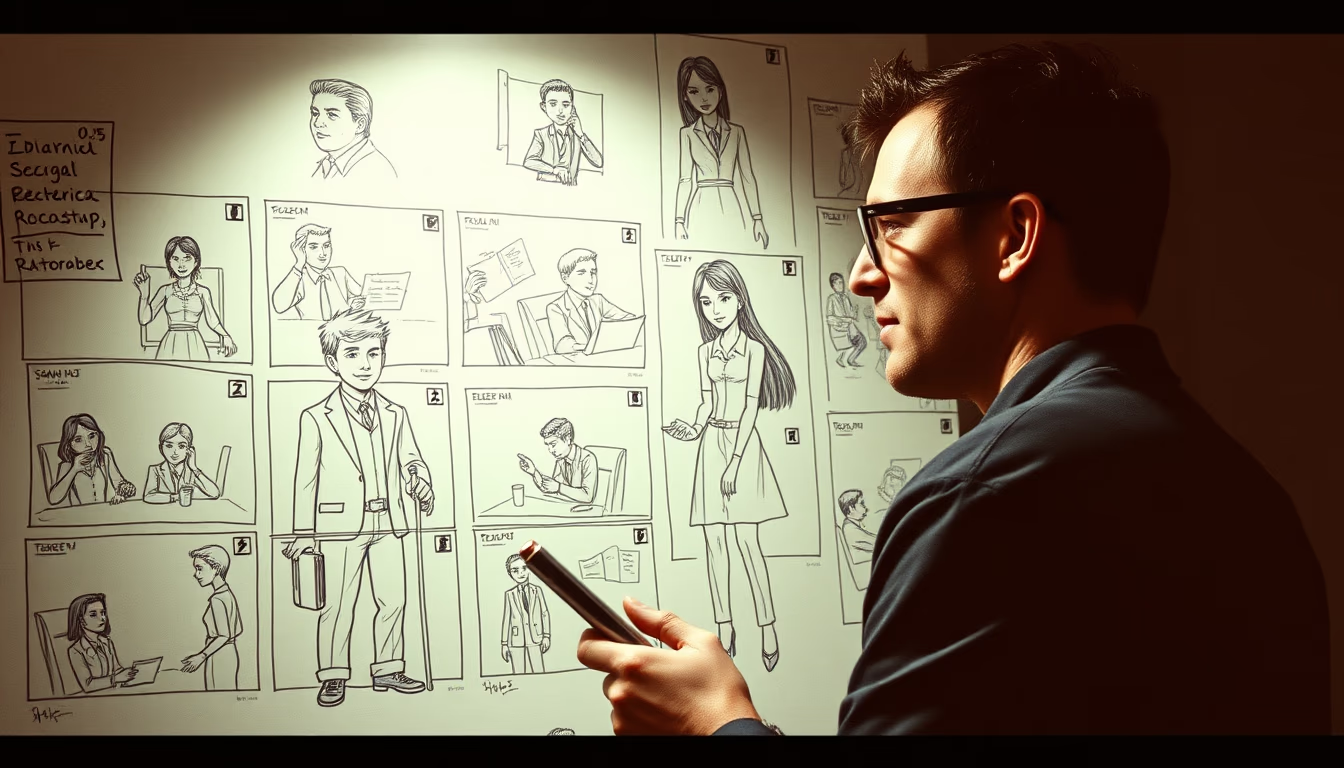
Manga panels black white
1344×768 · AVIF · CC BY 4.0
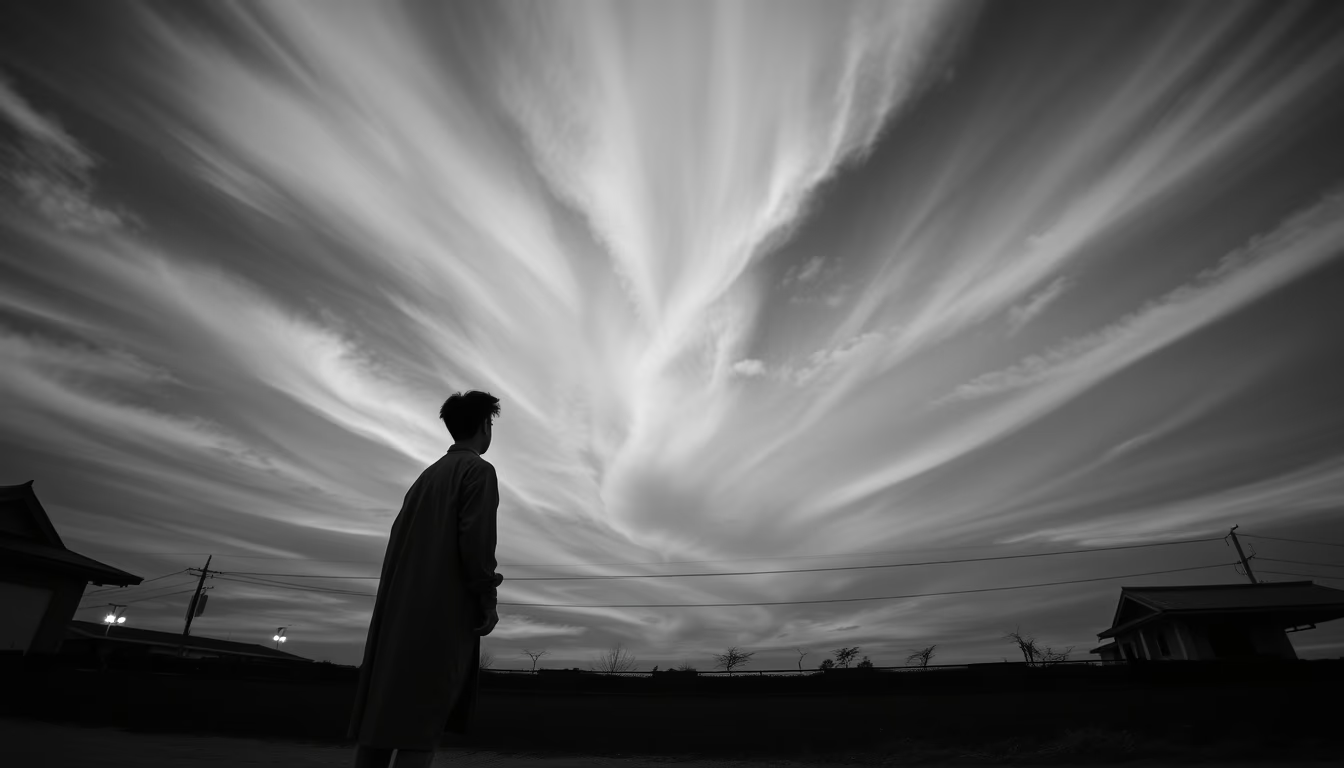
Manga is traditionally published in black and white, using techniques like screentone and hatching to create texture and depth on the pages.
About this subject
Manga, Japanese comics, are predominantly printed in black and white for historical and economic reasons. Monochrome printing reduces production costs, allowing magazines like Weekly Shonen Jump to release hundreds of pages weekly at affordable prices. This chromatic limitation, however, does not hinder artists' expressiveness. On the contrary, it drives them to maximize the use of black-and-white contrast, dynamic lines, and distribution of dark masses to guide the reader's eye.
Manga panels follow a fluid narrative structure, often breaking the rigidity of Western comics. Japanese artists vary panel sizes and shapes to control reading rhythm. Additionally, techniques such as stylized onomatopoeia and screentone (adhesive halftone sheets) are hallmarks of the style. Screentone, composed of dot, line, or texture patterns, is applied to specific areas to suggest shading, mood, or emotion without needing color.
Globally, manga has influenced countless Western works, from visual storytelling to the black-and-white aesthetic. Series like Katsuhiro Otomo's "Akira" and Masashi Kishimoto's "Naruto" exemplify how monochrome art can convey intense action and complex emotions. In Brazil, manga culture has grown exponentially since the 1990s, with publishers like JBC and Panini releasing black-and-white titles that captivate readers of all ages.
Frequently Asked Questions
Why are manga in black and white?
The main reason is economic: black-and-white printing is cheaper, allowing magazines to publish many pages weekly. Additionally, the tradition became established, and artists developed expressive techniques that do not require color.
What is screentone and how is it used in manga?
Screentone is an adhesive sheet with dot or texture patterns that artists cut and paste onto the drawing to create shading, textures, or atmospheres. It is applied to specific areas to suggest volumes or emotions, like gray gradients.
How do manga panels influence reading rhythm?
Panels vary in size and shape to speed up or slow down the narrative. Smaller, narrower panels create tension or fast action, while large, open panels allow dramatic pauses or establish settings.
Direct URL
https://pub-c7d6a6ea828543ac903a74a341ccb2e1.r2.dev/imagens/manga-panels-black-white-long-exposure-fresh3.avifHow to credit
Include a visible link back to UtilizAí. Copy one of the snippets below:
<a href="https://xn--utiliza-eza.com/en/midia/imagens/manga-panels-black-white-long-exposure-fresh3">Manga panels black white</a> by <a href="https://xn--utiliza-eza.com">UtilizAí</a>, licensed under <a href="https://creativecommons.org/licenses/by/4.0/">CC BY 4.0</a>.
[Manga panels black white](https://xn--utiliza-eza.com/en/midia/imagens/manga-panels-black-white-long-exposure-fresh3) by [UtilizAí](https://xn--utiliza-eza.com), CC BY 4.0
License: CC-BY-4.0