Manga panels black white
1344×768 · AVIF · CC BY 4.0
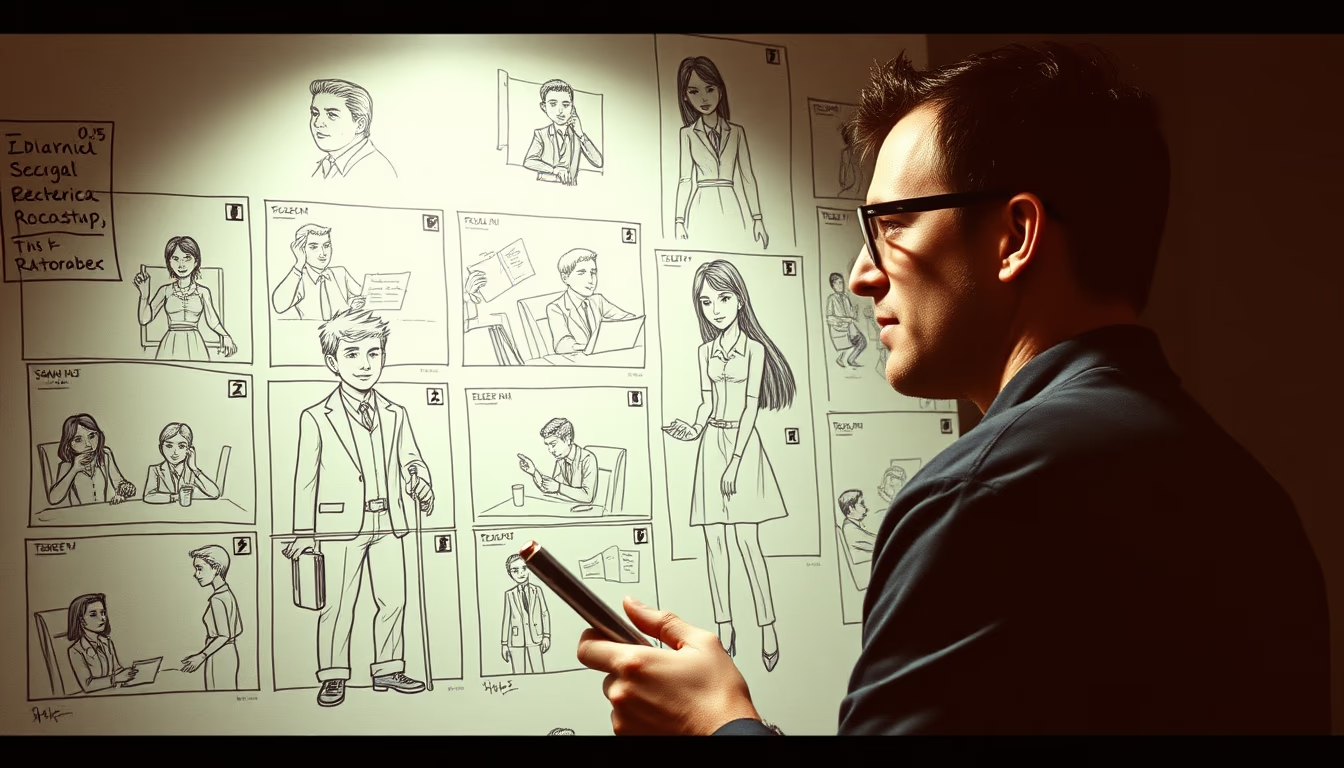
Black and white manga panels define the aesthetics of Japanese comics, using hatching and screentone techniques to convey emotion and motion.
About this subject
The tradition of black and white manga dates back to post-war Japan, when resource scarcity and printing costs made full-color reproduction impractical. This limitation, however, became a defining feature of the medium, forcing artists to master monochromatic visual language. Hatching is used to create textures and shadows, while stippling and screentones allow for gray gradations without additional ink. Panels, arranged in dynamic sequences, guide the reader's eye and establish narrative rhythm.
Techniques such as solid black backgrounds (kuro) and negative space (ma) are essential for highlighting key elements or conveying silence and introspection. The contrast between white paper and black ink ensures clear readability even in dense pages, and the absence of color demands precision in visual communication. Mangaka like Osamu Tezuka, the father of modern manga, popularized these techniques in the 1950s, influencing generations. Today, despite the availability of digital color, most commercial manga remain black and white due to tradition, cost, and aesthetic preference.
Monochrome also enhances dramatic impact. A flurry of punches in a fighting manga, for example, becomes visually striking when rendered only with swift lines and ink blots. Moreover, the reader is not distracted by color palettes, focusing instead on character expressions and action flow. For aspiring artists, studying black and white panels is a school of composition and visual storytelling, as every line must be intentional.
Internationally, black and white manga have won over audiences previously accustomed to colored comics. The unique visual signature has become a cultural hallmark, inspiring everything from illustrations to anime that retain the panel aesthetics. In art exhibitions, original manga pages are appreciated as standalone works, showcasing the skill of linework and the interplay of light and shadow that the lack of color provides.
Frequently Asked Questions
Why are manga in black and white?
Historically, post-war Japan's resource shortages and the high cost of color printing led manga to adopt black and white. Today, it has become a traditional aesthetic and economic choice that emphasizes linework and visual storytelling.
What are screentones?
Screentones are adhesive or digital sheets with dot patterns or textures used to create shadows, gradients, and visual effects in manga. They replace the need for manual hatching over large areas.
How do manga artists create depth without color?
They use techniques like cross-hatching, varying line thickness, screentone shading, and contrast between black and white. Panel spacing and solid black backgrounds also help simulate depth.
Direct URL
https://pub-c7d6a6ea828543ac903a74a341ccb2e1.r2.dev/imagens/manga-panels-black-white-aerial-drone-shot-fresh11.avifHow to credit
Include a visible link back to UtilizAí. Copy one of the snippets below:
<a href="https://xn--utiliza-eza.com/en/midia/imagens/manga-panels-black-white-aerial-drone-shot-fresh11">Manga panels black white</a> by <a href="https://xn--utiliza-eza.com">UtilizAí</a>, licensed under <a href="https://creativecommons.org/licenses/by/4.0/">CC BY 4.0</a>.
[Manga panels black white](https://xn--utiliza-eza.com/en/midia/imagens/manga-panels-black-white-aerial-drone-shot-fresh11) by [UtilizAí](https://xn--utiliza-eza.com), CC BY 4.0
License: CC-BY-4.0