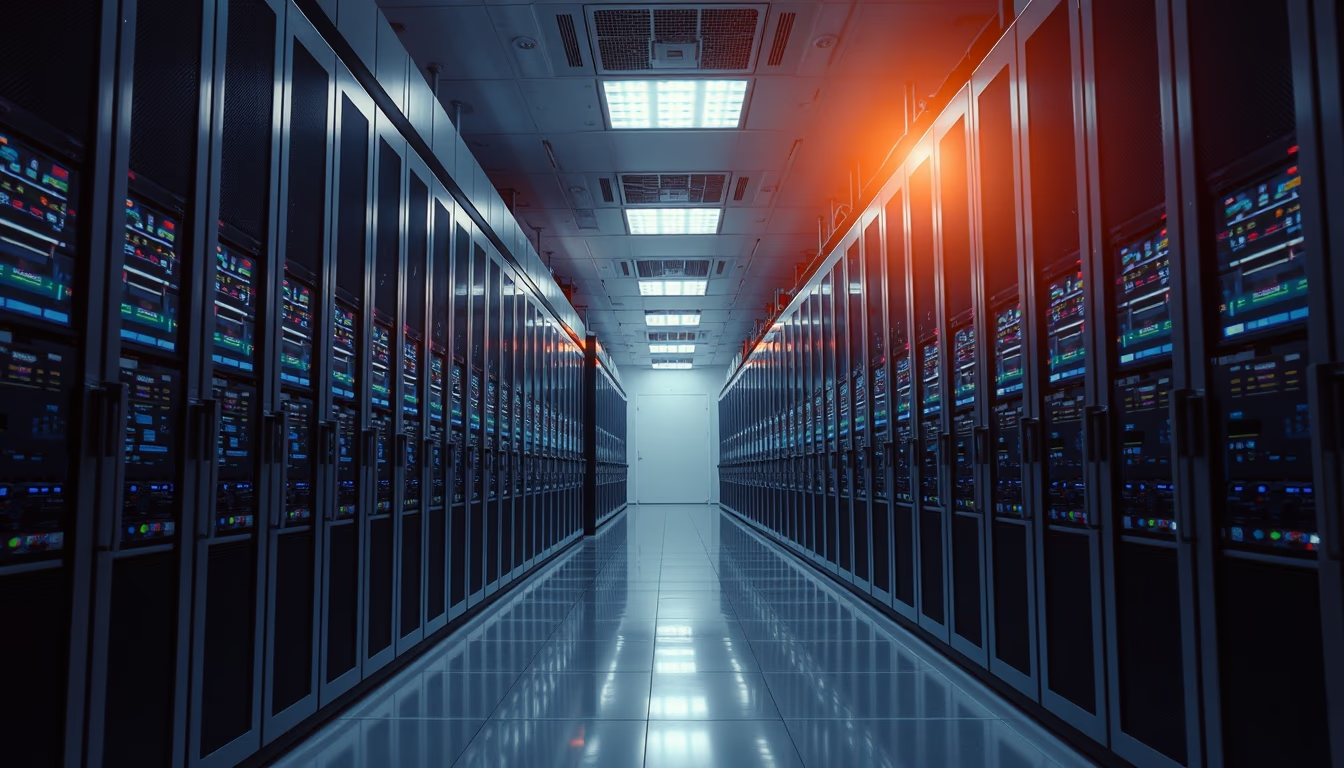
Mainframe computer ibm
1344×768 · AVIF · CC BY 4.0
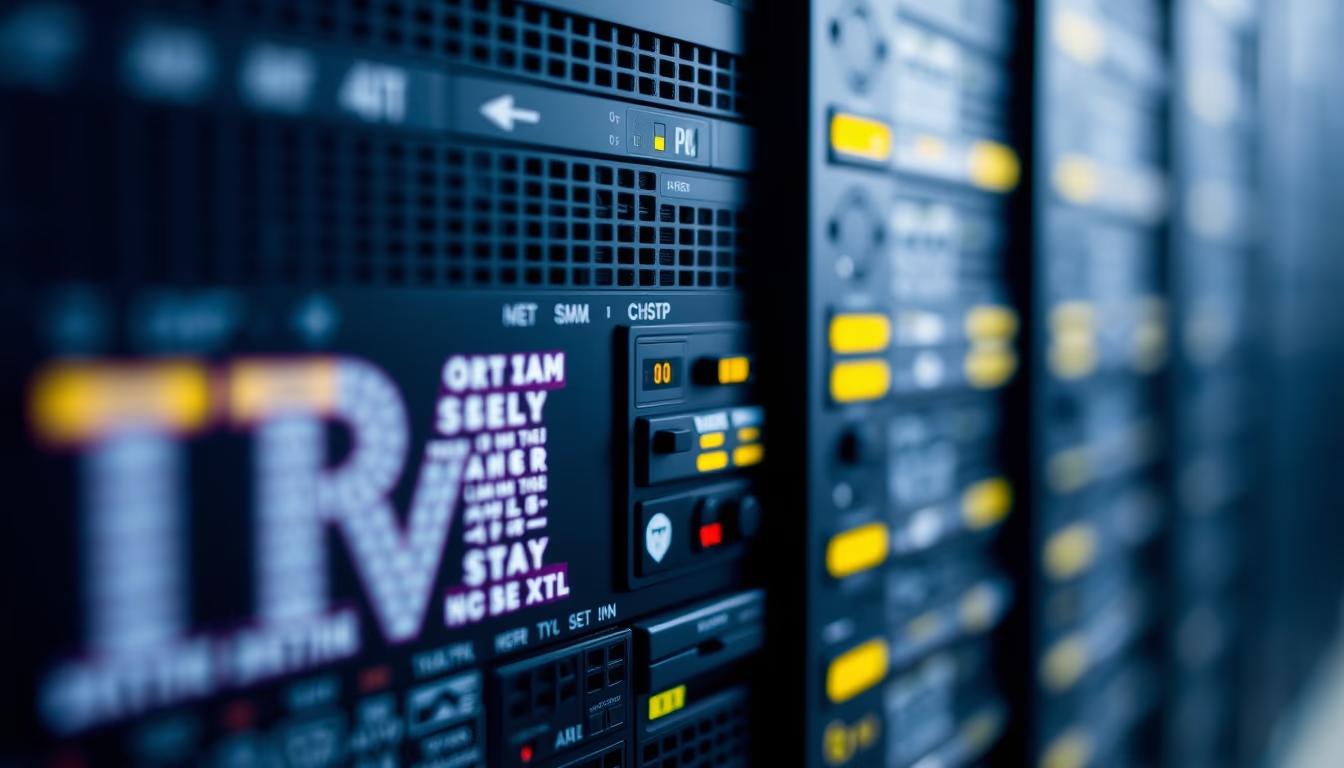
IBM mainframes are high-capacity enterprise servers, renowned for their reliability and security in processing critical transactions.
About this subject
IBM mainframes represent a lineage of computers that dates back to the System/360, launched in 1964. This family established the concept of a compatible architecture across different models, enabling software to run on machines of varying sizes. Today, IBM mainframes operate under the z/Architecture, with operating systems such as z/OS, z/VM, and Linux. They are designed to process enormous volumes of simultaneous transactions, with availability guarantees of 99.999% (five nines).
The relevance of mainframes in Brazil is significant. Large banks, insurance companies, telecom operators, and government agencies rely on these machines to process financial transactions, payrolls, and reservation systems. One example is Banco do Brasil, which uses IBM mainframes for its core banking system. The ability to scale vertically (adding more processors and memory) without service interruption is a critical differentiator.
Technical curiosity: modern IBM mainframe processors use chips manufactured at 14 or 7 nanometer technology, with multiple cores and huge caches. They are cooled by water or forced air systems, and memory modules can reach tens of terabytes. Security is another pillar: mainframes implement hardware-based encryption and workload isolation using Logical Partitions (LPARs).
Despite the rise of cloud computing, mainframes remain the backbone of many critical applications. IBM invests in hybrid cloud integration, allowing mainframes to connect to environments such as AWS and Azure. This ensures that companies can gradually modernize their systems without losing the reliability that only a mainframe provides.
Frequently Asked Questions
What differentiates a mainframe from a regular server?
Mainframes are designed for high availability, security, and mass transaction processing. They support component redundancy, hot swapping, and workload isolation, features rare in standard servers.
Why are IBM mainframes still used?
They offer extreme reliability, high-volume transaction processing, and robust security. Many legacy applications and critical financial systems were built for mainframes and cannot be easily migrated without risk.
How does a mainframe integrate with the cloud?
IBM offers hybrid cloud solutions that connect mainframes to providers like AWS, Azure, and IBM Cloud. This allows critical data and processes to be accessed by modern applications while maintaining mainframe security.
Direct URL
https://pub-c7d6a6ea828543ac903a74a341ccb2e1.r2.dev/imagens/mainframe-computer-ibm-macro-closeup-p10.avifHow to credit
Include a visible link back to UtilizAí. Copy one of the snippets below:
<a href="https://xn--utiliza-eza.com/en/midia/imagens/mainframe-computer-ibm-macro-closeup-p10">Mainframe computer ibm</a> by <a href="https://xn--utiliza-eza.com">UtilizAí</a>, licensed under <a href="https://creativecommons.org/licenses/by/4.0/">CC BY 4.0</a>.
[Mainframe computer ibm](https://xn--utiliza-eza.com/en/midia/imagens/mainframe-computer-ibm-macro-closeup-p10) by [UtilizAí](https://xn--utiliza-eza.com), CC BY 4.0
License: CC-BY-4.0