Magnifying glass papers
1344×768 · AVIF · CC BY 4.0
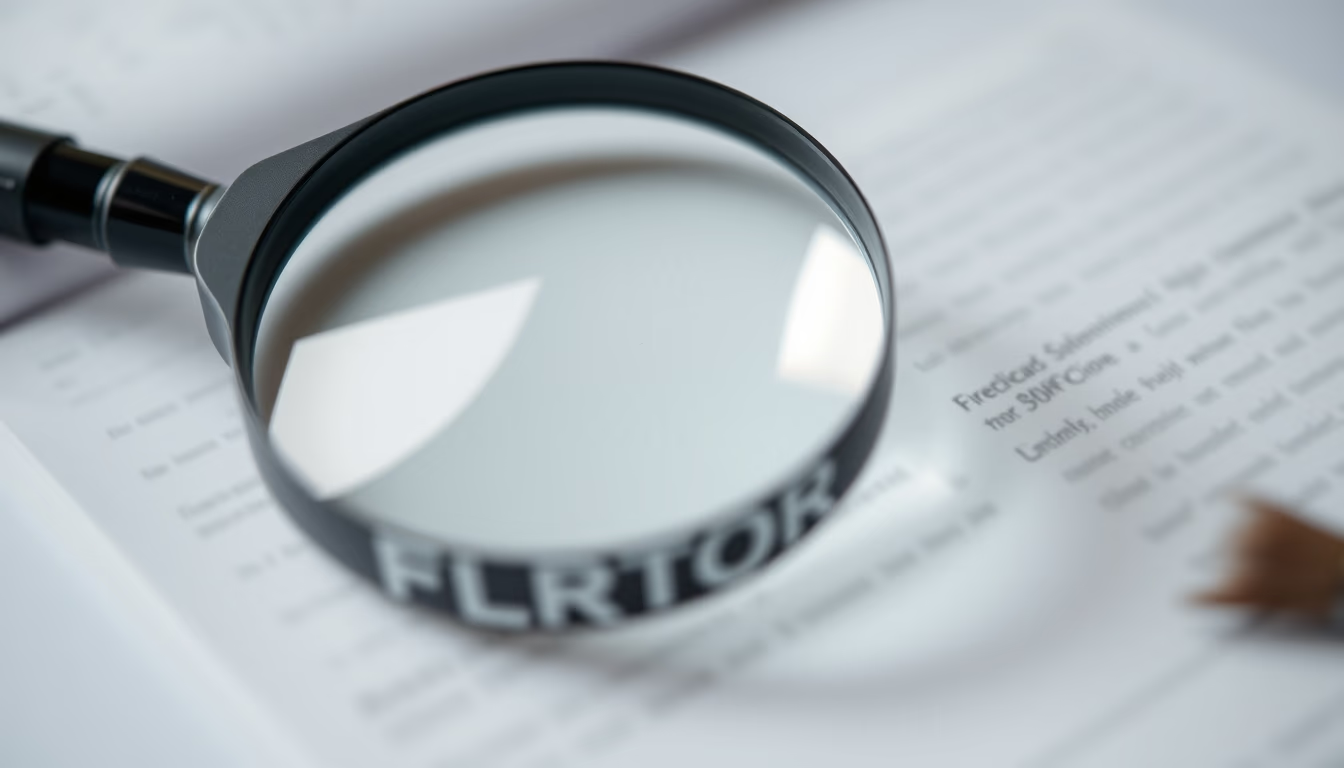
Magnifying glass over old papers reveals hidden details in historical documents, essential for authentication and conservation.
About this subject
The magnifying glass is an essential optical tool for examining old papers, allowing observation of fibers, watermarks, textures, and even corrections or erasures invisible to the naked eye. In historical archives, museums, and libraries, magnifying glasses assist conservators and historians in analyzing manuscripts, maps, and rare documents. For instance, identifying watermarks can date the paper and verify its provenance, while studying ink reveals alterations or forged signatures. Techniques like micrography and raking light photography rely on magnifiers to highlight details that would otherwise go unnoticed.
In the antiques market, authenticity is critical. Collectors and appraisers use illuminated magnifiers (such as jeweler's loupes) to inspect stamps, engravings, and rare books. A simple magnification can detect if paper has been artificially aged or if the printing truly matches the claimed period. Magnifying glasses are also used in restoration: to remove dirt or apply consolidants, the conservator needs to see every particle.
Interestingly, the use of magnifying glasses dates back to the 13th century with the first reading glasses. In the digital age, high-resolution scanners have partially replaced magnifiers, but they remain indispensable for direct contact with the object. A hand-held magnifying glass is compact, inexpensive, and requires no power, ideal for fieldwork at auctions or dusty archives. Moreover, it provides a tactile experience that digital zoom cannot replicate: the user adjusts focus and distance manually, forging a closer connection with the historical material.
The image of a magnifying glass over papers evokes the meticulous investigation that characterizes paleography and diplomatics, sciences that decipher ancient documents. Without optical magnification, many historical discoveries would have been lost. For example, analysis of medieval illuminated manuscripts reveals pigments and gold application techniques that are only visible under a magnifying glass.
Frequently Asked Questions
What is the purpose of a magnifying glass in analyzing old documents?
A magnifying glass enlarges details such as watermarks, paper texture, ink type, and possible erasures, helping to authenticate and date the document.
What is the difference between a hand magnifier and a jeweler's loupe?
A jeweler's loupe has higher magnification (10x or more) and often includes built-in lighting, making it ideal for close inspection of tiny details like stamps or signatures.
Are magnifying glasses still used alongside modern scanners?
Yes, they are complementary. While scanners capture digital images, magnifying glasses allow direct visual examination, manual focus adjustment, and identification of three-dimensional features that a scanner might miss.
Direct URL
https://pub-c7d6a6ea828543ac903a74a341ccb2e1.r2.dev/imagens/magnifying-glass-papers-macro-closeup-p8.avifHow to credit
Include a visible link back to UtilizAí. Copy one of the snippets below:
<a href="https://xn--utiliza-eza.com/en/midia/imagens/magnifying-glass-papers-macro-closeup-p8">Magnifying glass papers</a> by <a href="https://xn--utiliza-eza.com">UtilizAí</a>, licensed under <a href="https://creativecommons.org/licenses/by/4.0/">CC BY 4.0</a>.
[Magnifying glass papers](https://xn--utiliza-eza.com/en/midia/imagens/magnifying-glass-papers-macro-closeup-p8) by [UtilizAí](https://xn--utiliza-eza.com), CC BY 4.0
License: CC-BY-4.0