Maglev train tokyo
1344×768 · AVIF · CC BY 4.0
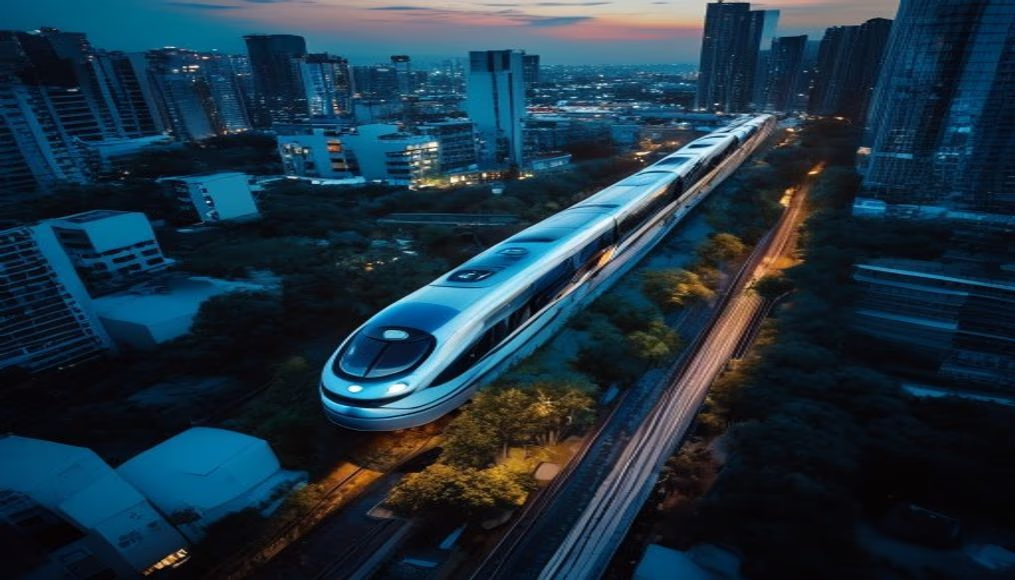
O trem maglev japonês, que ligará Tóquio a Nagoya e Osaka, é o trem mais rápido do mundo, atingindo 603 km/h em testes.
Sobre o tema
O trem maglev (levitação magnética) japonês, desenvolvido pela Central Japan Railway Company, representa o estado da arte em transporte ferroviário de alta velocidade. Diferente dos trens-bala Shinkansen, que usam rodas sobre trilhos, o maglev flutua magneticamente, eliminando o atrito e permitindo velocidades superiores a 600 km/h. Em 2015, um protótipo da série L0 estabeleceu o recorde mundial de 603 km/h na linha de teste de Yamanashi.
A rota planejada é a Linha Chuo Shinkansen, que cortará o centro do Japão, ligando Tóquio a Nagoya em cerca de 40 minutos (contra 1h40 do Shinkansen atual) e posteriormente a Osaka em aproximadamente 67 minutos. O projeto enfrenta desafios geológicos significativos, com 86% do percurso em túneis, incluindo seções sob os Alpes Japoneses. A construção começou em 2014, com previsão de operação Tóquio-Nagoya para 2027 e extensão a Osaka até 2037.
O sistema utiliza eletroímãs supercondutores refrigerados a hélio líquido, que geram campos magnéticos intensos para levantar e propulsionar o trem. A estabilidade é garantida por sensores e sistemas de controle computadorizados que ajustam a distância entre o trem e a pista (cerca de 10 cm). Além da velocidade, o maglev oferece baixo ruído e vibração, além de ser energeticamente eficiente em altas velocidades.
Culturalmente, o maglev simboliza a inovação tecnológica japonesa e seu compromisso com a pontualidade e eficiência. O projeto também visa aliviar o congestionamento na rota Tóquio-Osaka, uma das mais movimentadas do mundo, e impulsionar o desenvolvimento econômico das regiões atendidas. Contudo, o custo estimado de mais de 9 trilhões de ienes (cerca de 80 bilhões de dólares) gerou debates sobre viabilidade financeira e impacto ambiental da construção de túneis.
Perguntas frequentes
Quão rápido é o trem maglev de Tóquio?
O trem maglev japonês atingiu a velocidade recorde de 603 km/h em testes. Na operação comercial, a velocidade máxima prevista é de 505 km/h.
Quando a linha Chuo Shinkansen estará operacional?
O trecho entre Tóquio e Nagoya deve iniciar operação em 2027. A extensão até Osaka está prevista para 2037, dependendo da conclusão das obras.
Qual a diferença entre o maglev e o trem-bala Shinkansen?
O Shinkansen usa rodas sobre trilhos, enquanto o maglev levita magneticamente, eliminando o atrito. Isso permite ao maglev velocidades superiores (até 605 km/h) e menor ruído, mas exige uma infraestrutura completamente nova.
URL direta
https://pub-c7d6a6ea828543ac903a74a341ccb2e1.r2.dev/imagens/maglev-train-tokyo-aerial-drone-shot-p3.avifComo creditar
Inclua um link visível de volta pro UtilizAí. Copie um dos snippets abaixo:
<a href="https://xn--utiliza-eza.com/midia/imagens/maglev-train-tokyo-aerial-drone-shot-p3">Maglev train tokyo</a> by <a href="https://xn--utiliza-eza.com">UtilizAí</a>, licensed under <a href="https://creativecommons.org/licenses/by/4.0/">CC BY 4.0</a>.
[Maglev train tokyo](https://xn--utiliza-eza.com/midia/imagens/maglev-train-tokyo-aerial-drone-shot-p3) by [UtilizAí](https://xn--utiliza-eza.com), CC BY 4.0
Licença: CC-BY-4.0