Lightbox tracing
1344×768 · AVIF · CC BY 4.0

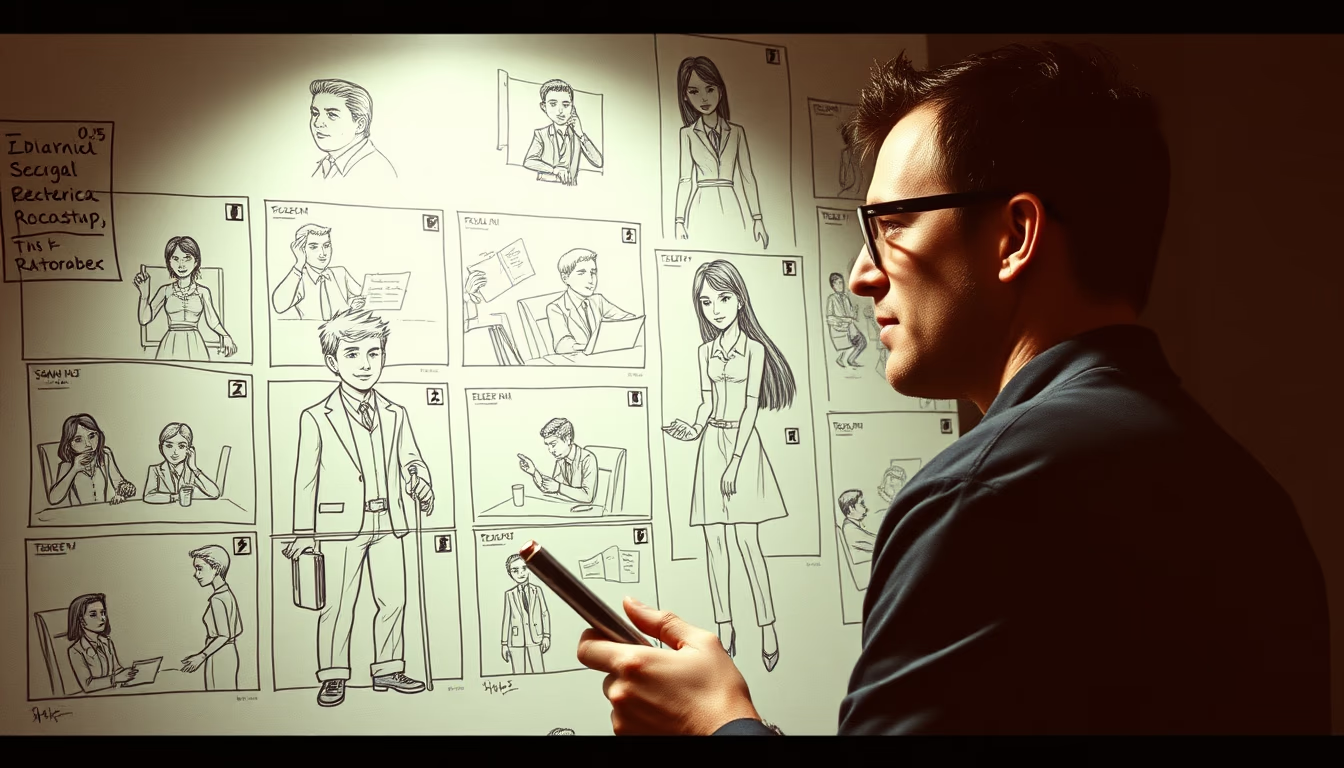
Lightbox tracing technique used by comic artists to transfer and refine sketches with precision.
About this subject
The lightbox tracing technique is widely used by comic artists to transfer sketches from one sheet to another, allowing refinement without losing proportion. It involves placing the original drawing on an illuminated surface, usually a light table, and overlaying a new sheet to redraw or adjust details. This method is essential in the creative process of many illustrators, especially in the comic book industry, where precision of lines is crucial.
Historically, lightbox tracing dates back to the use of light tables with incandescent bulbs, still popular in traditional studios. With technological advances, portable LED versions emerged, more economical and durable. Artists like Will Eisner and Jack Kirby used variations of this technique to create complex pages. In Brazil, comic artists such as Maurício de Sousa and Mike Deodato also employ similar methods, adapting them to their style.
Interestingly, lightbox tracing is not limited to comics: it is used in animation, storyboards, and graphic design. The technique requires practice to avoid overly mechanical lines, and many professionals recommend combining it with freehand drawing to maintain fluidity. Additionally, digital software simulates light tables, but the physical process is still preferred for its tactile feel and direct control over paper.
Frequently Asked Questions
What is a light table and how is it used in lightbox tracing?
A light table is a flat surface with internal illumination, usually LEDs, that allows seeing the drawing through overlapped sheets. The artist places the original sketch, covers it with a blank sheet, and traces the desired lines, correcting or refining the drawing.
What are the advantages of lightbox tracing over digital drawing?
Physical lightbox tracing offers tactile control and a direct connection to paper, which many artists consider essential for maintaining line fluidity. It also avoids dependency on electricity or software, making it an accessible and inexpensive technique for beginners.
Do famous comic artists still use lightbox tracing today?
Yes, many contemporary comic artists still use lightbox tracing, especially for traditional pages. Professionals like Frank Miller and Jim Lee have mentioned using light tables in their processes, combining analog and digital techniques.
Direct URL
https://pub-c7d6a6ea828543ac903a74a341ccb2e1.r2.dev/imagens/lightbox-tracing-studio-editorial-portrait-fresh6.avifHow to credit
Include a visible link back to UtilizAí. Copy one of the snippets below:
<a href="https://xn--utiliza-eza.com/en/midia/imagens/lightbox-tracing-studio-editorial-portrait-fresh6">Lightbox tracing</a> by <a href="https://xn--utiliza-eza.com">UtilizAí</a>, licensed under <a href="https://creativecommons.org/licenses/by/4.0/">CC BY 4.0</a>.
[Lightbox tracing](https://xn--utiliza-eza.com/en/midia/imagens/lightbox-tracing-studio-editorial-portrait-fresh6) by [UtilizAí](https://xn--utiliza-eza.com), CC BY 4.0
License: CC-BY-4.0