Leaf vein pattern
1344×768 · AVIF · CC BY 4.0
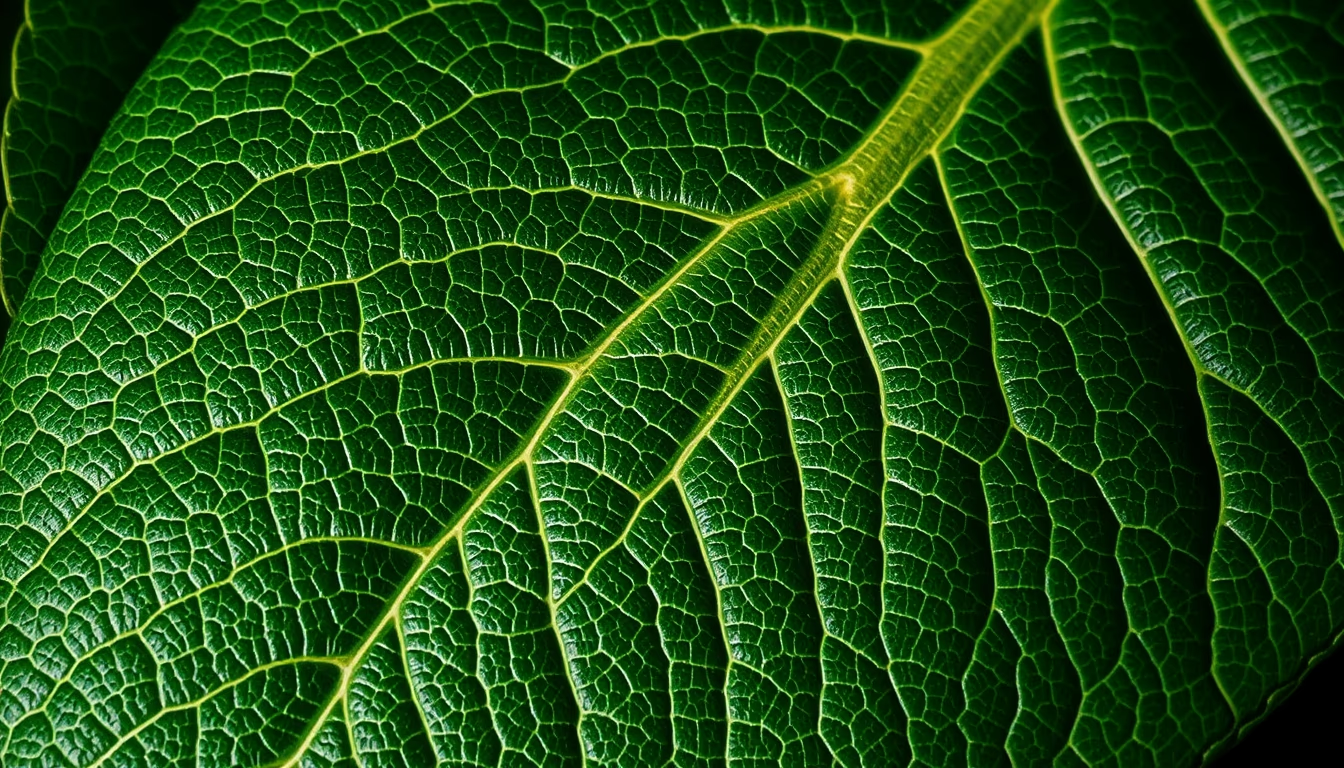
Intricate leaf vein patterns reveal nature’s engineering, blending biological function with aesthetic beauty in fine art macro photography.
About this subject
Leaf veins form the plant’s vascular system, composed of xylem and phloem that transport water, nutrients, and sugars. Their arrangement, known as venation, follows distinct patterns: parallel (in monocots like corn), pinnate (a central midrib with lateral branches, common in dicots like roses), and palmate (several veins radiating from a point, as in maples). These patterns are not only functional but highly ordered, often exhibiting fractal-like properties that maximize transport efficiency and structural strength.
Venation diversity is a key tool in botanical identification. Botanists use vein patterns to classify species, especially in fossilized leaves where venation is often the only preserved trait. Biomechanical studies show that vein design influences a leaf’s ability to withstand wind and weight, minimizing damage. Interestingly, some aquatic plants, such as the Amazon water lily (Victoria amazonica), have veins that act as buoyancy aids.
In art, leaf veins have inspired creators for centuries. Botanical illustrators from the 17th and 19th centuries, like Maria Sibylla Merian, meticulously detailed venation in their works. In contemporary photography, macro shots of leaves emphasize symmetry and repetitive patterns, turning an everyday element into abstract art. Transmitted lighting (light shining through the leaf) enhances the contrast between veins and tissue, creating images reminiscent of stained glass or topographical maps.
Beyond aesthetics, veins inspire technological innovations. Scientists study venation to design more efficient fluid distribution networks, such as in radiators or irrigation systems. The fractal structure of veins is also applied in creating lightweight, strong materials, mimicking nature for sustainable solutions.
Frequently Asked Questions
What is the main function of leaf veins?
Leaf veins transport water and minerals (xylem) and sugars produced in photosynthesis (phloem), while also providing mechanical support to the leaf blade.
How do venation patterns help identify plants?
Each species has a characteristic venation pattern: pinnate, palmate, parallel, or reticulate. Botanists use these differences to distinguish species, especially in fossils.
Why do leaf veins form such symmetrical and fractal designs?
Symmetry and fractal patterns optimize resource distribution and structural strength. Nature repeats these patterns for efficiency, as seen in fern or Monstera leaves.
Direct URL
https://pub-c7d6a6ea828543ac903a74a341ccb2e1.r2.dev/imagens/leaf-vein-pattern-fine-art-photography-p2.avifHow to credit
Include a visible link back to UtilizAí. Copy one of the snippets below:
<a href="https://xn--utiliza-eza.com/en/midia/imagens/leaf-vein-pattern-fine-art-photography-p2">Leaf vein pattern</a> by <a href="https://xn--utiliza-eza.com">UtilizAí</a>, licensed under <a href="https://creativecommons.org/licenses/by/4.0/">CC BY 4.0</a>.
[Leaf vein pattern](https://xn--utiliza-eza.com/en/midia/imagens/leaf-vein-pattern-fine-art-photography-p2) by [UtilizAí](https://xn--utiliza-eza.com), CC BY 4.0
License: CC-BY-4.0