Lake baikal frozen
1344×768 · AVIF · CC BY 4.0
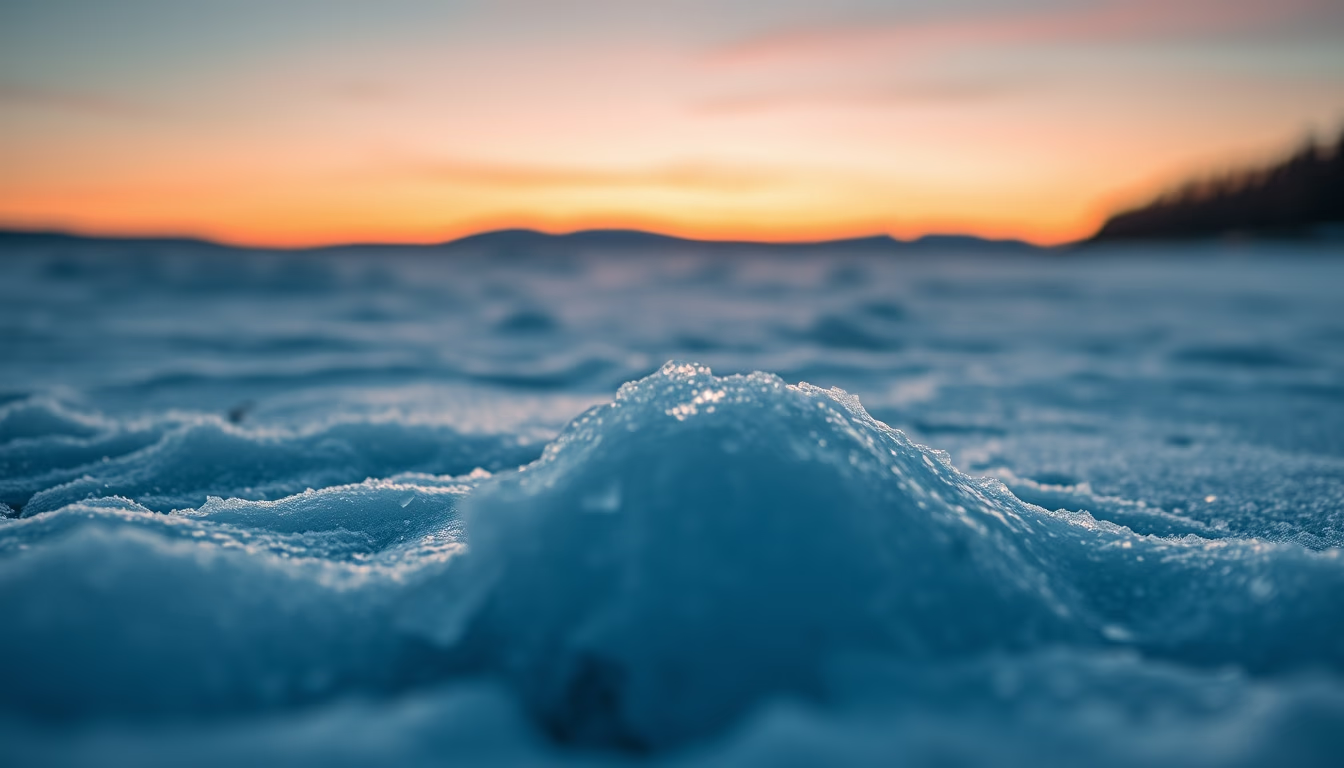
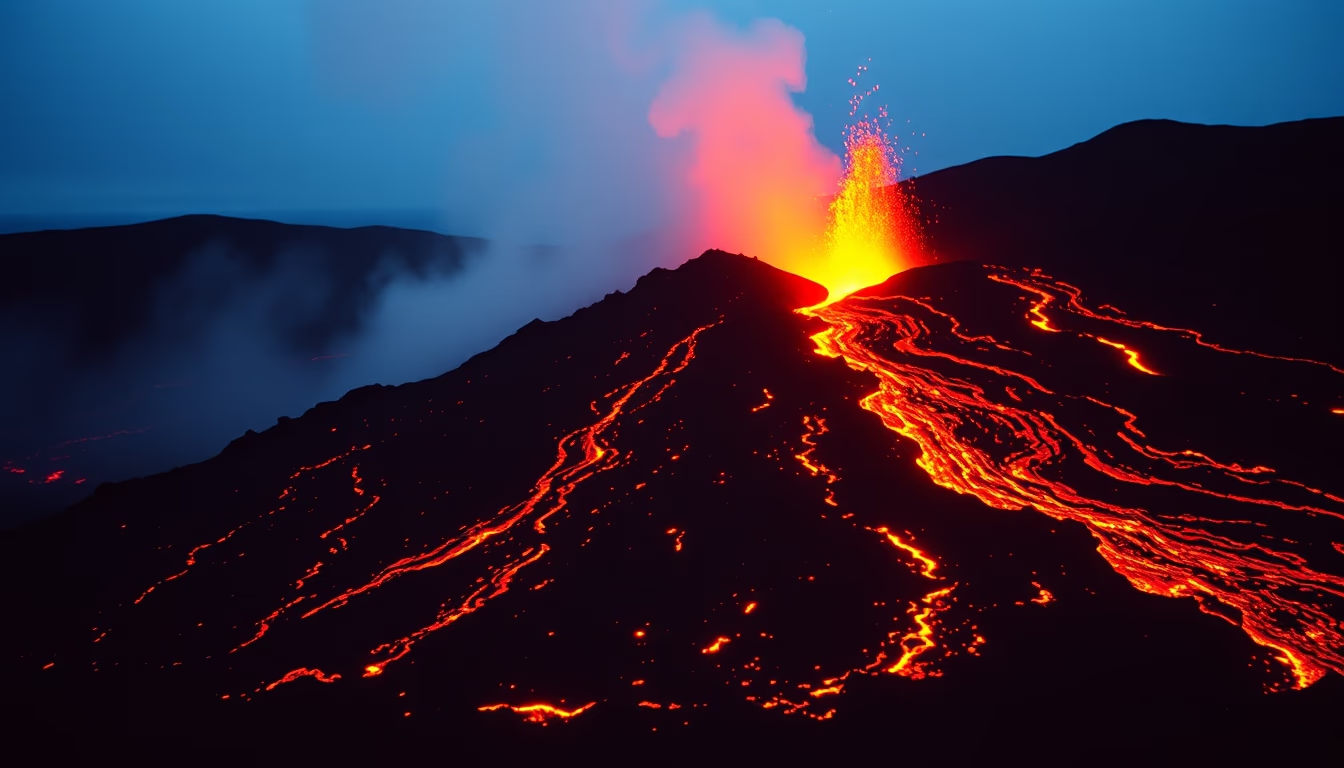
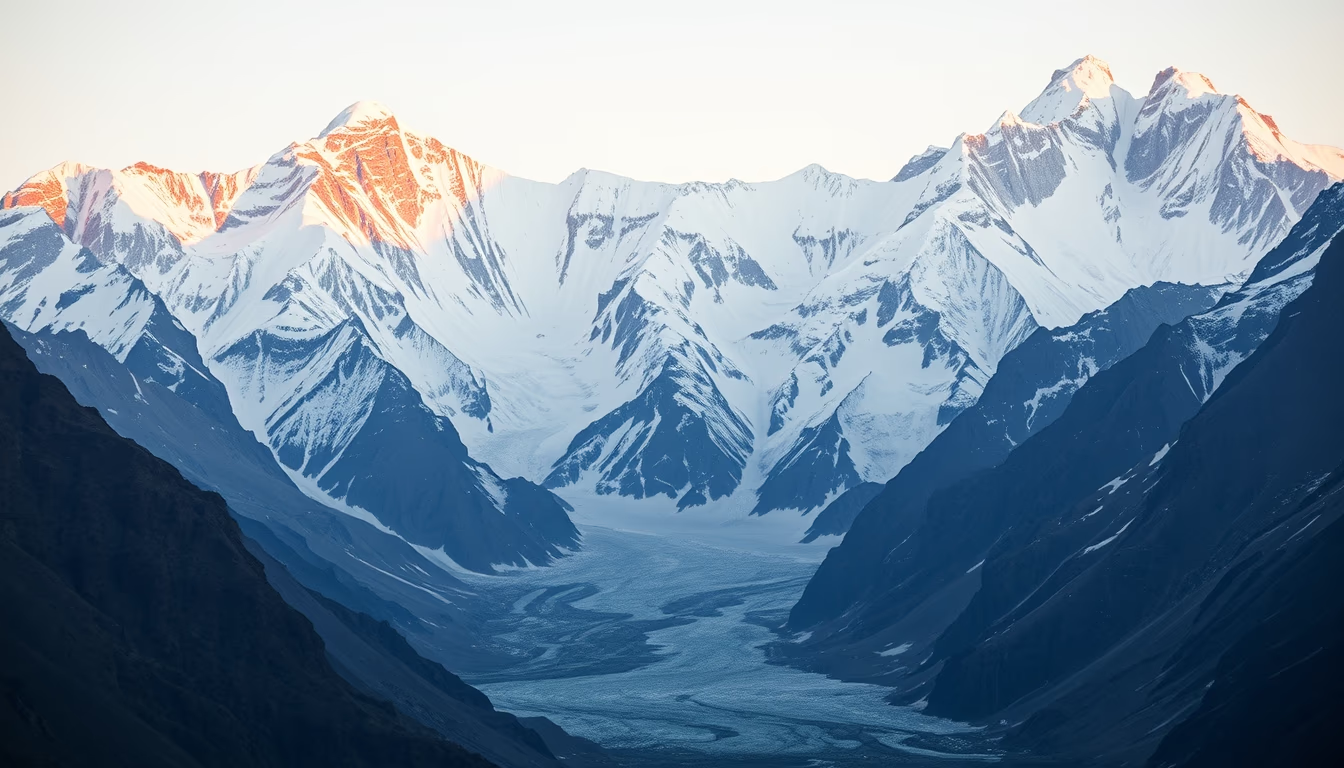
Lake Baikal in Siberia is the world's largest freshwater lake by volume and features one of the most stunning frozen landscapes during winter.
About this subject
Located in the Siberian region of Russia, Lake Baikal is the largest freshwater lake by volume in the world, holding approximately 23,600 km³ of water, which accounts for about 20% of the planet's surface freshwater. With a maximum depth of 1,642 meters, it is also the deepest lake on Earth. Since 1996, it has been a UNESCO World Heritage site due to its unique biodiversity and ancient age, estimated at 25 million years.
During the Siberian winter, lasting from January to May, the lake freezes completely, forming an ice layer that can reach up to 2 meters in thickness. The ice of Lake Baikal is famous for its exceptional transparency, resulting from the purity of the water and low particle concentration. This transparency allows sunlight to penetrate deeply, sustaining algae and plankton communities beneath the ice. Ice formations include hummocks, which rise up to 3 meters, and cracks that open and close with temperature changes.
The climate around Lake Baikal is extreme, with winter temperatures often below -38°C. Despite this, the lake hosts remarkable endemic fauna, such as the Baikal seal (nerpa), the only freshwater seal in the world, and the omul fish, prized in local cuisine. About 80% of the lake's species are endemic, including the golomyanka fish, which is translucent and lives in the depths.
Baikal's ice is not only a natural phenomenon but also a stage for human activities. During winter, it is common to see fishermen drilling through the ice, as well as tourists walking or driving vehicles on the frozen surface. Historically, the ice was used as a transport route, especially during the construction of the Trans-Siberian Railway. The intense blue color of the ice, visible in photographs, attracts photographers worldwide, symbolizing the natural beauty of Siberia.
Frequently Asked Questions
What is the maximum depth of Lake Baikal?
The maximum depth is 1,642 meters, making it the deepest lake in the world.
Why is the ice of Lake Baikal so transparent?
The exceptional transparency results from the purity of the water, with very low levels of particles and algae, allowing deep light penetration.
Which animals live exclusively in Lake Baikal?
One example is the Baikal seal (nerpa), the only freshwater seal, and the golomyanka fish, which is translucent.
Direct URL
https://pub-c7d6a6ea828543ac903a74a341ccb2e1.r2.dev/imagens/lake-baikal-frozen-macro-closeup-p2.avifHow to credit
Include a visible link back to UtilizAí. Copy one of the snippets below:
<a href="https://xn--utiliza-eza.com/en/midia/imagens/lake-baikal-frozen-macro-closeup-p2">Lake baikal frozen</a> by <a href="https://xn--utiliza-eza.com">UtilizAí</a>, licensed under <a href="https://creativecommons.org/licenses/by/4.0/">CC BY 4.0</a>.
[Lake baikal frozen](https://xn--utiliza-eza.com/en/midia/imagens/lake-baikal-frozen-macro-closeup-p2) by [UtilizAí](https://xn--utiliza-eza.com), CC BY 4.0
License: CC-BY-4.0