El capitan cliff
1344×768 · AVIF · CC BY 4.0
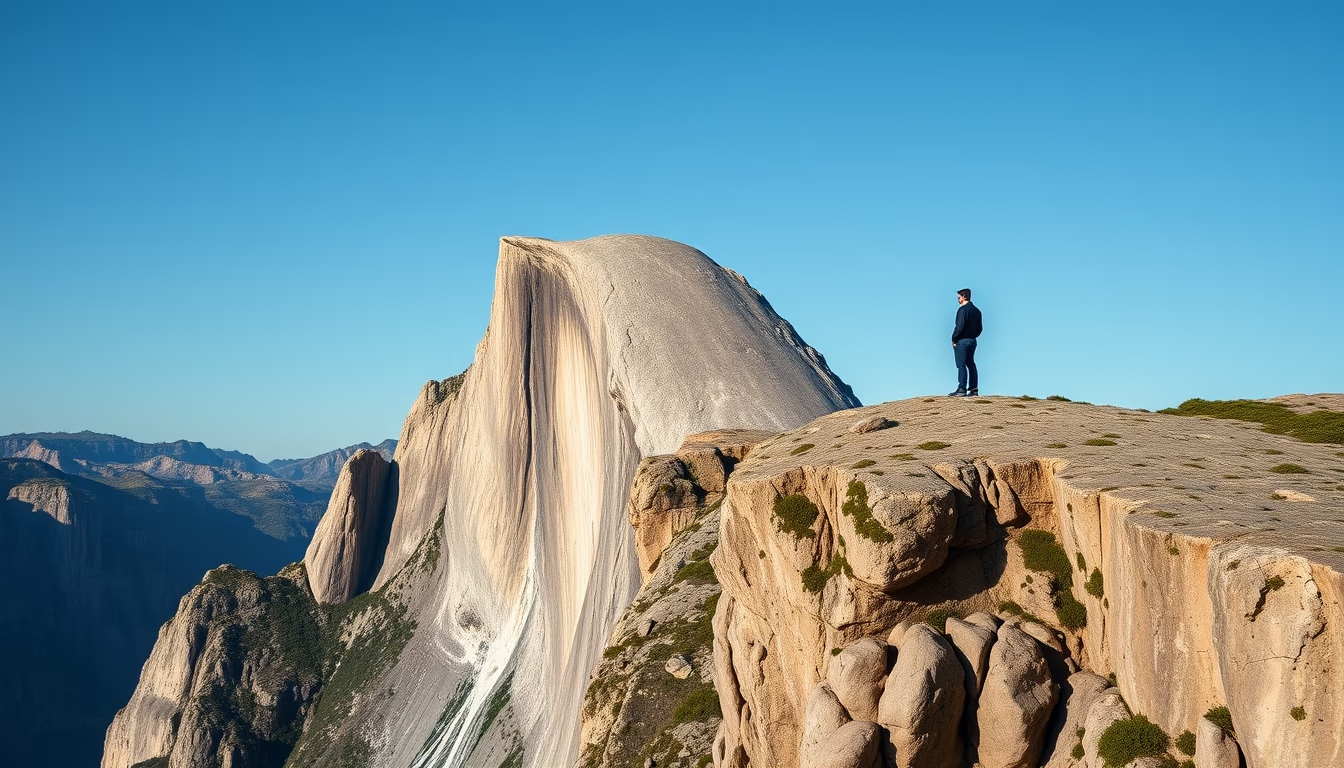
El Capitan is a massive granite monolith in Yosemite National Park, California, famous for its vertical walls and world-renowned climbing challenges.
About this subject
El Capitan, also called El Cap, is a granite rock formation located on the north side of Yosemite Valley in California, United States. It stands about 900 meters vertically from base to summit, making it one of the largest granite monoliths in the world. The rock is composed mainly of Cretaceous granite, formed by slow cooling of magma about 100 million years ago. Glacial erosion and water action carved its smooth, steep face over millennia.
El Capitan is an iconic destination for climbers worldwide. The first successful ascent was in 1958 by Warren Harding, Wayne Merry, and George Whitmore using fixed rope and pulley techniques. Since then, routes like The Nose (the classic line on the east face) have become legendary. In 2015, climbers Tommy Caldwell and Kevin Jorgeson completed the first free climb of the Dawn Wall, an extremely difficult route that took 19 days. Climbing El Capitan requires endurance, technique, and meticulous planning, with many teams camping on suspended portaledges during the ascent.
Beyond climbing, the formation is a cultural and natural symbol of the United States. El Capitan appears in films, photographs, and works of art. Its image often represents the grandeur of nature. Geologist François Matthes in the early 20th century studied Yosemite's geology and described the rock as a classic example of a granite batholith exposed by erosion. The name "El Capitan" was given by Spanish explorers or possibly by Native Americans referring to a local chief, but the exact origin is uncertain.
Today, the park receives about 4 million visitors annually, many of whom admire El Capitan from viewpoints such as Tunnel View or El Capitan Meadow. Photography of the sunset on the monolith is especially popular. Despite tourism, the rock remains unaltered, and climbing is regulated to preserve the environment. El Capitan is not just a geological landmark, but an icon of human achievement and natural beauty.
Frequently Asked Questions
What is the exact height of El Capitan?
El Capitan is approximately 900 meters (3,000 feet) of vertical height from base to summit, measured on the east face known as The Nose.
Who first climbed El Capitan?
The first ascent was in 1958 by Warren Harding, Wayne Merry, and George Whitmore, using pulley and fixed rope techniques in an expedition that lasted 47 days.
What is the difference between free climbing and aid climbing?
In free climbing, the climber uses only hands and feet to ascend without pulling or attaching equipment for progress. In aid climbing, devices are used to assist the ascent, common on the steepest routes of El Capitan.
Direct URL
https://pub-c7d6a6ea828543ac903a74a341ccb2e1.r2.dev/imagens/el-capitan-cliff-minimalist-composition-p11.avifHow to credit
Include a visible link back to UtilizAí. Copy one of the snippets below:
<a href="https://xn--utiliza-eza.com/en/midia/imagens/el-capitan-cliff-minimalist-composition-p11">El capitan cliff</a> by <a href="https://xn--utiliza-eza.com">UtilizAí</a>, licensed under <a href="https://creativecommons.org/licenses/by/4.0/">CC BY 4.0</a>.
[El capitan cliff](https://xn--utiliza-eza.com/en/midia/imagens/el-capitan-cliff-minimalist-composition-p11) by [UtilizAí](https://xn--utiliza-eza.com), CC BY 4.0
License: CC-BY-4.0