Kelp forest underwater
1344×768 · AVIF · CC BY 4.0
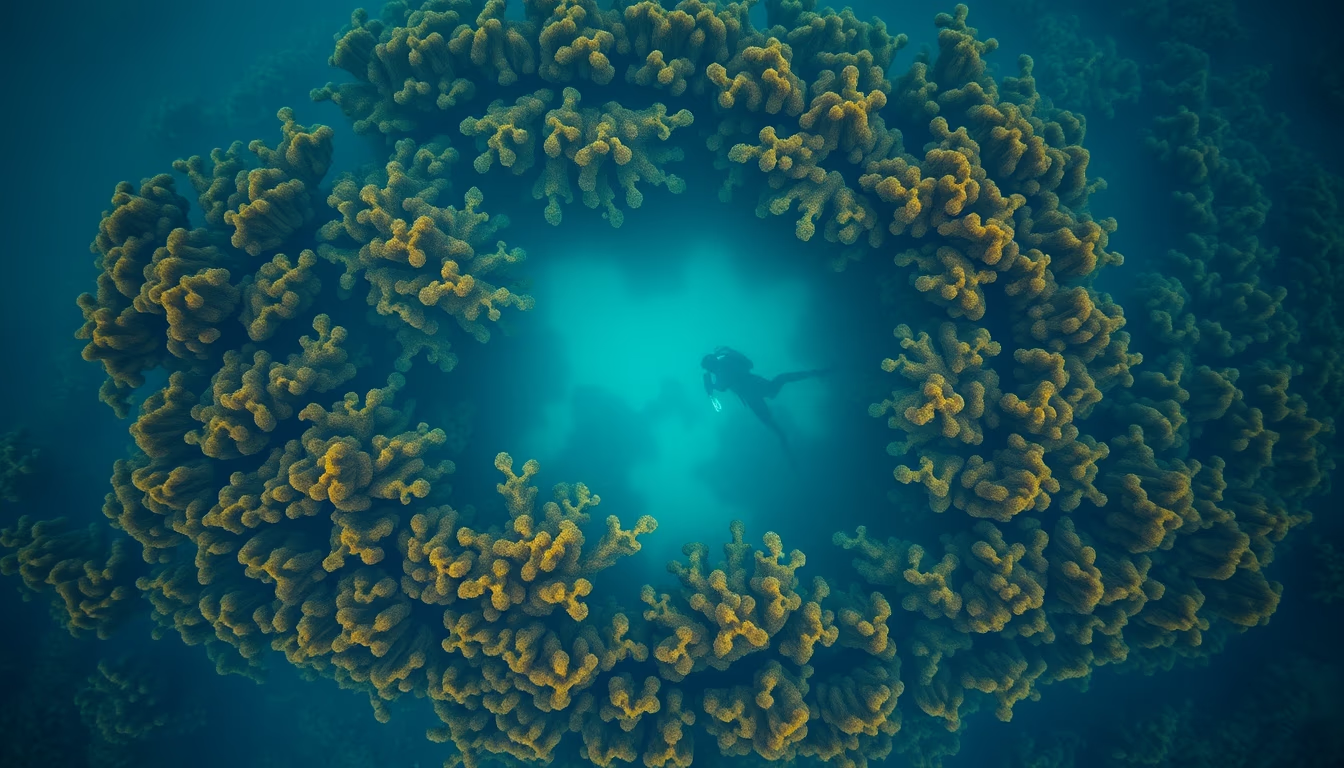
Floresta de kelp: ecossistema submarino que sustenta biodiversidade marinha e regula o clima oceânico.
Sobre o tema
As florestas de kelp são ecossistemas submarinos formados por algas pardas gigantes do gênero Macrocystis, que podem crescer até 50 metros de altura. Ocorrem em águas frias e ricas em nutrientes ao longo de costas rochosas, especialmente no Pacífico, como na costa da Califórnia, Chile, Tasmânia e Argentina. No Brasil, formações similares são encontradas no litoral sul, embora com espécies diferentes, como a Laminaria abyssalis.
Essas florestas funcionam como berçários para peixes, crustáceos e moluscos, abrigam lontras-marinhas e servem de habitat para milhares de espécies. São consideradas um dos ecossistemas mais produtivos do planeta, com taxa de crescimento que pode ultrapassar meio metro por dia. Além disso, a biomassa de kelp absorve dióxido de carbono da atmosfera, ajudando a mitigar as mudanças climáticas.
A importância cultural e econômica também é relevante: comunidades costeiras utilizam o kelp para alimentação, fertilizantes e extração de alginatos usados na indústria alimentícia e farmacêutica. Entretanto, esses ecossistemas estão ameaçados pelo aquecimento global, pela poluição e pela expansão de ouriços-do-mar, que se proliferam sem predadores naturais. No Pacífico Norte, a perda de florestas de kelp já ultrapassou 90% em algumas regiões.
Curiosidade: as lontras-marinhas, predadoras de ouriços, são fundamentais para manter o equilíbrio do kelp. Quando a caça às lontras foi descontrolada no século XIX, houve explosão populacional de ouriços e devastação das florestas. Atualmente, projetos de restauração replantam kelp e reintroduzem lontras para recuperar esses ambientes.
Perguntas frequentes
O que são florestas de kelp e onde são encontradas?
São ecossistemas submarinos formados por algas pardas gigantes do gênero Macrocystis, encontradas em águas frias e ricas em nutrientes, principalmente no Pacífico (Califórnia, Chile, Tasmânia) e também no sul do Brasil com espécies similares.
Qual a importância das florestas de kelp para o meio ambiente?
Elas funcionam como berçários para diversas espécies marinhas, absorvem CO₂ ajudando contra as mudanças climáticas e protegem a costa da erosão. São um dos ecossistemas mais produtivos do planeta.
O que ameaça as florestas de kelp atualmente?
O aquecimento global, a poluição e o aumento descontrolado de ouriços-do-mar devido à falta de predadores naturais, como as lontras-marinhas, já causaram perdas de mais de 90% em algumas regiões do Pacífico Norte.
URL direta
https://pub-c7d6a6ea828543ac903a74a341ccb2e1.r2.dev/imagens/kelp-forest-underwater-aerial-drone-shot-p3.avifComo creditar
Inclua um link visível de volta pro UtilizAí. Copie um dos snippets abaixo:
<a href="https://xn--utiliza-eza.com/midia/imagens/kelp-forest-underwater-aerial-drone-shot-p3">Kelp forest underwater</a> by <a href="https://xn--utiliza-eza.com">UtilizAí</a>, licensed under <a href="https://creativecommons.org/licenses/by/4.0/">CC BY 4.0</a>.
[Kelp forest underwater](https://xn--utiliza-eza.com/midia/imagens/kelp-forest-underwater-aerial-drone-shot-p3) by [UtilizAí](https://xn--utiliza-eza.com), CC BY 4.0
Licença: CC-BY-4.0