Jellyfish translucent dark water
1344×768 · AVIF · CC BY 4.0
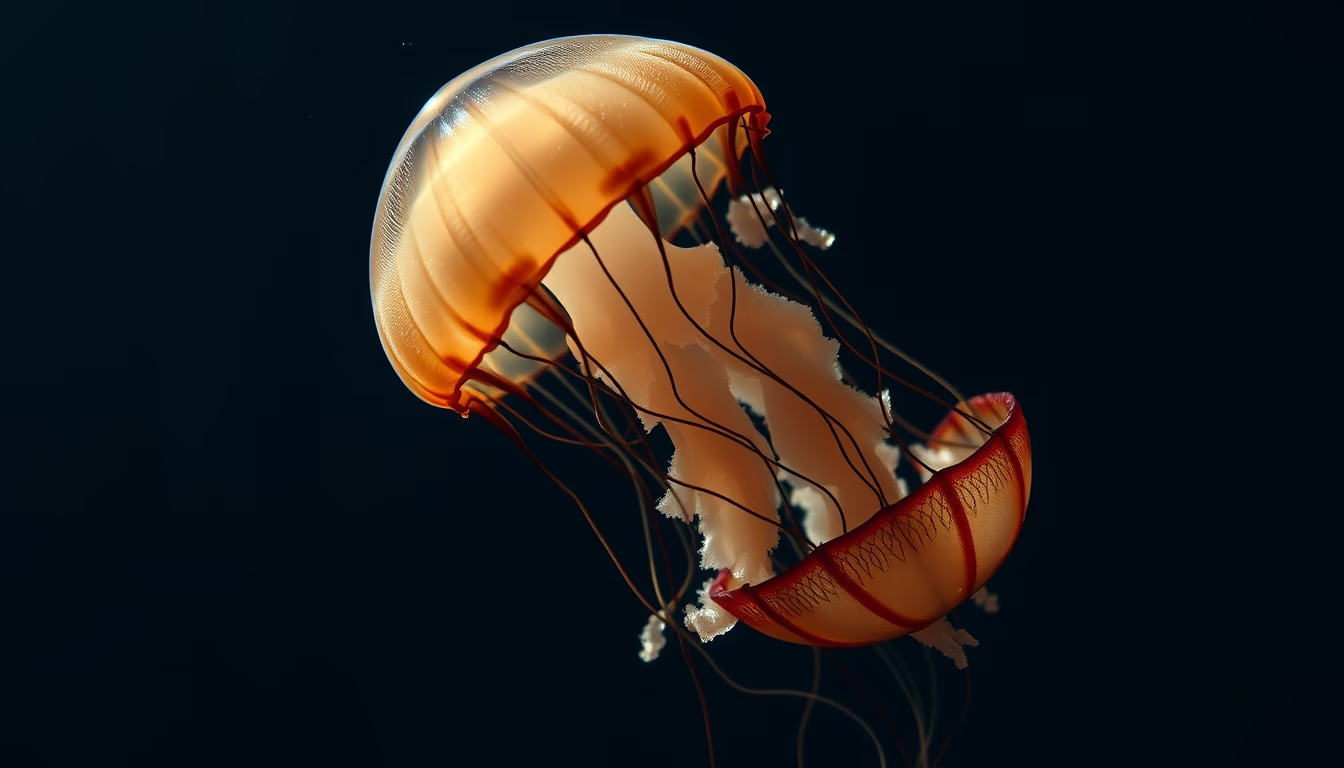
Jellyfish are bioluminescent creatures inhabiting all oceans, from surface to abyssal depths, with a fascinating life cycle and ecological importance.
About this subject
Jellyfish are marine organisms belonging to the phylum Cnidaria, known for their gelatinous bodies and stinging tentacles. There are over 2,000 described species distributed across all oceans, from the photic zone to abyssal depths. They are composed of about 95% water, which gives them transparency and buoyancy to drift with currents. Some species exhibit bioluminescence, emitting blue or green light through proteins like aequorin, a defense or prey-attraction mechanism.
The jellyfish life cycle includes two main phases: polyp (sessile) and medusa (free-swimming). The medusa is the reproductive stage, while polyps can form colonies and even reproduce asexually. This alternation of generations allows jellyfish to adapt to environmental changes and form population blooms under favorable conditions, such as warming waters and eutrophication. Such blooms can impact fisheries and tourism, but also serve as indicators of marine ecosystem changes.
Culturally, jellyfish inspire art, fashion, and design due to their fluid shapes and translucency. In haute couture, lightweight fabrics and asymmetric cuts evoke the ethereal movement of these animals. The species Turritopsis dohrnii is known as the "immortal jellyfish" for its ability to revert to the polyp stage after stress, challenging biological notions of aging. In Japan, they are appreciated in aquariums and cuisine, served in salads or preserved. Brazil has several coastal species, such as the lion's mane jellyfish (Cyanea capillata), found in the southern and southeastern coast, capable of causing painful stings.
Ecologically, jellyfish act as predators and prey, controlling zooplankton populations and serving as food for sea turtles, ocean sunfish, and some sharks. Despite their fragile appearance, they are efficient hunters, using cnidocytes (stinging cells) to paralyze prey like crustaceans and small fish. Scientific research on their mucus and toxins has contributed to advances in regenerative medicine and hydrogel development.
Frequently Asked Questions
Are jellyfish dangerous to humans?
Most jellyfish cause only mild irritation, but some, like the box jellyfish (Chironex fleckeri) in Australia, can be lethal. In Brazil, the lion's mane jellyfish and the Portuguese man o' war (Physalia physalis) cause painful stings requiring medical attention.
Why do jellyfish glow in the dark?
Bioluminescence in jellyfish is produced by proteins such as aequorin and GFP, which emit light when reacting with calcium ions. This glow may serve to attract prey, confuse predators, or communicate with other individuals.
What is the ecological importance of jellyfish?
They control plankton and small crustacean populations, serve as food for turtles and fish, and their blooms indicate environmental changes like warming and pollution. Additionally, their tissues are studied for biomaterials and medicine.
Direct URL
https://pub-c7d6a6ea828543ac903a74a341ccb2e1.r2.dev/imagens/jellyfish-translucent-dark-water-high-fashion-editorial-p1.avifHow to credit
Include a visible link back to UtilizAí. Copy one of the snippets below:
<a href="https://xn--utiliza-eza.com/en/midia/imagens/jellyfish-translucent-dark-water-high-fashion-editorial-p1">Jellyfish translucent dark water</a> by <a href="https://xn--utiliza-eza.com">UtilizAí</a>, licensed under <a href="https://creativecommons.org/licenses/by/4.0/">CC BY 4.0</a>.
[Jellyfish translucent dark water](https://xn--utiliza-eza.com/en/midia/imagens/jellyfish-translucent-dark-water-high-fashion-editorial-p1) by [UtilizAí](https://xn--utiliza-eza.com), CC BY 4.0
License: CC-BY-4.0