Injera ethiopian flat
1344×768 · AVIF · CC BY 4.0
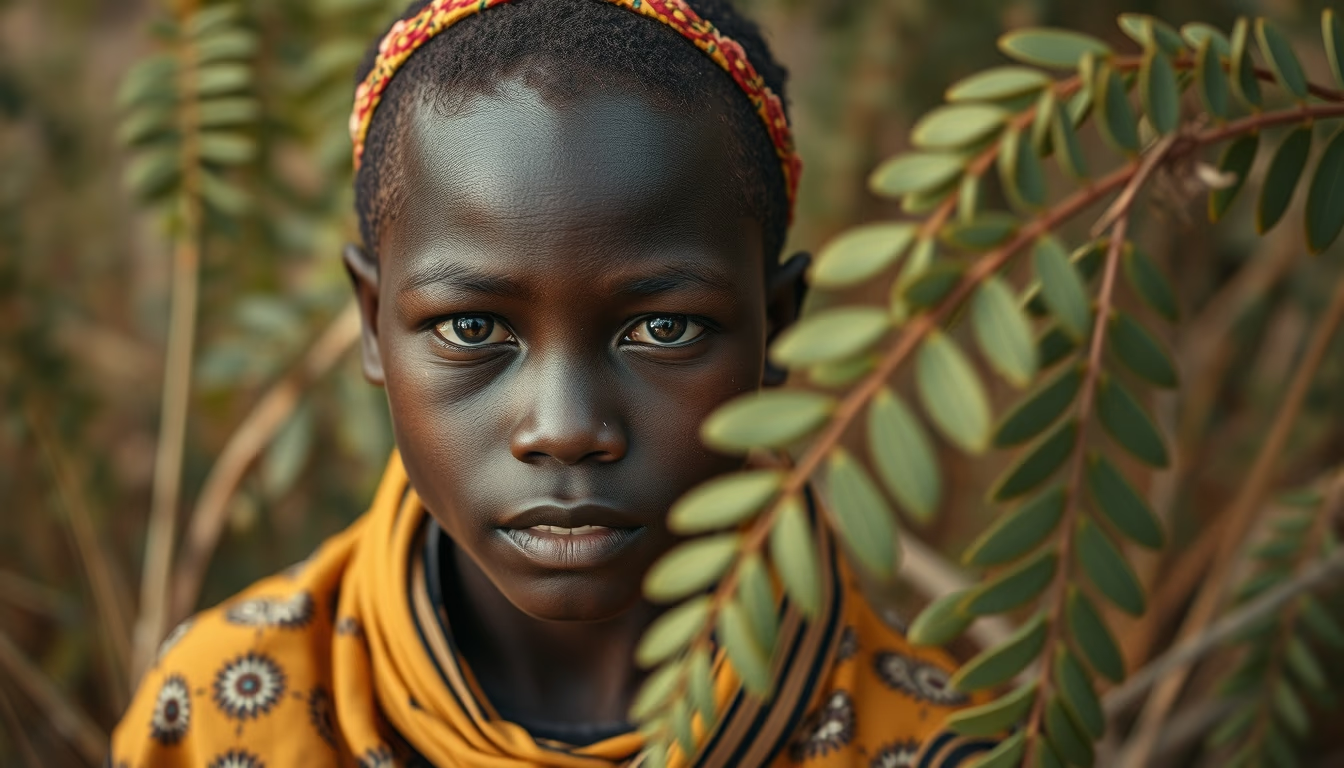
Injera is the fermented flatbread staple of Ethiopia and Eritrea, made from teff flour, used as a base for stews like wat.
About this subject
Injera is a thin, spongy, slightly sour flatbread that serves as the staple food in Ethiopian and Eritrean cuisine. Its distinctive texture comes from the natural fermentation of teff flour, an ancient grain native to the Horn of Africa, rich in iron, calcium, and fiber. Traditionally, the batter is made with water and left to ferment for several days, developing a mildly acidic flavor and an airy structure reminiscent of a large, flexible pancake.
When served, injera covers the entire surface of a large metal tray or a traditional woven basket called a “mesob.” On top, portions of spicy stews such as “doro wat” (chicken cooked with spices and eggs) or “misir wat” (seasoned lentils) are placed. Diners tear off pieces of injera to scoop up the sauces and ingredients, eating with the right hand. This act is not only functional but also an essential part of dining etiquette and communal experience.
Teff, the main ingredient of injera, is a tiny, highly nutritious grain adapted to the highlands of Ethiopia. Naturally gluten-free, injera suits people with celiac disease or gluten sensitivity. Despite its ancient origins, injera has gained global popularity, found in Ethiopian restaurants worldwide, where it retains its artisanal fermentation process and cooking on clay or metal griddles.
Making injera is a tradition passed down through generations, typically carried out by women in the household. Fermentation can take one to three days, depending on temperature and desired acidity. In Ethiopia, injera is consumed at nearly every meal, and its absence is considered incomplete. The country produces millions of tons of teff annually, most of which goes to domestic consumption.
Frequently Asked Questions
What is injera?
Injera is a fermented flatbread from Ethiopia and Eritrea, made from teff flour. It has a spongy texture, a slightly sour taste, and serves as a base for stews.
Is teff gluten-free?
Yes, teff is naturally gluten-free, making injera suitable for people with celiac disease or gluten intolerance.
How is injera traditionally eaten?
Injera is served on a large tray, topped with stews. Diners tear off pieces of the bread with their right hand to scoop up sauces and ingredients.
Direct URL
https://pub-c7d6a6ea828543ac903a74a341ccb2e1.r2.dev/imagens/injera-ethiopian-flat-documentary-nature-style-fresh3.avifHow to credit
Include a visible link back to UtilizAí. Copy one of the snippets below:
<a href="https://xn--utiliza-eza.com/en/midia/imagens/injera-ethiopian-flat-documentary-nature-style-fresh3">Injera ethiopian flat</a> by <a href="https://xn--utiliza-eza.com">UtilizAí</a>, licensed under <a href="https://creativecommons.org/licenses/by/4.0/">CC BY 4.0</a>.
[Injera ethiopian flat](https://xn--utiliza-eza.com/en/midia/imagens/injera-ethiopian-flat-documentary-nature-style-fresh3) by [UtilizAí](https://xn--utiliza-eza.com), CC BY 4.0
License: CC-BY-4.0