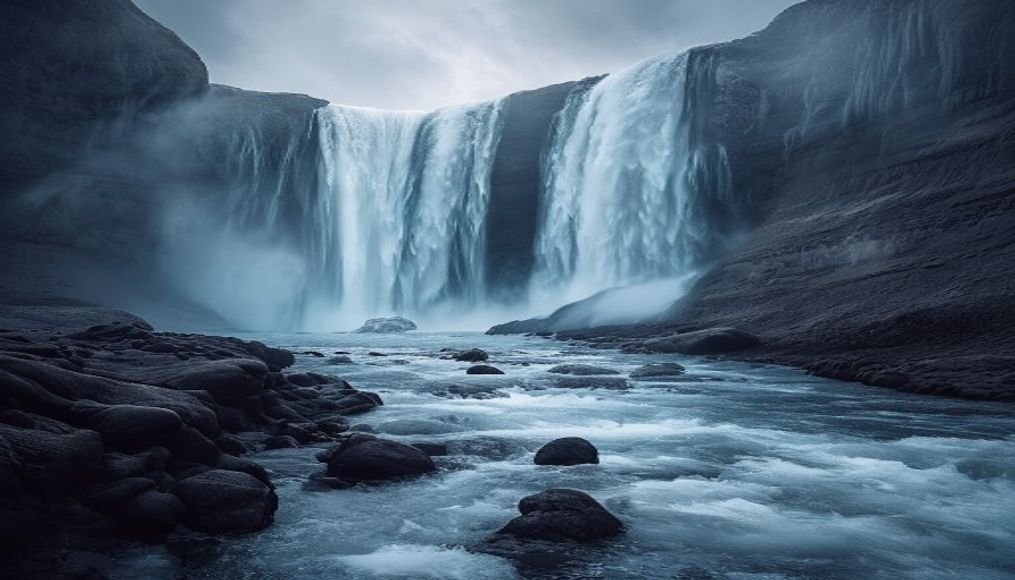
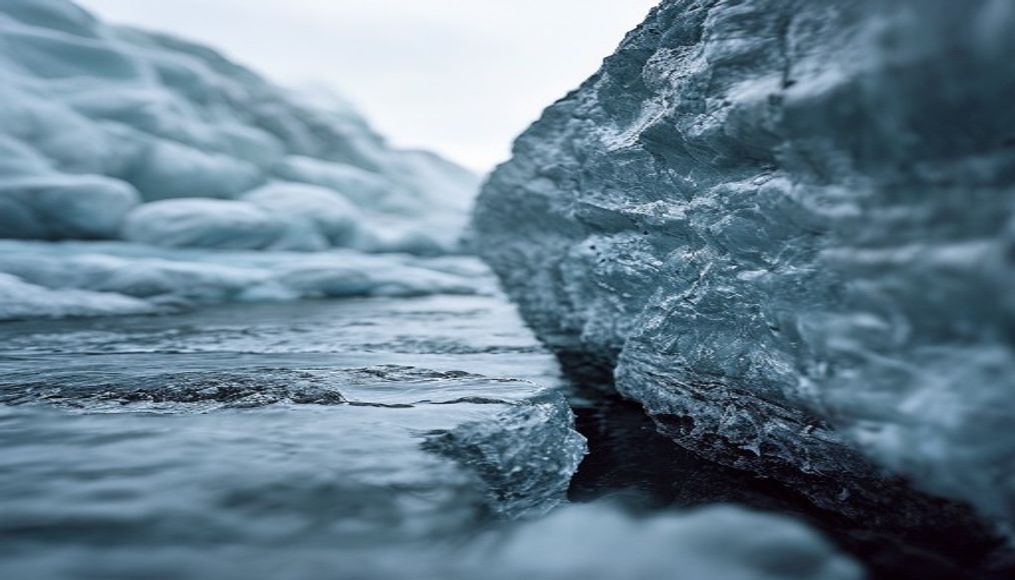
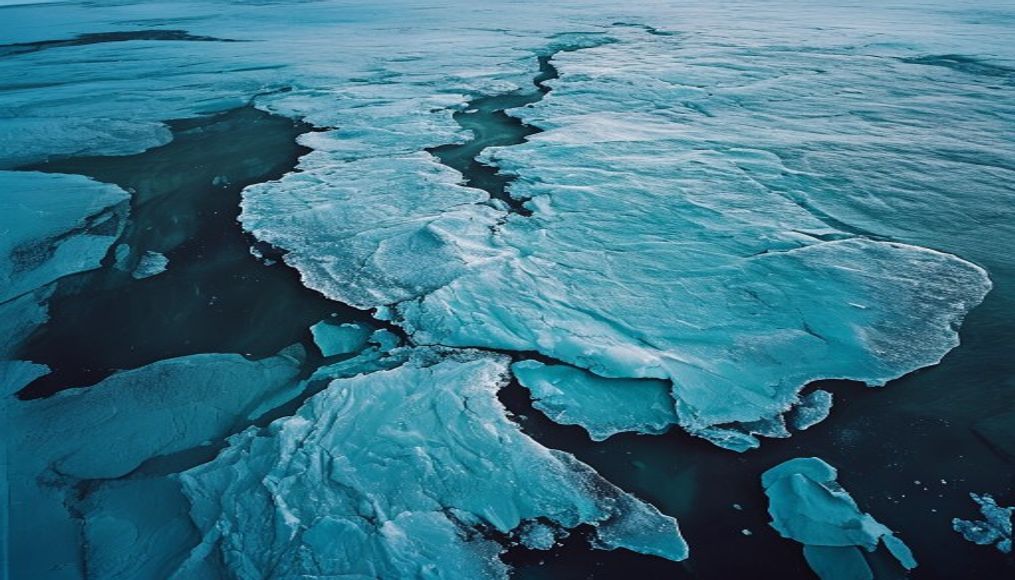
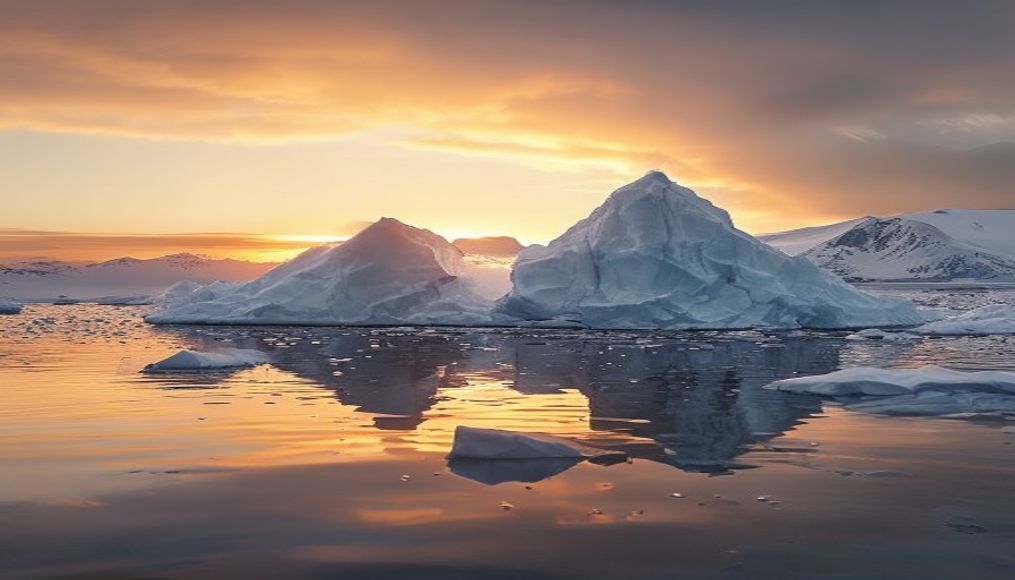
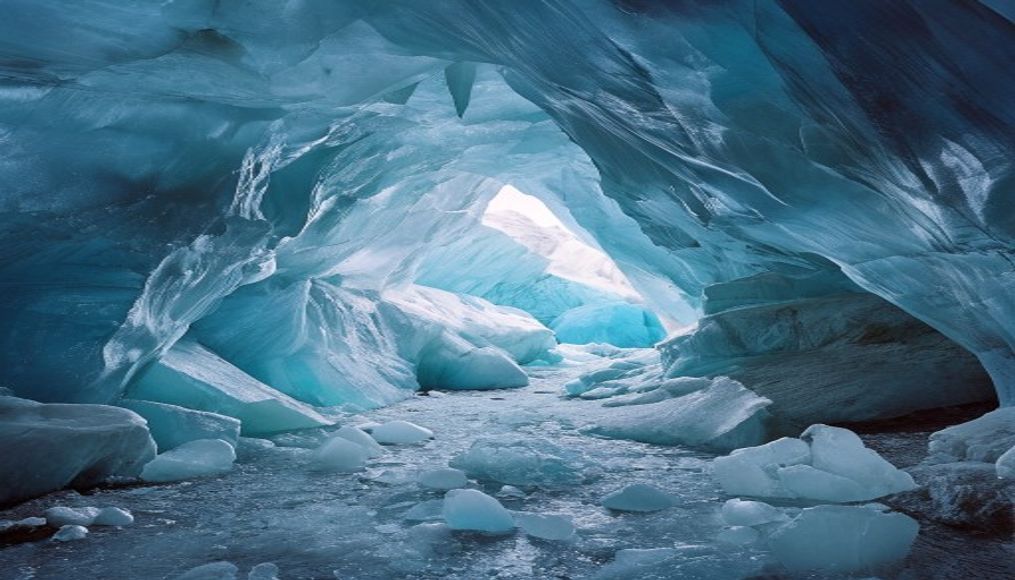
Iceberg breaking calving
1344×768 · AVIF · CC BY 4.0
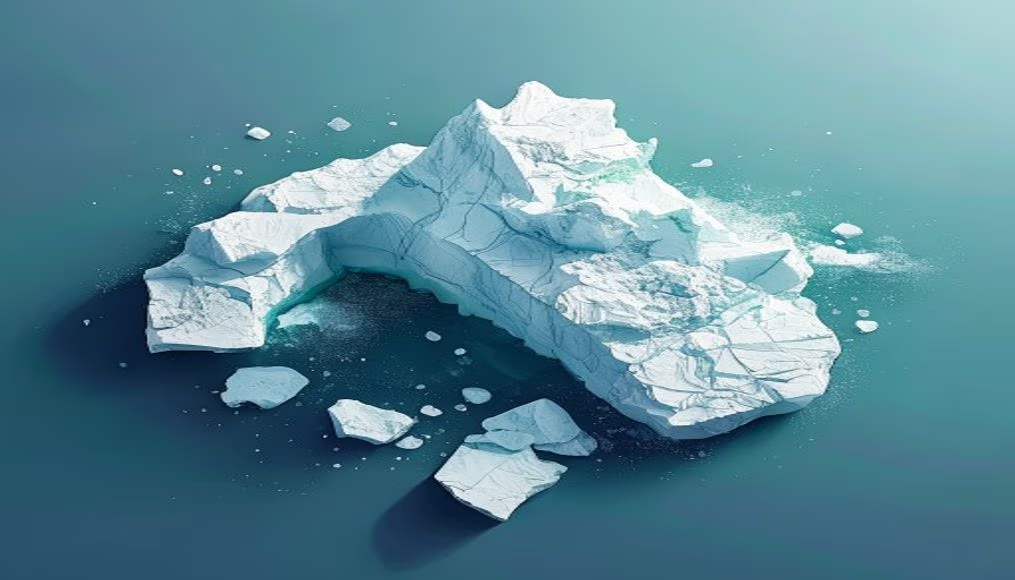
Iceberg calving is the natural process where chunks of ice break off from glaciers or ice shelves, a key mechanism in glacier mass loss.
About this subject
Iceberg calving is one of the most spectacular processes in glacier dynamics. It occurs when internal stresses within the ice, caused by the glacier's movement toward the sea or a lake, exceed the material's strength, leading to fracture and detachment of ice blocks. This phenomenon is primarily observed in Greenland, Antarctica, and high-latitude regions such as Alaska and Patagonia.
Calving rates have accelerated in recent decades due to global warming. In Greenland, for instance, surface melting and glacier thinning increase ice flow toward the ocean, intensifying iceberg production. A notable event was the detachment of iceberg A68 from the Larsen C ice shelf in Antarctica in 2017, which measured about 5,800 km², roughly the size of the state of Rio de Janeiro.
From a scientific perspective, calving is a major source of uncertainty in sea-level rise projections. Tidewater glaciers are particularly sensitive because warm ocean water melts their submerged base, destabilizing the ice front. Studies suggest that the process can be accelerated by ocean waves and changes in thermohaline circulation.
Interestingly, calving also plays an ecological role. Icebergs release nutrients such as iron and organic carbon into the ocean, fertilizing phytoplankton and influencing marine productivity. Moreover, the sound of calving, heard as a thunderous crack, is one of the most powerful natural sounds.
Frequently Asked Questions
What causes iceberg calving?
Calving is caused by stresses within the ice due to glacier movement, combined with basal melting from ocean or lake water. Global warming accelerates the process by thinning and destabilizing glaciers.
Where does calving occur most frequently?
It occurs mainly in Greenland, Antarctica, Alaska, Patagonia, and the Canadian Arctic. Any glacier that ends in a body of water can experience calving.
How does calving affect sea level?
Calving directly contributes to sea-level rise because ice that was on land is transferred to the ocean. It is one of the primary sources of glacier mass loss.
Direct URL
https://pub-c7d6a6ea828543ac903a74a341ccb2e1.r2.dev/imagens/iceberg-breaking-calving-isometric-flat-lay-p0.avifHow to credit
Include a visible link back to UtilizAí. Copy one of the snippets below:
<a href="https://xn--utiliza-eza.com/en/midia/imagens/iceberg-breaking-calving-isometric-flat-lay-p0">Iceberg breaking calving</a> by <a href="https://xn--utiliza-eza.com">UtilizAí</a>, licensed under <a href="https://creativecommons.org/licenses/by/4.0/">CC BY 4.0</a>.
[Iceberg breaking calving](https://xn--utiliza-eza.com/en/midia/imagens/iceberg-breaking-calving-isometric-flat-lay-p0) by [UtilizAí](https://xn--utiliza-eza.com), CC BY 4.0
License: CC-BY-4.0