Horse saddle leather
1344×768 · AVIF · CC BY 4.0
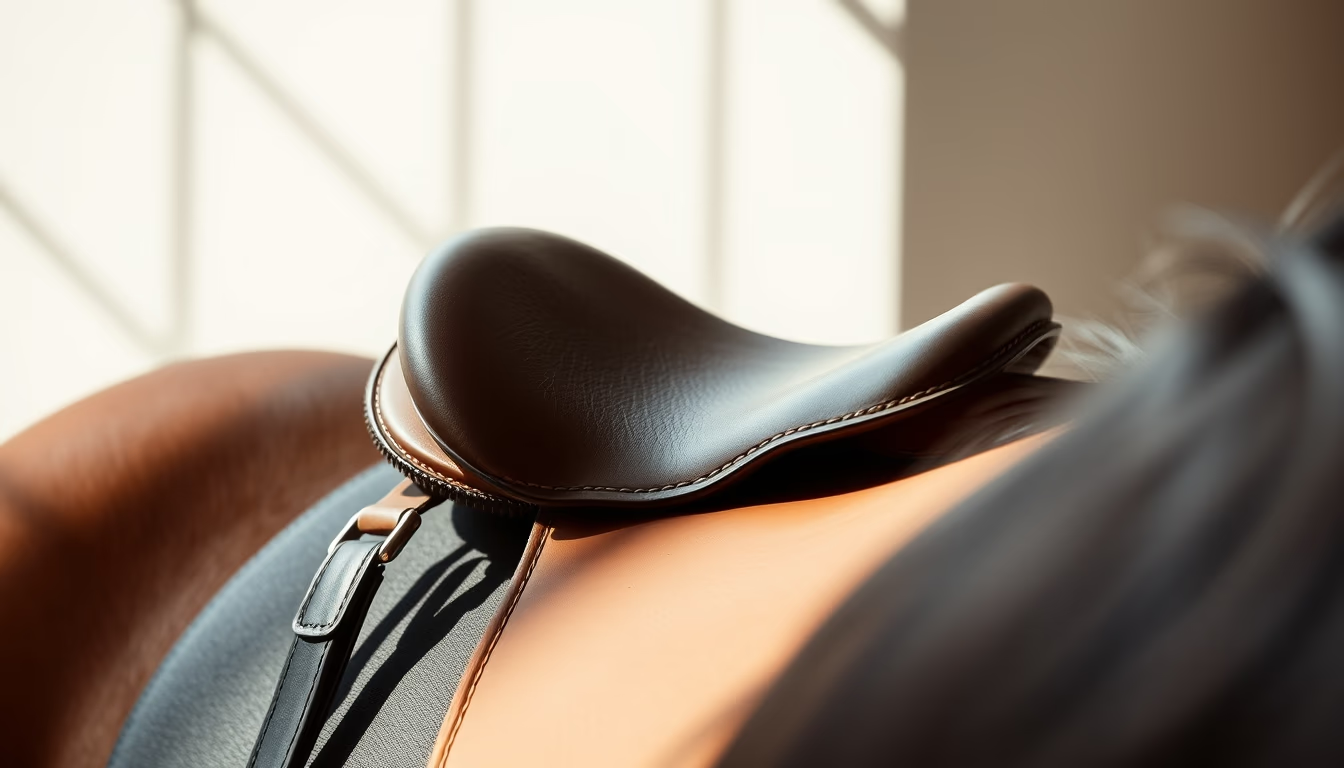
Horse saddle leather is a handcrafted material prized for its durability, natural beauty, and tradition in equestrianism.
About this subject
Saddle leather is one of the most noble and functional materials in the equestrian world. Traditionally obtained through vegetable tanning, a process using natural tannins extracted from tree barks such as acacia and oak, this type of leather gains exceptional strength and a characteristic patina that develops with use. Unlike synthetic or chrome-tanned leather, vegetable-tanned leather retains breathability, conforms to the horse's and rider's body, and can last for decades with proper care. In Brazil, the state of Rio Grande do Sul is a hub for saddle leather production, a legacy from gaucho culture, using the material in lomilhos (traditional saddles), harnesses, and other cowboy gear.
The choice of leather type for a saddle depends on its purpose: Western saddles often use thicker, more resistant cowhide, while English saddles prefer thinner, more flexible leather such as bridle leather. Leather quality is assessed by fiber uniformity, absence of defects, and response to treatments with specific soaps and greases. Regular maintenance with appropriate conditioners not only extends the saddle's lifespan but also enhances its natural shine and prevents drying and cracking. Saddle leather is not just a functional material; it carries an artisanal tradition that connects generations of saddlers and riders worldwide.
Interestingly, vegetable-tanned saddle leather has a lower environmental impact than synthetic leather, as it utilizes byproducts of the food industry and natural biodegradable processes. Moreover, the patina that forms over time makes each saddle unique, recording the marks of use and the owner's history. This aspect further values artisanal leather, which is often passed down as family heirlooms or collector's items.
Globally, saddle leather is produced in countries like Argentina, Italy, and the United States, each with specific techniques and traditions. Argentina is famous for leather used in polo tack, while Italy excels in high-fashion leather for classical riding saddles. This diversity reflects the material's adaptation to different equestrian disciplines and cultural preferences.
Frequently Asked Questions
What is the best type of leather for a saddle?
The best is vegetable-tanned leather, as it offers durability, malleability, and develops a beautiful patina. For Western saddles, thicker cowhide is preferred; for English saddles, thinner leather like bridle leather.
How to care for saddle leather to make it last for years?
Clean regularly with saddle soap, condition with a specific leather conditioner, and avoid prolonged sun or moisture exposure. Store in a dry, airy place and treat scratches with appropriate saddle grease.
Is vegetable-tanned saddle leather sustainable?
Yes, because it is a byproduct of the food industry and uses natural tannins, it has a lower environmental impact than synthetic leather. Additionally, its long lifespan reduces frequent disposal.
Direct URL
https://pub-c7d6a6ea828543ac903a74a341ccb2e1.r2.dev/imagens/horse-saddle-leather-minimalist-composition-fresh11.avifHow to credit
Include a visible link back to UtilizAí. Copy one of the snippets below:
<a href="https://xn--utiliza-eza.com/en/midia/imagens/horse-saddle-leather-minimalist-composition-fresh11">Horse saddle leather</a> by <a href="https://xn--utiliza-eza.com">UtilizAí</a>, licensed under <a href="https://creativecommons.org/licenses/by/4.0/">CC BY 4.0</a>.
[Horse saddle leather](https://xn--utiliza-eza.com/en/midia/imagens/horse-saddle-leather-minimalist-composition-fresh11) by [UtilizAí](https://xn--utiliza-eza.com), CC BY 4.0
License: CC-BY-4.0