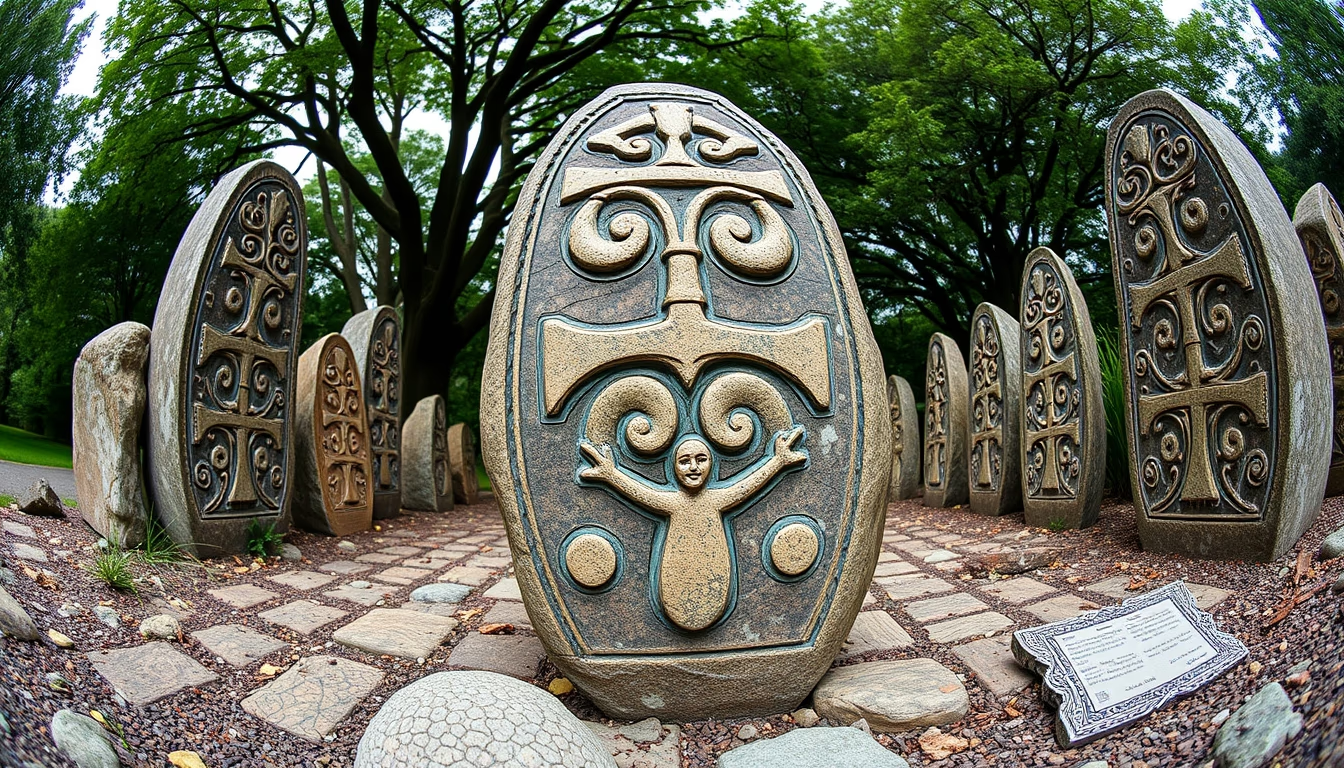
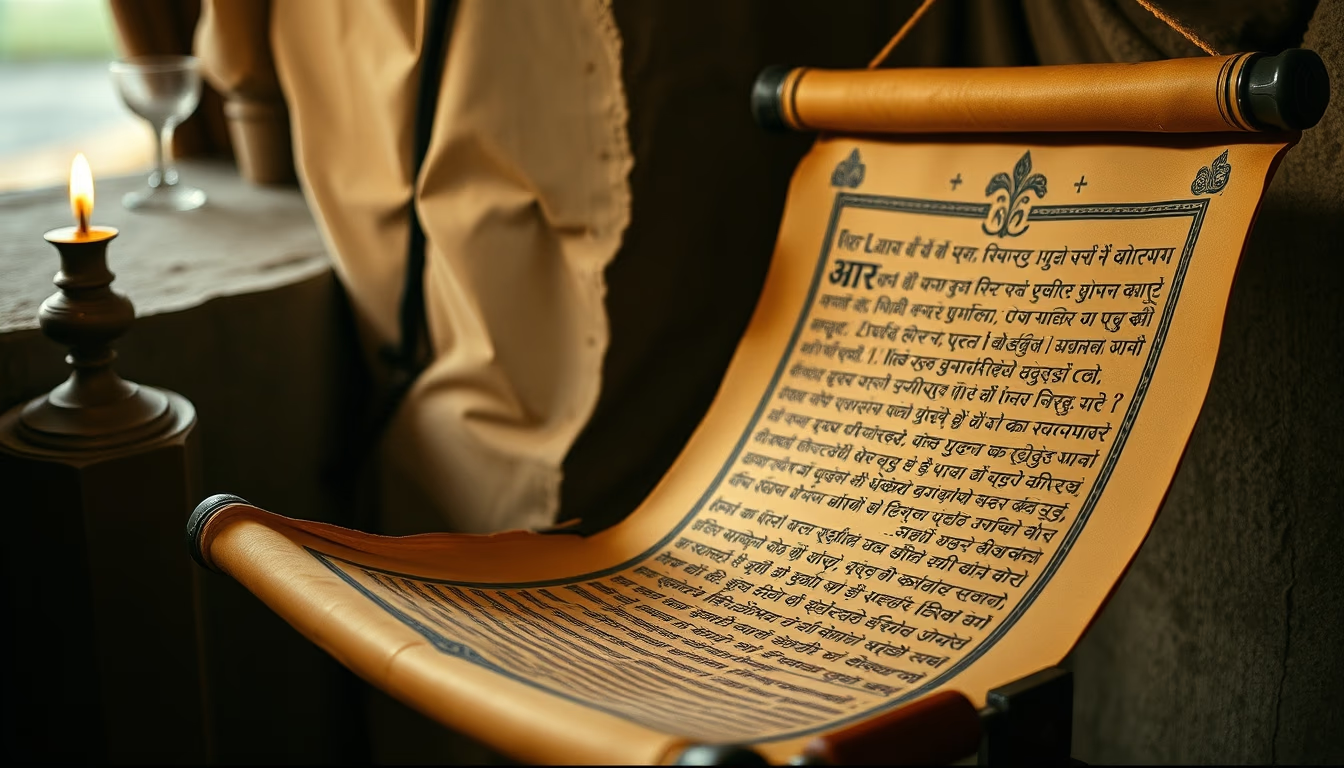
Hieroglyphs egyptian wall
1344×768 · AVIF · CC BY 4.0

Egyptian hieroglyphs are one of the oldest writing systems in the world, combining logograms and phonograms in monumental inscriptions.
About this subject
Egyptian hieroglyphs formed the writing system used in ancient Egypt for over 3,000 years, from around 3200 BCE to the 4th century CE. Unlike an alphabet, hieroglyphs combined ideograms (symbols representing ideas) and phonograms (symbols representing sounds), totaling about 700 to 800 signs in the classical period. This script was primarily carved on monuments, temples, and tombs, considered sacred by the Egyptians, who called it 'the words of the gods'.
The decipherment of hieroglyphs was a milestone in Egyptology. The Rosetta Stone, discovered in 1799, contained the same text in Greek, Demotic, and hieroglyphic scripts, enabling Jean-François Champollion to decipher the system in 1822. Champollion realized that hieroglyphs could represent sounds (phonemes) and that some signs were determinatives (indicating the word's category). This breakthrough opened the door to understanding the history, religion, and culture of ancient Egypt.
Hieroglyphic writing was often arranged in columns or rows, readable from right to left or left to right, with the direction indicated by the faces of human or animal symbols. Egyptians also developed cursive versions, such as hieratic (used on papyrus) and demotic (more simplified). Despite its ceremonial use, hieroglyphs also recorded administrative, literary, and scientific texts.
Interestingly, many hieroglyphic symbols have become cultural icons, such as the ankh (symbol of life) and the Eye of Horus (protection). The study of hieroglyphs continues to reveal details about daily life, beliefs, and technical knowledge of ancient Egyptians, remaining one of the keys to understanding one of history's most fascinating civilizations.
Frequently Asked Questions
How were Egyptian hieroglyphs deciphered?
Decipherment was made possible by the Rosetta Stone, which contained the same text in Greek, Demotic, and hieroglyphic scripts. Jean-François Champollion deciphered them in 1822, realizing that some symbols represented sounds and that the system combined logograms and phonograms.
How many hieroglyphs exist and how were they used?
There were about 700 to 800 signs in the classical period. They were used to write on monuments, temples, and papyri, combining ideograms (ideas) and phonograms (sounds). The writing direction could be right-to-left or left-to-right, indicated by the orientation of figures.
What is the difference between hieroglyphs, hieratic, and demotic?
Hieroglyphs were the formal, monumental script used for sacred inscriptions and carvings. Hieratic was a cursive version for papyrus, faster to write. Demotic, even more simplified, emerged in the late period and was used for everyday documents.
Direct URL
https://pub-c7d6a6ea828543ac903a74a341ccb2e1.r2.dev/imagens/hieroglyphs-egyptian-wall-studio-editorial-portrait-fresh7.avifHow to credit
Include a visible link back to UtilizAí. Copy one of the snippets below:
<a href="https://xn--utiliza-eza.com/en/midia/imagens/hieroglyphs-egyptian-wall-studio-editorial-portrait-fresh7">Hieroglyphs egyptian wall</a> by <a href="https://xn--utiliza-eza.com">UtilizAí</a>, licensed under <a href="https://creativecommons.org/licenses/by/4.0/">CC BY 4.0</a>.
[Hieroglyphs egyptian wall](https://xn--utiliza-eza.com/en/midia/imagens/hieroglyphs-egyptian-wall-studio-editorial-portrait-fresh7) by [UtilizAí](https://xn--utiliza-eza.com), CC BY 4.0
License: CC-BY-4.0